Review: Yellowjackets, “Hivemind” | Season 4, Episode 1
An effective enough premiere immediately reintroduces all the same strengths and weaknesses
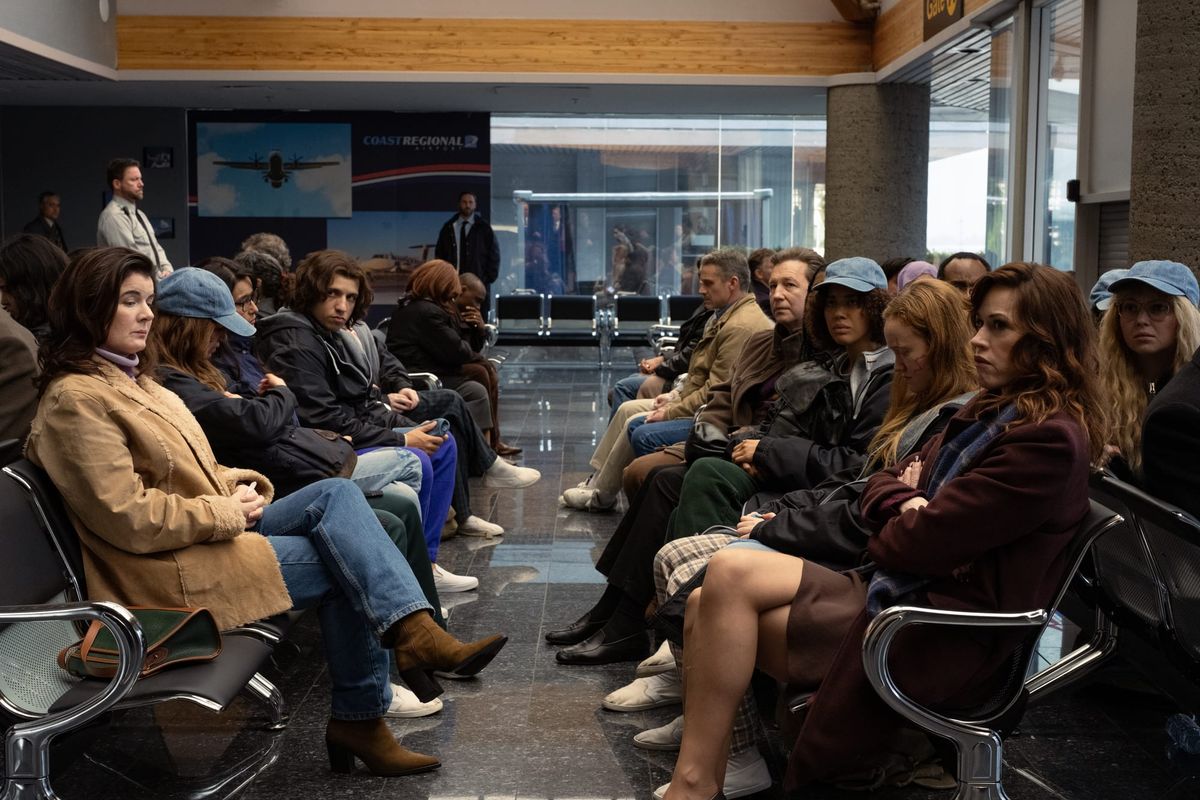
Welcome back to our coverage of Yellowjackets, which concludes with its fourth and final season. As always, this first review is free for all, but if you want to keep reading to find out what happens despite having stopped watching a season ago, you'll need to be a paid subscriber.
When the trailer for the fourth season of Yellowjackets revealed that a significant portion of this final stretch would take place in the aftermath of the team’s rescue from the Canadian wilderness, I felt surprised by my own reaction—or non-reaction, really. There was a time when such a revelation would’ve really amped me up; from the beginning, I’ve been deeply curious (and, like many viewers even early on, fairly skeptical) about how the showrunners could keep the series running for more than a couple seasons, and the possibility of watching the girls return to a “normal life” following their insane wilderness experience was always tantalizing to me. It’s this show’s version of the Oceanic Six.
But a lot of time has passed since season one, still possibly one of the strongest opening seasons of the last ten years. Back then, I was completely sold on the show—emotionally invested in the young characters and their psychological responses to their horrifying new circumstances, yes, but also invested in the plot itself and finding out what exactly happened during those 19 months in the woods. Then seasons two and three slowly killed my investment, answering most of the big questions (like what happened to Shauna’s kid, or the identity of Pit Girl from the series’ chilling opening) without delivering much genuine shock and tragedy on the level of Jackie’s death in the first-season finale, still easily the best conclusion to the best storyline on the show.
My expectations for this show have certainly changed as the years have gone on, and you can see that gradual shift over the course of my 29 individual reviews. After season two languished too much in abstraction, I appreciated some of the fun of season three’s gonzo balls-to-the-wall approach and unpredictable reveals (most notably the existence of a group of researchers in the wilderness nearby). On a fundamental level, though, Yellowjackets never lived up to the potential of that stellar first season, and that will never not be a little disappointing.
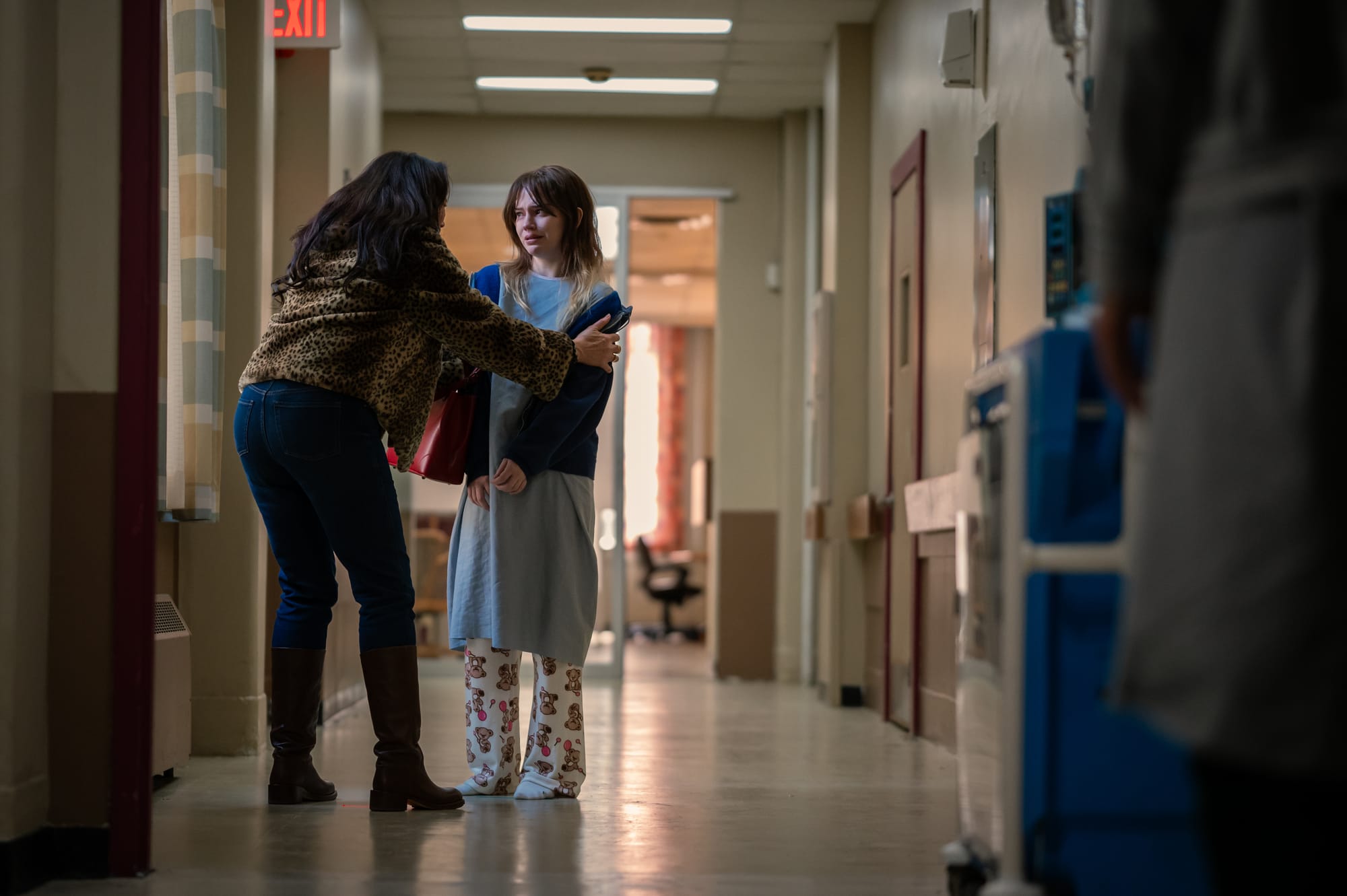
So seeing the girls in this wild new circumstance doesn’t hit quite as hard as it would in my alternate-universe version of Yellowjackets that had three great seasons in a row. That’s not to say those segments don’t work; in fact, they’re easily the most electric bits of this premiere, from the return of young Jeff in the cold open to the various manifestations of PTSD among the survivors. Some of this material is exactly what I would want from this story, especially tracking the realistic emotional responses. Nat gets to experience the relief of a hot shower, only to learn that she’s the one kid without a parent there. Shauna is predictably despondent and emotionally removed, unable to match her mom’s level of emotion. Mari’s mother is almost feral with grief, and Lottie is completely unmoored.
There’s also an investigation brewing into what happened out there, of course, headed by Donald Kundla from the Transportation Safety Board—and there’s a media circus to deal with, glimpsed in that brief 1998 flashback from season two. So far, though, there are no cracks in the girls’ agreed-upon narrative; the only issue, really, is how identical they are. There’s also the fact that the OB-GYN can easily tell Shauna had a child, a subject that would deeply trigger Shauna even if she didn’t have to worry about maintaining an alibi.
All of this stuff works really well, and I’m particularly keen to see what life will look like once the teens go back to being, well, teenagers. In fact, I might’ve even preferred a version of this premiere that ditched the other timelines and stuck with this one for a full hour, and I know I’ve said that before. Yes, that’s timelines, plural: season four will apparently feature three different timelines, one taking place only weeks before the other.
Without knowing where everything is going, I’m skeptical about this choice. For one, the episode’s only glimpse of the wilderness relies on a cheap cliffhanger of Nat reacting to some untold horror. More importantly, the show already struggles to maintain momentum with the standout storyline (the wilderness) constantly being interrupted by the present-day scenes. This has been the issue from the beginning, really, even in season one when both stories were successful.
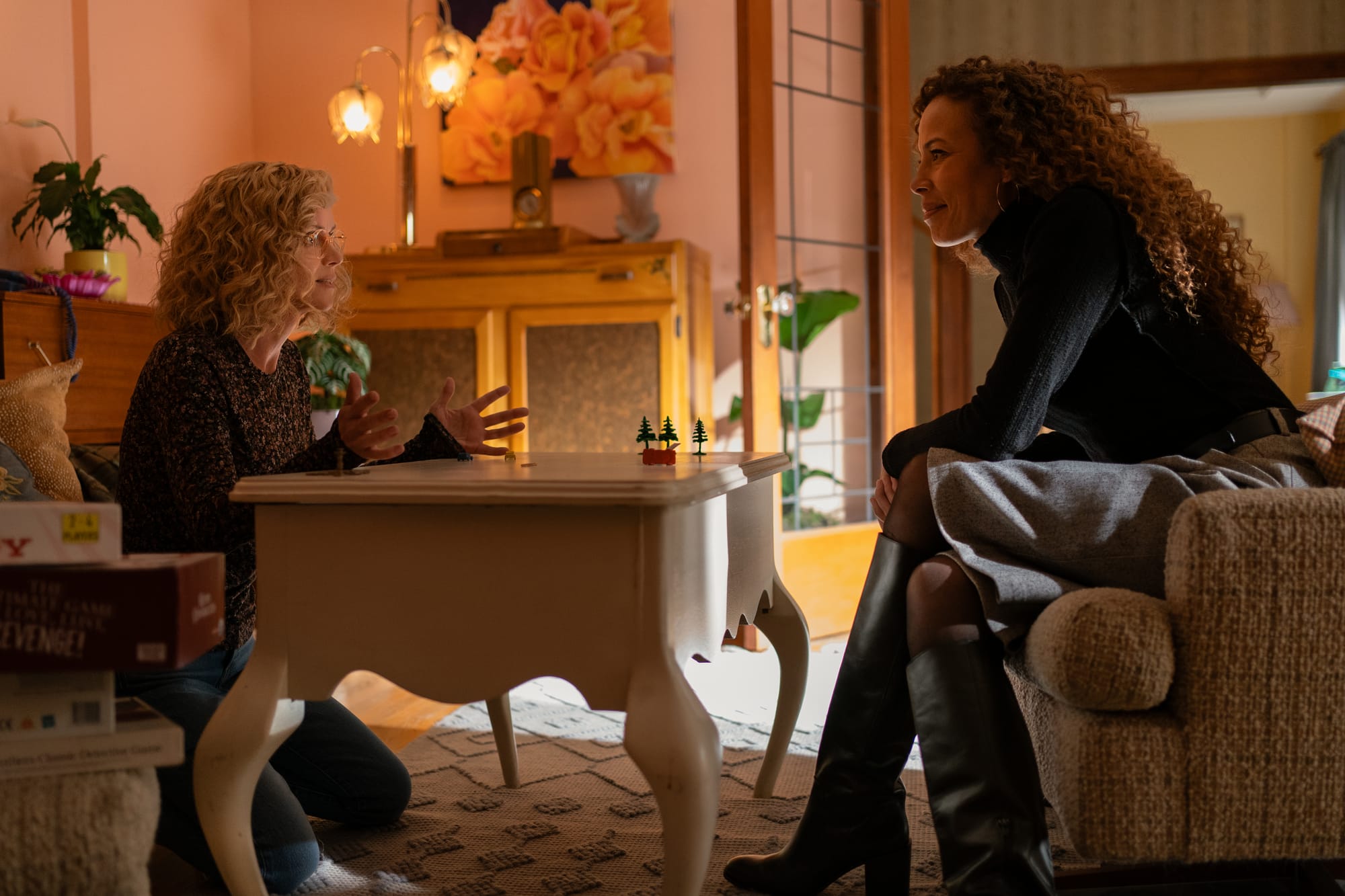
And it’s certainly still the case here. There are a few worthwhile present-day scenes in “Hivemind,” especially Melissa coming clean to Alex (while still fudging some of the details about knowing her mother). Melissa feels like a real, empathetic person here, and it’s nice to see even if it doesn’t track with the person who snapped and relapsed on violence by killing Van last season. Then, of course, she shows up at Shauna’s doorstep and announces that she signed a lease on the house next door, taking her back to psychopath territory. It feels like a contrived and out-of-character way of keeping all these people in the same space.
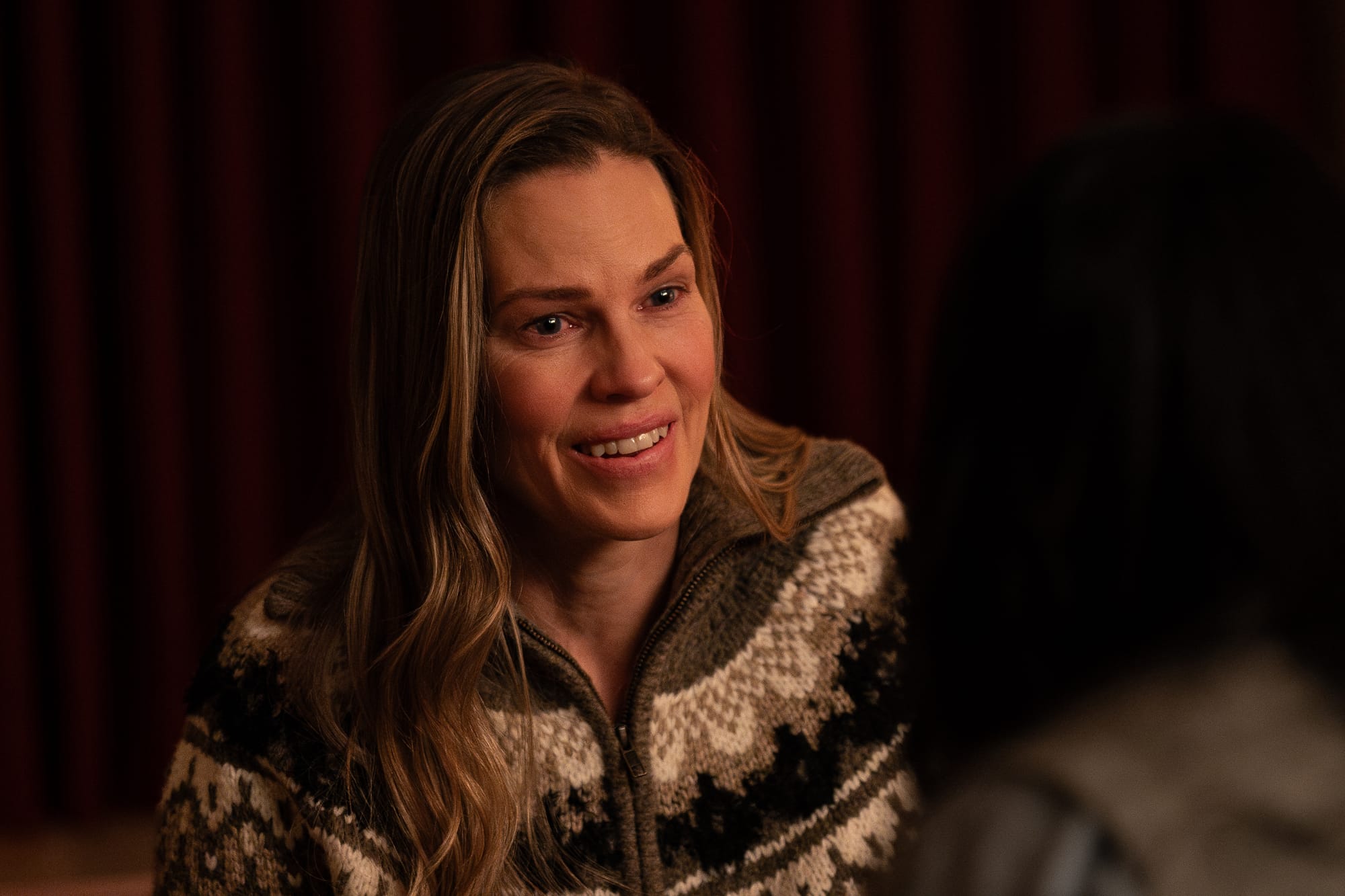
In general, it’s difficult to see where exactly any of these present-day stories can go. This is the final season, but there’s not much urgency. Yes, Misty and Tai are plotting ways to murder their friend, but it doesn’t feel likely to happen—and either way, the overemphasis on comedy makes most of it hard to take seriously. And Shauna herself is unhinged at this point, to the point that losing her wouldn’t be heartbreaking. This character was once a flawed hero, then an antihero, but making her the true antagonist of the show still just doesn’t feel quite right. The scene of her opening chip bags just to provoke a shop clerk doesn’t say anything new about Shauna, especially after three seasons of watching her indulge her dark side just to spice up her boring, regular life. It barely even works comedically, and the same goes for Shauna’s other out-of-pocket behavior in this episode: threatening to murder the PI who failed to track Melissa, for example, and cutting holes in Jeff’s shirts.
“Hivemind” feels oddly short, despite running the customary hour. That’s partly an effect of the general laxness of the proceedings, at least in half of the story: Not all that much gets accomplished here besides checking in with everyone, each of whom is doing all the same stuff they were doing at the end of last season, and there’s nothing much to specifically look forward to next week—Jeff and Callie making it on their own? This premiere isn’t one of the weakest episodes, necessarily, but the experience of watching it just brought back every feeling I’ve had about the show, and by this point those feelings are starting to lean more negative than positive.
Stray observations
- I thought I’d take a break from addressing the central “does the supernatural actually exist?” question, because I’ll surely be discussing it plenty throughout this season. Anyway, it doesn’t come up much here, except for that moment with Tai seemingly praying to It and remembering some of her alter-ego’s memories from the wilderness. Let’s wait and see with this one.
- Tai does ask Misty her status with Walter, and apparently they haven’t spoken since she broke his heart. I expect he’ll be back before long, but I’m really not sure what value he still has to this story, as much as I like Elijah Wood’s performance.
- I enjoyed seeing Nat bum her first cigarette in a while.
- Molly Ringwald is the latest icon to join the cast! She’s playing Van’s mom, who seems very sweet and recorded every X-Files episode for her.
- Also welcome to June Squibb, the patient who notices Misty’s shifty deal with the guy who gives her the duplicate Shauna ID. Curious to see how she’ll get more involved.
- “Statistically, it’s, like, insanely unlikely our plane would crash twice.” “Yeah, tell that to Laura Lee.” This is a great exchange, and evidence that the jet-black humor of the earlier timeline is almost always more successful than the goofy soft-dark comedy of the later one.
- My favorite of Misty’s suicide fantasies was Shauna’s letter reading “I’m sorry, I am too selfish to live.”


Comments ()