Review: Ted Lasso, "Being Alive" | Season 4, Episode 10
Women should be able to have it all; TV shows, less so
Hey subscribers—as noted, we're extending our once-a-year 20% discount on annual subscriptions until next week. This is the best deal you'll get on a year of coverage of dozens of shows, and right now it lets you join the conversation about the end of the return of Ted Lasso. You can see our full fall schedule and learn more about the deal here.
Friend of the newsletter Matt Singer—whose book came out this week!—coined the term legacyquel as a way of confronting the trend of franchise films that serve to pass the torch to a new generation. Films like Star Wars: The Force Awakens that inspired the term want the auspices of legacy, with the characters people recognize and connect with, but they also understand that moving forward requires new blood. It’s nostalgia with a clear desire to generate subsequent sequels, Creed turning into Creed II and Creed III.
It’s a term we most often associate with feature films, mainly because television has its own lineage of nostalgia-driven development practices. The legacyquel is really mixing two of those together, combining the “getting the gang back together” vibes of a revival with the desire to create new stories through different characters of a reboot. And while some TV returns try to mix these two modes (the return of Scrubs comes to mind), there’s always a tension: if the original characters are what people care most about, how can you justify pulling away from them to develop new characters if they’re not intended to “replace” the old characters in any way?
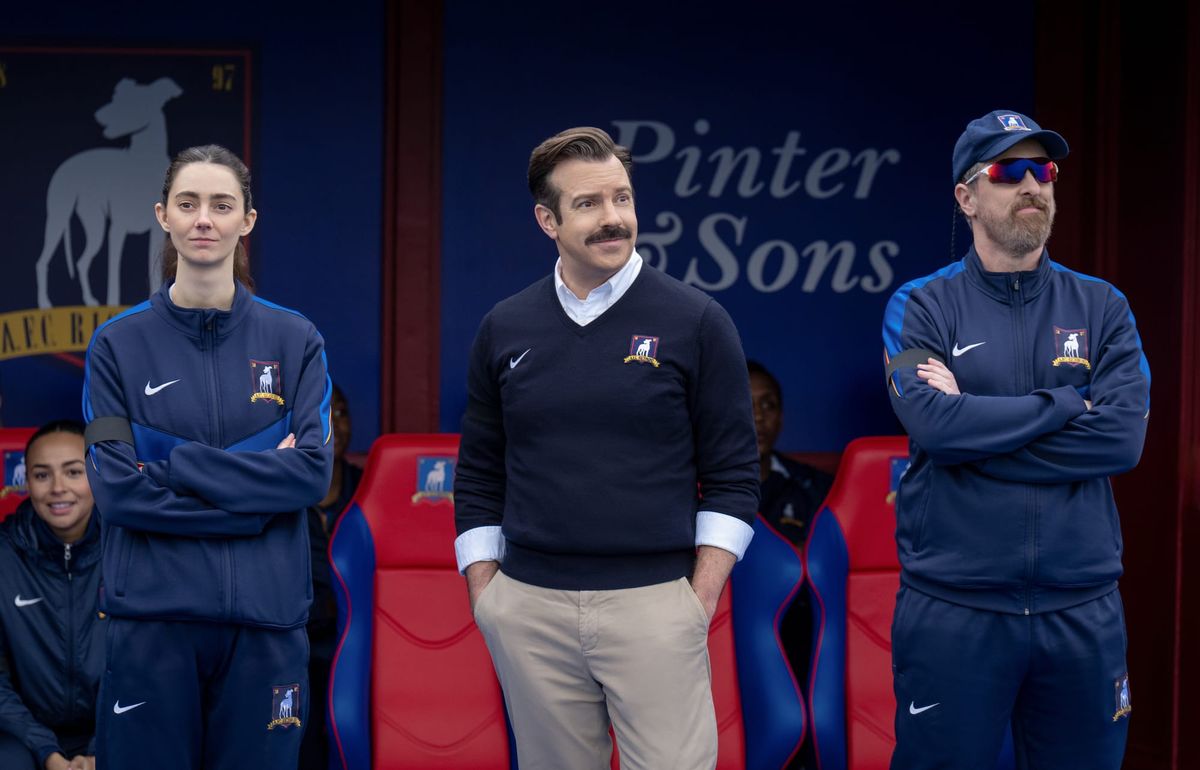
This tension is certainly part of the problem with Ted Lasso’s fourth season, but the bigger issue is that this isn’t a revival, at least not in practical terms. Scrubs ended in 2010, meaning that audiences had plenty of time to develop nostalgia. Ted Lasso ended in 2023, and it was only three years later that Jason Sudeikis decided it was time to return to the show and its characters. It was enough time for the show to be officially “ended,” but not enough time for a nostalgic lens to fully develop. It’s very likely that an average viewer of the show didn’t even know it was canceled, given that a three-year gap between seasons is just a thing that happens these days—heck, Euphoria’s hiatus was longer. The result is that Ted Lasso season four is technically just another season of Ted Lasso, although with the aura of revival in terms of the about-face on concluding the show after three seasons and with the vague idea of a reboot with the switch to focus on a Richmond women’s team.
While there were some occasional dud storylines, and one of them is unfortunately central to this finale, Ted Lasso’s problem in season four was in its struggle to balance the competing impulses of returning to this universe. The revival elements are honestly the emotional core of this finale, and reinforce that it would have been foolhardy to bring the show back without leveraging the audience’s investment in—for example—Roy and Keeley’s respective journeys. Meanwhile, the reboot elements were consistently the season’s best narrative engine, finding new shades to the show’s trademark philosophy and introducing some compelling new characters. The issue was that these components always felt in competition with each other, and there wasn’t a single episode all season where it seemed like the writers had figured out how they were meant to co-exist. A legacyquel only works if there’s the sense the producers are able to create new legacies on the foundation of the returning characters, and nothing about this season of television suggests that’s in Ted Lasso’s future.