
Week-to-Week: What a Local Survivor Casting Call Taught Me About the Show's Legacy
And about a landmark 50th season ultimately neither for or by its fans
Welcome to Episodic Medium's recently less-than-weekly newsletter, where I reflect on television and the media industries broadly. To receive future newsletters, sign up below—to receive all of our weekly reviews that keep coming even when I'm too busy for newsletters, including my review of tonight's Survivor finale, become a paid subscriber.
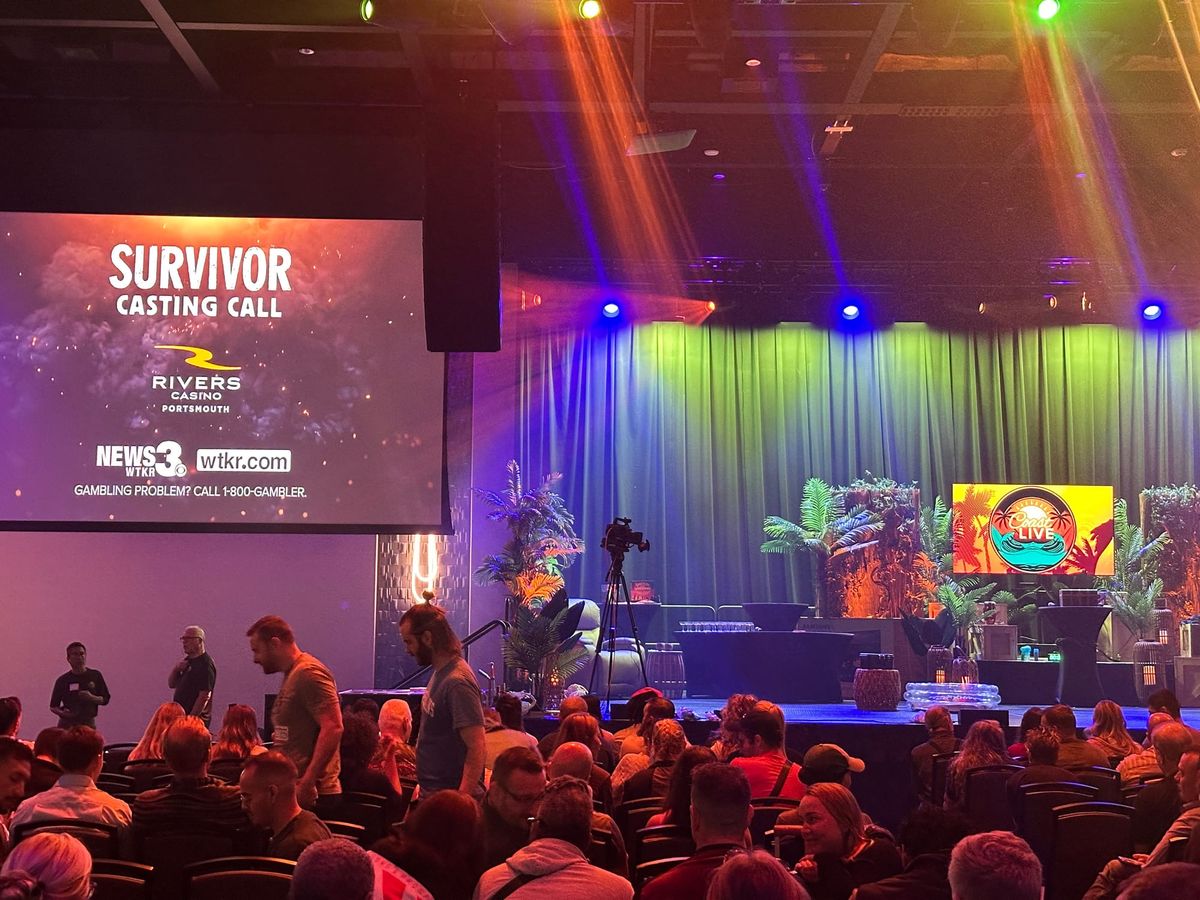
In the midst of Survivor’s landmark 50th season, which I've been covering here at Episodic Medium, I made my way to Rivers Casino in Portsmouth, Virginia early on a Friday morning. As I walked from my car, a woman—presumably an employee—commented that “something must be going on.” It turns out that it isn’t normal for hundreds of people to be queuing inside and outside the building, many of them dressed in their most distinctive outfits and curiously wearing bandanas in often unorthodox ways.
What I knew, and what the woman was about to discover, is that local CBS affiliate WTKR was holding a special Survivor casting call. Built around a live taping of their weekday lifestyle show Coast Live (which you can watch for yourself here), the event promised fans of the show what they’ve presumably always dreamed of: a chance to show producers how they could outwit, outplay, and outlast on an upcoming season. The casino—who was coordinating logistics—had prepared 800 specially printed number tags themed to the show; by the time I was leaving around 11:20, they had run out. The first would-be castaway showed up the previous evening; by the end of the day, it’s likely close to 1000 people showed up to register to give their one-minute pitch on why they could be the sole survivor, with the tapes making their way to CBS.

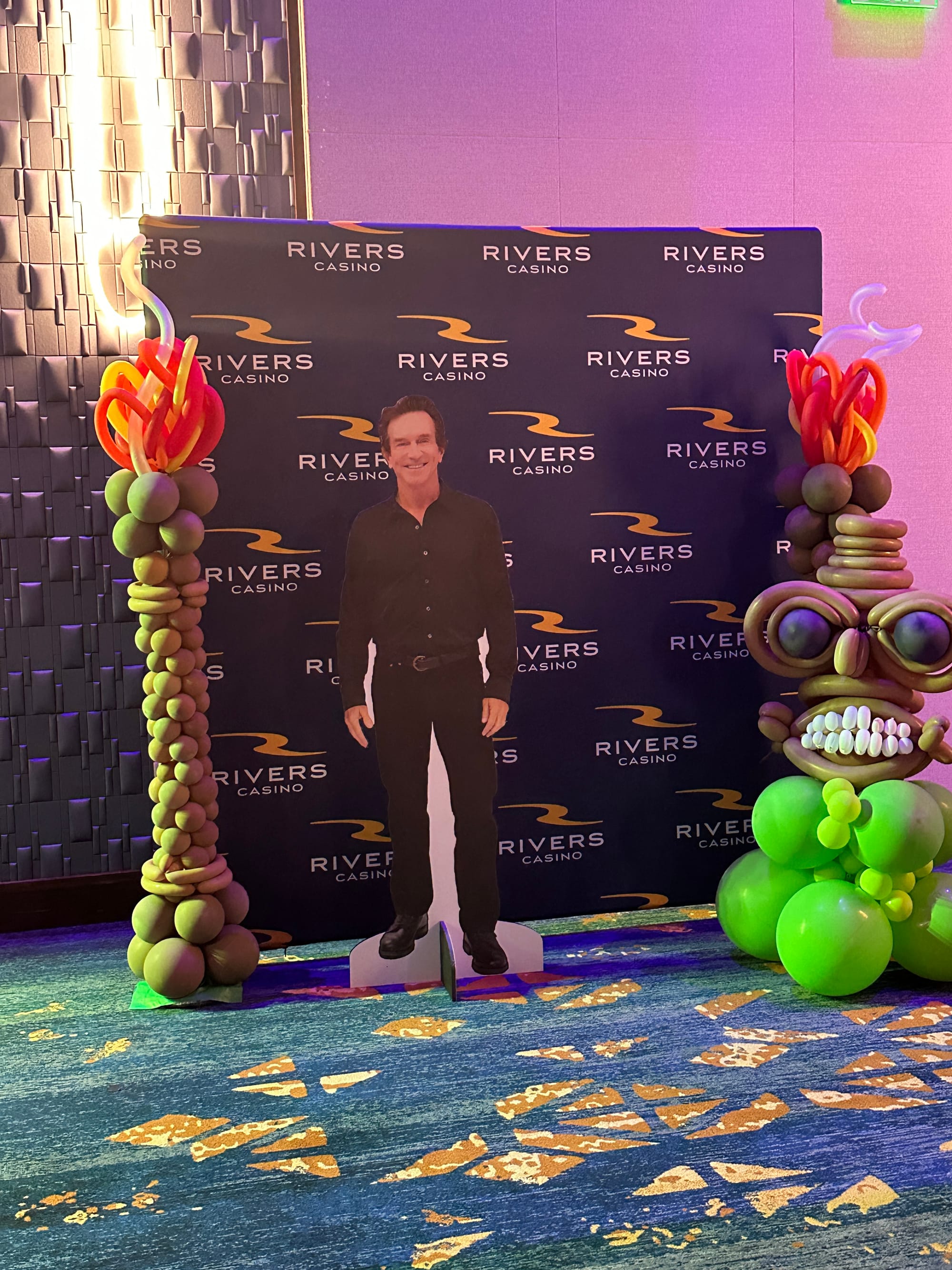
Having used my privilege from being a frequent guest on Coast Live to get myself a seat for the taping, I wasn’t there to audition. I also wasn’t just there to get a picture with special guest Parvati Shallow, but what Survivor fan would turn down that opportunity? Primarily, though, my interest was in bearing witness to the culture the show has created over its fifty seasons. In a season originally pitched as “In the Hands of the Fans,” the actual choices of the season’s audience have reminded us that the internet may not be representative of the audience at large. While an event like this would no doubt draw some of the show’s most online fans—co-host Chandler Nunnally was invited to join a local fan-made Survivor game—it would also draw normal people who watch Jeff Probst’s weekly calls to audition and decide to do something about it.
Technically, attending this event doesn’t guarantee anything: while the tapes will be sent to CBS, fans would have just as much of an opportunity to get on the show by filming an audition tape themselves. But what these people have as an advantage is a sense of ritual: they showed up early, waited for hours, and got to feel like they’re participating in something bigger than themselves. A man seated behind me during the taping was explaining to the woman next to him that he had never done something like this before—he was shy, and had become nervous about it on the drive to Portsmouth. But being part of the live taping—the cheering, the games, the music—helped calm his nerves, and he was looking forward to his minute in front of the camera.
It’s unlikely that minute will amount to anything, for him and most of those in attendance. I don’t say this to be cynical, it’s just reality. Only 36-ish people play Survivor each year, and chances are some of them will already be in the show’s audition pool. And the truth is that while it may be a personal triumph for someone to overcome their nerves to audition, the chances of someone like that catching the eye of the casting director is extremely low. The same was true for all of the attendees over the age of 50, who are competing for an even shallower end of the casting pool. Even the ones who seem like they have a shot aren’t always going to deliver: the young man who drove from Florida who competed as part of the Coast Live taping was bringing great energy for TV, and seemed like he’d do well, but when I saw him after his audition his body language suggested it was possible the adrenaline had run out. And he’d hardly be alone in failure: most of us who watch Survivor will never get to be a part of it, even if we send in a tape.

Survivor 50 was initially pitched as a chance to change that, giving fans the power to influence the game from the outside. What I saw at that casino was a reminder how effective this show has been at creating something you want to be a part of: sure, I overheard someone who didn’t watch the show and was only there because her friends said she’d be good at it, and I got some very bad vibes from the body language from some of those practicing their pitches in the ballroom once the auditions started, but for the most part people were there because Survivor is a part of who they are. The idea of the fan vote suggested that we could now become part of the game, even if we’re not going to make it to Fiji ourselves.
In practice, however, Season 50 was never about the fans. I’m not just saying this because of the tyranny of democracy where the “normie” fans—probably not unlike some of those in attendance at this casting call—made bad decisions I disagree with personally, denying me the authoritarian control I so clearly crave. I’m saying it because the choice to foreground celebrity superfans—the interminable Zac Brown sequence, the naming rights to the Boomerang Idol, Jimmy Fallon’s interventionism, and MrBeast’s million dollar coin flip—established a hierarchy where one didn’t exist before. It would be one thing if real people like the fans who showed up to audition were selected to be a part of the game they love; instead, the show used the mostly vague fan vote categories to do what they wished, and latched onto celebrities because their connection to the show is worth more than the people who’ve watched it for over 25 years.
I’ve seen lots of criticism of Season 50 in terms of the results of the game itself, and I get that: it’s hard to ignore that the various twists in the game particularly screwed over players that fans have been invested in for a long time, and who they wished to see get their chance to win the whole thing. I too would have loved Cirie to get a long-deserved win. But this is an inherent problem with a returnee season, because the fan favorites are also the ones who are going to be identified as threats to win at the end. The fact that a player like Joe so actively condescending to the game we love is guaranteed to sit in the final three of a season allegedly in the hands of the fans is comical, but it’s also inevitable. Provided our control ends at pre-season straw polls with no direct power, the producers’ attempts to keep the game “interesting” were always going to facilitate big moves whose targets would be the players fans most wanted to see play the game again.
I have to check myself, though—I can just hear Jeff Probst reading this (hey Jeff) and being like “Are you saying that fans didn’t want to see Joe play again? Because I—” and then I’d stop him. Of course I know that there are people out there who watch Survivor and love Survivor and also love Joe. Heck, just recently I was fed a Reddit post of someone who wished Bhanu lasted longer on Season 46, so I am aware of the (sometimes horrifying) multitudes that exist within the show’s fanbase. The problem is that I sat in a room with a representative sample of that fanbase, and saw a diverse group of people who love the show and want to be a part of it, and none of that energy has felt present in the season that was allegedly for them. Whether based on—as our own Ben Rosenstock argued at The A.V. Club—the cult of personality Probst has indulged in or the (logical) strategic targeting of the players who are more widely beloved, what was meant as a tribute to Survivor’s legacy has instead underlined the fissures of the New Era that define the last five years of its existence.
The resilience of Survivor was apparent in that casino ballroom. Some of those in attendance wouldn’t have been alive in the summer of 2000 when the show became an overnight phenomenon. There are going to be people who watch tonight’s finale who have lived with the show and its “characters” for a quarter-century, and others who found the show in the last year and binged through all the seasons. And as much as Season 50 may have failed to embody its commitment to its fans, and as much as its tribute to those “characters” was disrupted by the realities of their threat to less interesting players’ chance of winning the now two-million-dollar prize, none of this will stop the show from finding more fans in the future.
I was tempted to start asking people around me what they thought about Season 50, or how they voted in the polls, but I knew the answers would confirm what Probst relies on when he asserts his version of the game over my personal objections: there is an indelibility to Survivor that can withstand almost anything, and which has shone through enough in an uneven season to make it a celebration of its triumphs as much as its failures. I imagine that many people in that room have opinions not unlike my own, but they were still in that room, and had come to that casino in the early hours in the hopes of feeling closer to something they love (or love to hate).
That's a power that we can't take for granted, even if more often than not it feels like that's exactly what Jeff Probst is doing himself.
Episodic Observations
- As referenced above, the newsletter has taken a bit of a backseat amidst some significant burdens in my actual job, and we’ve gone headlong into our Spring schedule without a full announcement. So if you’ve been missing our reviews of shows we picked up in April—The Boys! The Comeback! Euphoria! Widow’s Bay! Hacks!—you can find them at the links. I promise a full schedule update for summer at the beginning of June.
- In my few seconds with Parvati, I noted that the crowd in attendance did not pop enough at her mention of Australian Survivor, reminding us that they really need to work out whatever rights agreement/ego trip is keeping them from licensing the show to the U.S. Her season—”Australia vs. the World”—was my entry point, but we’ve since watched a bunch of others, including the most recent “Redemption.” Worth seeking out as a maximalist alternative to what’s happening in the U.S.
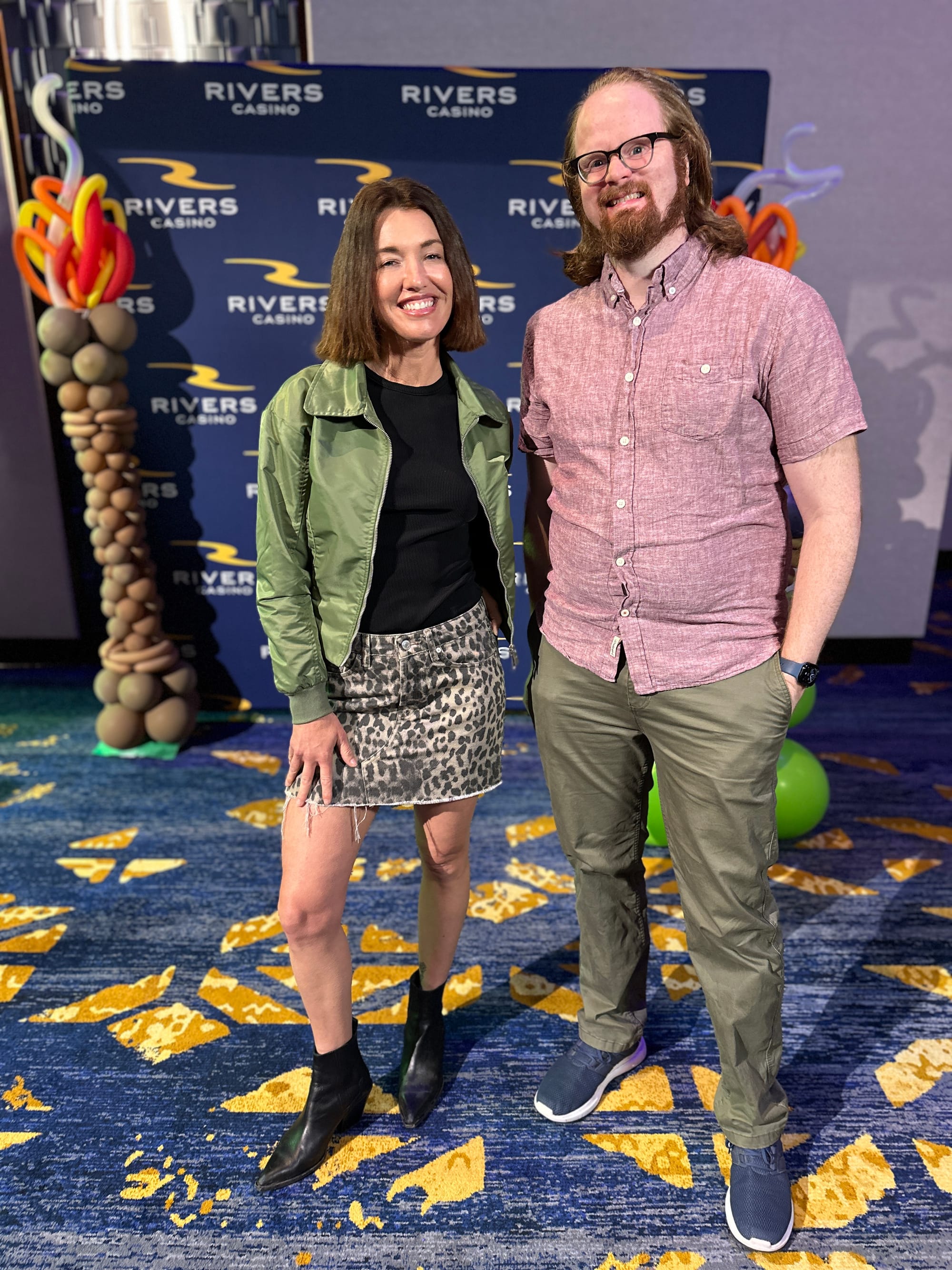
- My Instagram mutuals (most of whom I know personally) were very convinced I was auditioning, but I don’t think they understand how undesirable “active critic of the show” is?
- This local station also did a casting event for Big Brother and a “Contestant Search” for the Price is Right. The latter resulted in an automatic berth on the show, but the former—as with Survivor—offered no guarantees. The Survivor event was the most well-attended.
- Today marks the debut of Apple’s Maximum Pleasure Guaranteed, which is a solid Tatiana Maslany delivery system although maybe not load-bearing enough that I thought it made sense to cover it (I chose Widow’s Bay instead after sampling both). It was also the subject of the first episode of the TV is Good podcast from friends of the newsletter Alan Sepinwall and Kathryn VanArendock, where they compare it to Weeds, so do check that out.
- I’m still working my way through Prime Video’s Off Campus, which is watchable and interesting to watch after Heated Rivalry in terms of approaching an ongoing romance series as an ensemble engine for television storytelling. In this way, despite the hockey connection, it’s closer to something like Bridgerton, but really accelerating juggling multiple characters (and presumably multiple books). It’s definitely a more commercial take on how to leverage BookTok than Heated Rivalry's play at prestige, but I don’t think that necessarily makes it a cynical one. Our own Caroline Siede posted her thoughts on both halves of the season on her newsletter, Girl Culture.
- Although my time for writing was limited, I did watch a lot of what’s been on this spring even if I haven’t had a chance to write about it, so I’m always interested in hearing what’s been connecting with people.
Comments ()