
Review: The Vampire Lestat, "Detroit" | Season 3, Episode 1
A glorious, glittery rebrand fit for a rock star vampire
Welcome to our coverage of The Vampire Lestat, which is kind of a new series but is obviously mostly the continuation of AMC’s adaptation of Anne Rice’s Vampire Chronicles. As always, this first review is free for all, but subsequent coverage will be exclusively for paid subscribers. You can get a whole year for only $44 right now—check out our summer schedule here.
Changing an opening credit sequence is not an uncommon occurrence on television, even if the song replacement or remix is a step down from the original choice (Felicity, Alias, and Veronica Mars immediately spring to mind). It is rarer to shift from an extended title card paired with foreboding orchestral sounds into a glam rock extravaganza. Interview with the Vampire is not switching up its introduction to blow the cobwebs out. Instead, the series, adapted from Anne Rice’s Vampire Chronicles book series by creator Rolin Jones, enters a new era in its third season. It is out with Interview with the Vampire and in with The Vampire Lestat, taking its name from the source material. The premiere comes roaring onto the stage, with ambition and self-assurance to match the frontman. It is a dizzying, delirious, and unbelievably fun return to the flagship series in AMC's Immortal Universe. Rebrands can be tricky, but even with the new title and different protagonist, the DNA of this show remains the same (hence why Season 3, not 1), and a confident premiere immediately thrusts us back into the middle of a sprawling story.
Still, it might take a beat to recalibrate. While Daniel Malloy’s interviews with Louis de Pointe du Lac that led to the eponymous book were the foundation of the first two seasons, an album and an accompanying documentary (this time directed by a now-immortal Daniel) give Lestat de Loncourt a chance to tell his side, promising to take us back further than his Louis years. Black-and-white footage immediately distinguishes the rock doc shots from the other material, creating a layered confection of narrative techniques. We have seen glimpses of Lestat’s time in Paris in IWTV’s second season, but that was through Armand’s eyes. The Vampire Lestat is a clap back song magnified, spreading into every corner of Lestat’s 265 years alive and undead.
The premiere kicks off with a flash forward that instantly reveals something big has gone down. Why else would Armand be wearing an eyepatch and Louis using a cane? More importantly, if Lestat is having an estate sale, does this mean he is dead dead? TV shows often use “in media res” as a shortcut to the action. It can feel like a cheat code, but this series has always bounced around the timeline, and this framing establishes the origin of Lestat’s unique point of view. Similar to previous seasons, Jones drip-feeds big-picture details without giving away too much. Namely, a global catastrophe that stems from Lestat’s self-titled album and supporting tour. Part of the auction lot is an 111-album collection titled “The Failures,” with Lestat narrating what led to this mysterious cataclysmic event. Whereas IWTV cut between Louis (and Armand) and Daniel in 2022 Dubai and the past, The Vampire Lestat uses these recordings and other triggers, like Daniel’s questions, to flip back in time with 2025 as an anchor.
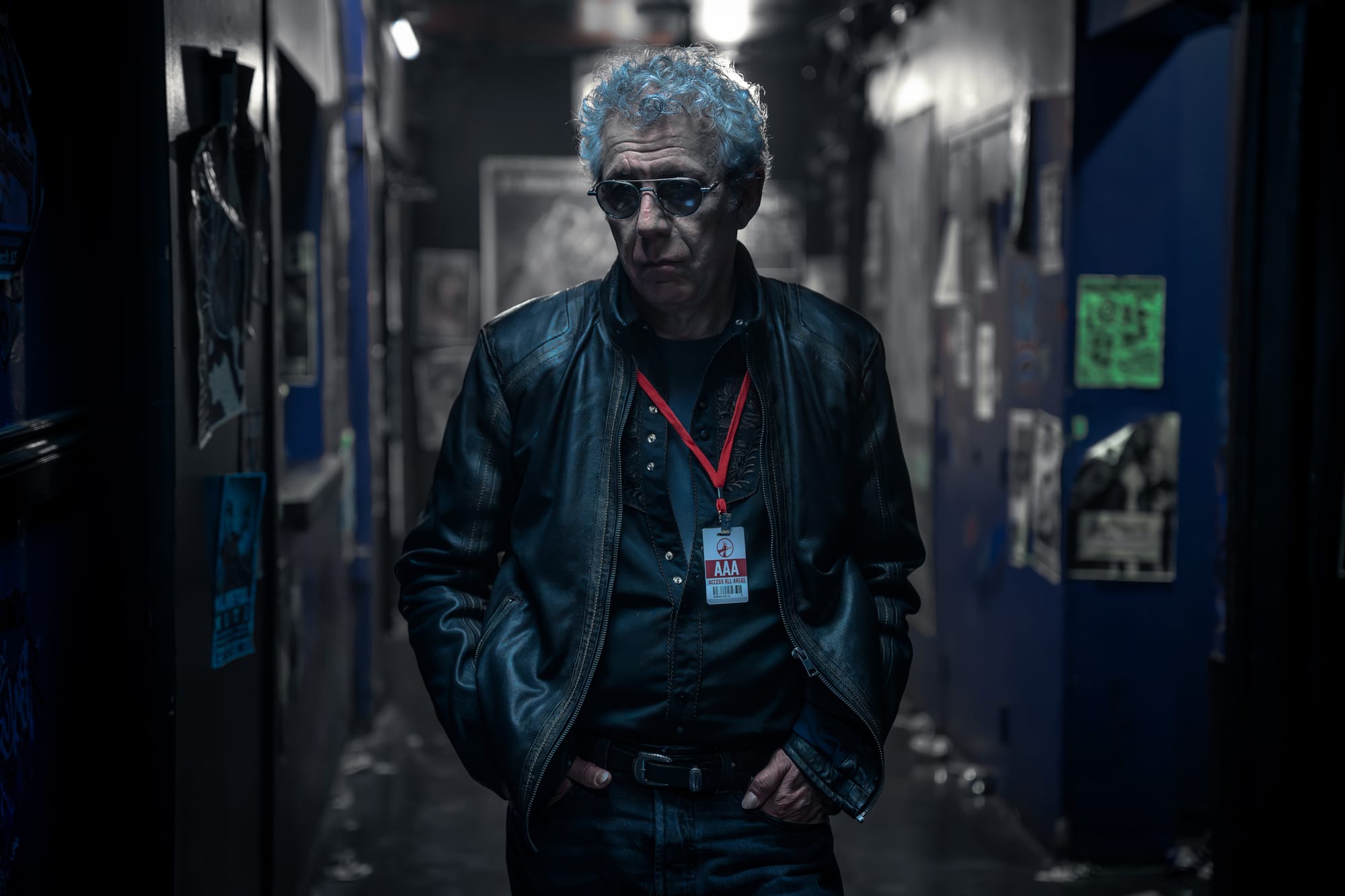
Daniel is armed with everything he learned from Louis, and his prodding becomes more focused when he senses a weakness (as when he repeatedly asks whether Lestat stuttered as a child). Rather than retread the past and do a Rashomon-esque version of the Lestat and Louis story (or The Affair if we want a TV example), not too much time is spent in the premiere lingering on the events that make up Daniel’s best-selling non-fiction memoir. Rather than unspool all of those issues when sitting opposite Daniel a couple of years later, it is far more powerful that only a few references to Louis’ version come up at this early juncture. Lestat’s terse “no” about whether he threatened Claudia with rape on the train speaks volumes about that previous sticking point about one of Lestat’s most heinous acts.
References to Lestat giving different answers to the same question about his desire to perform signpost Daniel's awareness that Lestat is playing a part. It isn't catching Lestat in a lie, but it suggests he is as unreliable a narrator as Louis. Perspective is important, and the exploration of memory, identity, and heartbreak continues to drive the narrative. Lestat pins his avoidance of the truth on the current political landscape, offering the “facts are irrelevant” rationale and claiming this is his era now. Daniel sees through his provocateur BS by pointing out that Lestat’s bad is playing 800-seat venues, while Post-Malone and Jelly Roll are playing 60,000-capacity stadiums (little did Daniel or Jones know that they would hit a few bumps a year later). The pandemic was a hum of anxiety in the first two seasons, and this premiere follows suit with allusions to who is in the White House.
Music is equally important in uncorking Lestat’s past, as best demonstrated in a series of images “hammering away at the performative vampire persona.” Overloading the senses is part of the thrill, and I spotted characters like Lestat’s first love, Nicki (introduced in Season 2). Jennifer Ehle makes a grand entrance in the final scene of “Detroit” in the present day with a sleek cunty lob (long bob) and the twist here being that a coy Lestat hasn’t been texting Louis as I expected, but his mother, Gabriella—the other twist being that they are sexually intimate. Now, that is a real record-scratch moment. It is also notable that Louis and Lestat only talk over FaceTime in a scene from the past, and then Lestat sees Louis in the crowd as one of his muses, during what Lestat calls a nervous breakdown on stage. We will have to wait for this gothic romance to reignite.
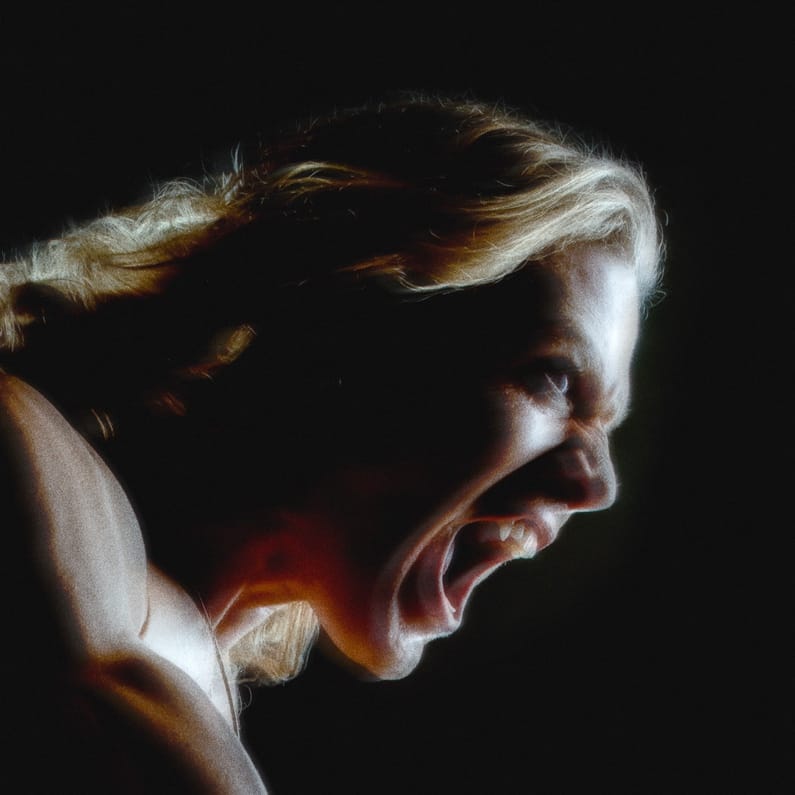
There is a lot to take in from this jam-packed episode, including Lestat’s fourth-wall-breaking narration that playfully reveals snippets of what is to come. Take the fight in the boutique hotel with the “regional” vampires and the elevator four-way that Lestat keeps referencing before saying he has got ahead of the story. Given that Louis chided Daniel for trying to skip ahead in the first episode of IWTV (“Let the tale seduce you,” Louis said), this callback emphasizes how different these two storytellers are. One vampire is controlled and measured, while the other leans into the chaotic frontman persona in his mess of smeared eyeliner and gold glitter. To Lestat, the songs are the story, and the documentary is the liner notes, and each adds a layer to the myth-making.
Lestat ingesting a potent combination of ecstasy and LSD plays into the heightened rock star behavior that is established early in the premiere with the tour backstage. Tripping scenes are a TV staple, with the most recently successful depiction coming from Widow’s Bay. Here, distorted faces, slurred speech, and colorful lights add to the hallucinating tableau. Lestat certainly has the rock-and-roll energy down both on and off stage. It is frenetic and chaotic, but Craig Zisk’s direction doesn’t hold you at a distance. Rather, this is an all-access invitation to the Vampire Lestat experience.
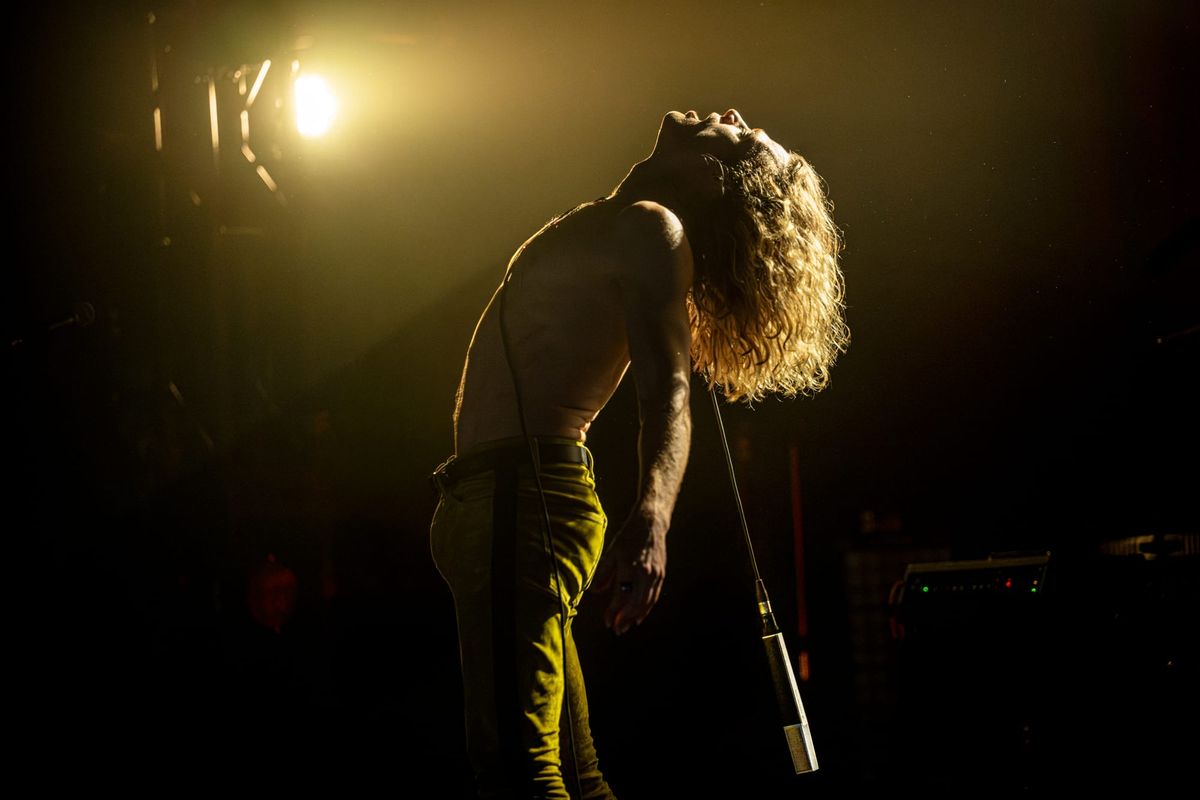
Composer Daniel Hart’s score set the mood with its stirring orchestral arrangement in the first two seasons. Still, even before The Vampire Lestat, he showed range with Claudia’s “I Don’t Like Windows When They’re Closed” and Louis hallucinating Lestat serenading him with “Come to Me Again.” Now, Hart is rising to an even bigger challenge. Writing music for fictional bands can be hit-or-miss, or only one song may be required to sell a secondary storyline. In the premiere alone, there are multiple songs I have been humming all week (including “All Fall Down” in the opening credits), all of which Sam Reid performs like a man possessed. “Long Face” and “Black Licorice” are early personal favorites. Watching Reid strut across the stage, thrusting his hips in the too-tight pants that are perfect for Lestat—no matter what Daniel says—instantly sells the vision. We have seen Lestat command a stage before (playing the Harlequin, which he also disputes while reading Daniel’s book), but this new iteration is electrifying. I have spent the last few days watching clips of the concert at the Beacon Theatre in New York City, which also served as a premiere. It is an Emmy-worthy turn that will likely not be part of the conversation come next year. The Television Academy is missing out.
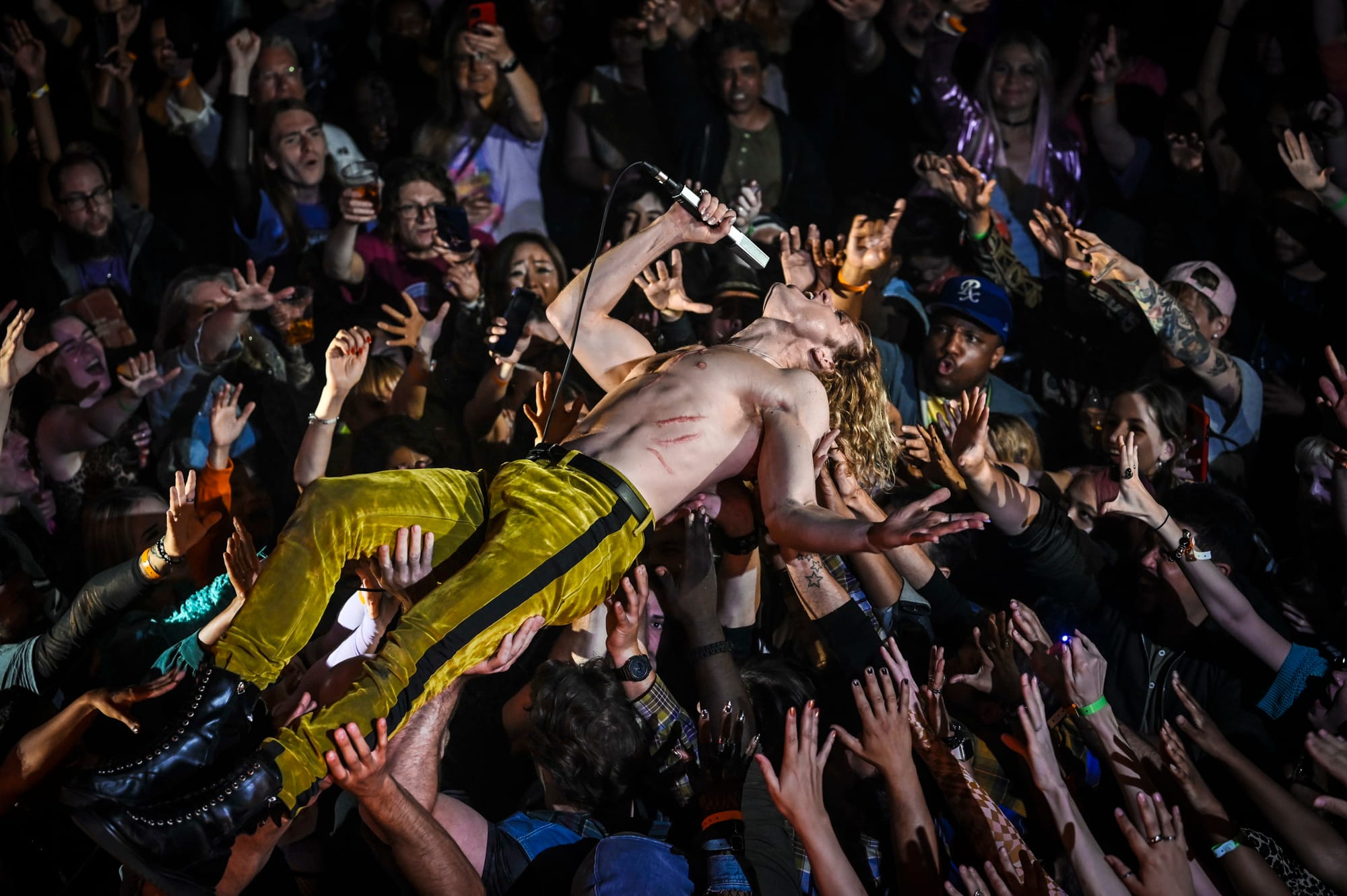
Throwing us into the middle of a 54-city rock tour and having already notched 30 shows is a way to up the ante. Yet, the performing arts have already been a core part of the series. The Théâtre des Vampires used mixed media on stage in 1940s Paris to tease the existence of blood suckers to the general public in Season 2, which continues with Lestat’s foray in the present day. Hell, even Lestat’s bandmates don’t know Lestat is really a vampire until they see him in full fight mode.
Tension is also playing out on stage with Lestat butting heads with lead guitarist and former frontman, Larry (Noah Reid). In the gap between the present and Larry’s first encounter with Lestat, he has come to resent the man who took over his band, and the clash of egos is one of the more familiar aspects of a rock group dynamic. Reid is best known for playing Patrick on Schitt’s Creek, which also showcased his musical talents. Having actors who can also play their instruments adds another layer of authenticity to the concert scenes. Some of the backstage antics lean a little cliché, but that also fits the image Lestat is cultivating. Much like any messy pop star, Lestat has multiple beefs: with his bandmates, the media (Daniel), exes, and the vampire community as a whole. There are many ways this great catastrophe could play out.
Armand is another source of friction. First, through Lestat trying to get a rise out of Daniel by referencing his maker and suggesting that Daniel has “transformational trauma.” Daniel’s glee when fighting the Detroit locals would suggest otherwise, but there is still plenty of time to dig beneath the surface. Armand also comes up during this corridor brawl because one of the vamps has a tattoo that reads “Armand told the truth.” It seems not everyone believes Daniel’s accusations that Armand directed the play that led to Claudia’s death (and that Armand didn’t save Louis’ life; Lestat did), and this coven claims to be the Children of the Darkness reborn (aka, Armand’s original coven in Paris). The set-up is ripe for the impending fallout, and the breakneck speed of this premiere could be hard to sustain while servicing both the returning and new cast. But for now, I am ready to keep pressing play until the albums run out.
Stray observations
- “It was raining!” Lestat yells about a hookup story that had Daniel questioning Louis’ ability to remember accurately in Season 1.
- Other aspects of Daniel’s book that Lestat quibbles about are Lestat’s missing chest scars, his hair length, and vampires having to pee. Another correction: his thoughts on sex, and that it isn’t all torture and toxicity. This sequence is another blast of images featuring Lestat and figures from the past, and a reminder that the beating heart of this show is queer.
- I have read the first two books in this series, and book readers will undoubtedly spot familiar figures during Lestat’s self-described onstage breakdown and moments from Lestat’s past. The end credits confirm that Sheila Atim appeared, however briefly, as The Queen of the Damned.
- Lots of pop culture references, including the opening credits paying homage to other vampires like Nosferatu and Twilight’s Edward Cullen. The boutique hotel where Lestat and his band are staying is named after the 1936 movie Dracula’s Daughter, which Anne Rice cited as an inspiration for her work (it is also the name of a cabaret bar in The Vampire Lestat novel). If you look closely, the band is posing on the step-and-repeat at this hotel that reads “Immortal Properties by Thomas Pitt.” That name is a nod to the stars of the 1994 film adaptation.
- Canadian director Guy Maddin is the voice of "The Failures" and has a vampire connection. Among his many credits is Dracula: Pages From a Virgin's Diary. I ended up watching his Criterion Closet, from 15 years ago (it looks so different), which is incredibly charming.
- After a sloppy night on one of the tour stops, it was deemed necessary for Lestat to have a human body double. Reid plays the doppleganger Jarda, which makes for a fun comparison.
- Lestat’s whole rock star aesthetic gets five stars from me, with costume designer Lex Wood (taking the reins from Carol Cutshall) nailing his on and off-stage attire. But it is the pink corset that takes it to the next level, even if by the end of the episode, it has seen much better days.
- The kids who knock on Lestat’s door on Halloween are dressed as various characters from Interview with a Vampire, including one Armand, three kids cosplaying as Louis, and a couple of Claudias, as well as an old-fashioned ghost. Zero Lestats. No wonder he is triggered. It is also very funny to me that these kids are dressed like characters from a book they haven’t read, and I am reminded once again that this is Lestat’s version of the story, not necessarily the truth.
- “Which one of you OD’d before?” Lestat asks Daniel and the newcomer, Dee. The way they both raised their arms made me giggle.
- Having recently rewatched the Season 2 finale, I clocked that the helmet-wearing DJ was the Talamasca’s inside man, Sam from the Théâtre des Vampires. But it was a very fun reveal, nevertheless (especially as Lestat couldn’t quite place him at first).

Comments ()