
Clue-to-Clue: On the Game Show
A journey to and from the Alex Trebek Stage for our own Donna Bowman
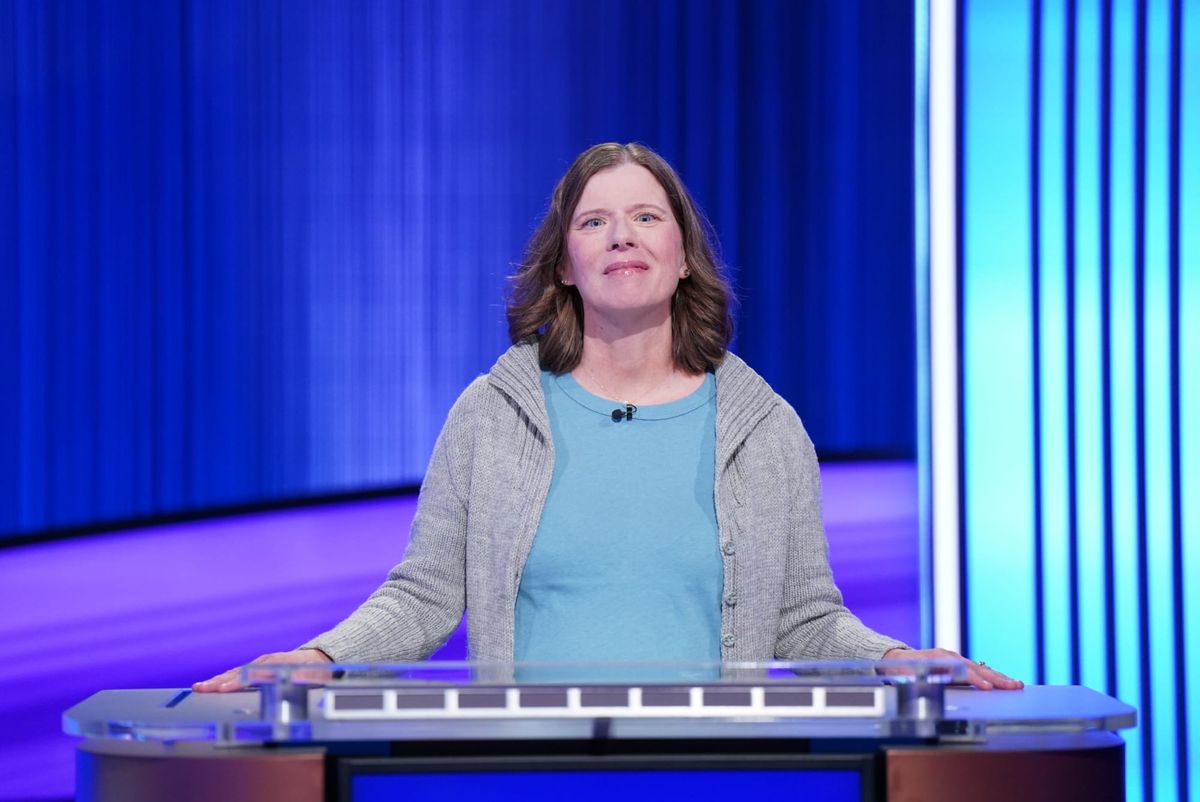
Week-to-Week is the increasingly sporadic newsletter of Episodic Medium, usually featuring analysis of the media industries from me as editor-in-chief. This time, however, our own Donna Bowman shares her experience as a contestant on Jeopardy! this week (you can watch it on Hulu or Peacock until Tuesday). To receive future newsletters and hear about the shows Donna and the rest of our contributors are reviewing weekly, become a free subscriber.
Like many high-achieving high schoolers, I was on the quiz bowl team. It wasn’t called quiz bowl for some reason—probably the quirks of how the local association got started—but the format was the same: toss-ups, bonus rounds, buzzers, pencil-and-paper math. Academic competitions were my only sport. I loved practicing, but actual matches against other schools stressed me out, the same way team sports always stressed me out. I always felt on the verge of letting everybody down, and I’d be so glad when the match was over.
In the six weeks or so between the day I got The Call telling me that I had been cast on Jeopardy!, and my designated tape day, I felt a lot of emotions: pride, excitement, determination, anticipation. But I also felt fear and anxiety. Even though I would compete as an individual, I still felt the stress of letting everybody down—everybody in this case meaning family, friends, students, colleagues, readers, members of my various on- and offline communities. It’s the biggest question rolling around as you await your moment in the spotlight: What if I fail so hard nobody will ever look at me the same way again?
There are other questions, mostly fear-based. What if I miss something obvious, or give a stupid answer? What if I faint on stage? What if my voice comes out funny? What if I’m so nervous I can’t function? As you await your trip to the Alex Trebek stage, these questions float up into your consciousness at odd moments. And you set little goals, ones that you hope will be achievable: I just want to buzz in and get one question right. I just want to not embarrass myself. I just want to make it to Final Jeopardy in positive territory. I just want to make a smart Final Jeopardy bet.
Strangely enough, that last goal is the one I focused on the most during that six week interim. It’s the one thing that seemed like I could control. I never really considered studying up on my weaker knowledge areas (geography, world history, and math are at the bottom of my LearnedLeague stats); drilling world capitals and European battles would fill my days with the pressure of being reminded of what I don’t know. I would go in with the knowledge I have, which is pretty extensive, and has gotten more so over the past decade of competitive online quizzing.
But the one aspect of the game that few people play along with at home is wagering strategy. If I made it to the end with money on my podium, I knew I would get to make a wager that would be either smart or dumb, either good or bad. A lesson I took from that time when we all got caught up in poker back in the 2000s is that whether a bet is good or bad doesn’t hinge on the outcome. You’re gonna make good bets that don’t pan out, and bad ones that do. You make the wager that gives you the best chance. And that’s something I could learn and practice.
So I did. I enlisted my eldest son, a math-minded game show fanatic, to help me first internalize some simple rules for wagering from first place (simple “cover” bet in most cases), second place (wager enough to be ahead of first place if they do the cover bet and get it wrong), and third place (the most complicated place, really depends on what the gaps are). Every night we would pause Jeopardy! right before the final clue, and I would grab pen and paper and work out wagers for each contestant. During those dozens of shows, I’d inevitably hit some special wagering scenarios—crush, two-thirds rule, Stratton’s dilemma—and get to see in a concrete instance how they affected the smart bet.
Thanks to that nightly practice, and the truly sweet patience of my son, a born teacher, in letting me make mistakes and helping me see them, my primary goal of my Jeopardy! appearance came into focus: Make a good wager on Final Jeopardy.
Game shows are a uniquely engaging type of television. A well-designed game show encourages the viewer to play along. Quiz shows are simple in this regard: Shout out the answer if you know it. (I always think of the Life in Hell strip where the rabbit playing along at home berates the hapless contestant on the TV: “Idiot, those prizes are rightfully mine.”) Playing along shrinks the psychological distance between you and the contestant on screen, who also is usually just an ordinary Joe. Game shows feel like a kind of television you could be on, no matter who you are.
But a quiz show also has a barrier: It’s about knowing things, being “smart.” Unless you’re either very self-confident or very arrogant, the thought of testing yourself against a quiz show comes with immediate doubts about whether you’re good enough. And it’s not just about being smart, but being able to perform in the moment; you can know all the answers, but if you freeze up or get the yips or have a brain glitch, you won’t be able to demonstrate your knowledge. All of that forms a heavy counterweight to a quiz show’s accessibility.
I’m sure there are thousands upon thousands of people who let those doubts take charge, and never take that first step to becoming a contestant. You’ve seen the ads for Jeopardy! perhaps, emphasizing all the different kinds of people who have made it to the show. Why not you? the ads ask. It’s a Ratatouille “anyone can cook” situation. No, not everyone will be successful—but anyone could be. There’s not just one profile for a quiz show contestant. It’s not just brainiacs or photographic memory havers or nerds who read Wikipedia for fun. Anyone who opens their eyes and ears and pays attention to a wide variety of stuff around them has the makings of a quiz show competitor. And so the first big moment is the moment you decide to take the Anytime Test. It divides your life into before and after, as so many big moments do: before, when I told myself I wasn’t ready, and after, when (for whatever reason) I decided I could just, you know, send it.
It’s easy to find behind-the-scenes accounts of being a Jeopardy! contestant, so I’m not going to give you a ticktock of my experience. (Happy to answer any questions in the comments, though.) Instead I want to highlight the most unexpected parts of the journey after that first big moment. In one way or another, they all reveal something about the structure of this venerable quiz show: how ordinary people are brought in, transformed into competitors, and leave as public(-ish) figures.
Joining a community. Starting with the live-on-Zoom audition, which is the last step before casting, you find yourself in company with others who have taken the plunge. You play a mock game, “buzzing” with a pen in an exaggerated motion that the moderators can see, in groups of three. The other hopefuls are your competitors; you go in wanting to beat them with your knowledge, but also to outshine them in the eyes of the casting crew. At a certain point in the process, though, there’s a mock “host chat” or contestant interview, where everyone talks a little bit about themselves. And a switch flips. Suddenly these people aren’t roadblocks in your way; they’re interesting people with whom you share a common goal. I particularly fell in love with Ron Clarke, who zoomed in from a corner room in his Alaska home overlooking some beautiful scenery (he lifted up his laptop to show us), and talked about how he moved up there in retirement to put his wildlife biology training to use as a whale watcher for Coast Guard operations. While I was waiting for my own episode to air, he turned up on the show and won a game. I was just as happy he made it onto the Alex Trebek stage as I was for myself. (He sure looked different without his cowboy hat.)
Jeopardy! alumni talk all the time about their tape day group chats, and yes, that’s a thing; as our episodes air this week, we’re sharing pictures of our watch parties, reminiscing about particular game moments and clues, and celebrating that we all had this experience, regardless of the outcome. A couple of the folks in the green room were already in LearnedLeague, but I recruited three more in that group chat, and they’re starting their rookie seasons now. The local alternate who was with us that day (and played his own game the following week) was a fellow Atlanta Braves fan, so we texted back and forth during the playoffs (sparing the feelings of “go birds” Curtis Parker). Then after your show airs, you get invites to the larger alumni groups on Facebook and Substack.
None of this is spontaneous; the contestant coordinators pass around a sheet so you can give your email and phone number to whoever in your group volunteers to start the group text, and the alumni substack is run by the show. (A question in the post-show survey asks what you’d want an alumni group to be like, so they might have plans to migrate it elsewhere or change the structure.) But what it reveals is something that people have been experiencing on the show for decades: the bond that forms in that green room between people who came in wary, looking for someone they hope they can beat, but leave as each other’s biggest fans. I got beat by Will Goree, who I pegged early in the day as very nervous and therefore maybe somebody I’d have an advantage over if I could keep my cool. But by the time we headed to the stage together, I just wanted so much for him to do well and be happy. He had become my special little guy, my blorbo, and I wanted him to have a good time much more than I wanted to win. (Maybe that’s why I missed that $2000 Neil Diamond clue? Makes you think.)
Rehearsal. I knew we were going to get a chance to stand on the stage and practice with the buzzer before being thrown into a live game. After all, the buzzer is one of just a few things you can’t really practice at home while you’re watching (two others being waiting for the host to call on you, and picking a category and dollar amount after getting a clue right). But I didn’t realize the many other functions the rehearsal serves.
For one thing, there’s so much of it! The contestants come to the stage in groups of three and play 15 clues, seeing them on the big board as you do in a real game, hearing them read by the stage manager, and timing buzzer presses to the lights that come on when the system is activated. And then you come back for a second round and do it again! The crew is doing lots of things while you are on stage, getting your cameras adjusted, fine-tuning the riser that equalizes heights, and recording you saying your name and hometown. But that second round is psychologically crucial. Now you know what it’s like to face that huge board, which fills your field of vision (I was almost completely unaware of the studio audience while playing). You get a chance to adjust your buzzer timing—a staff member watching your attempts in the first go-round tells you if you’re late or early. I was told to listen for the end of the clue rather than wait for the activation lights, since I was a hair late, and that adjustment paid off in my second rehearsal, boosting my confidence. Most of all, going up there twice just wiped away the jitters. Going up for a third time, for the real show? Now it was not nearly as big a deal.
And you rehearse other things too, like the anecdote you’re going to tell during the host chat, and writing on the podium tablets. Consider the latter as an example of how each little piece of preparation is integrated into the production process: You write your name for the practice sessions, which serves the dual purpose of allowing Jimmy the stage manager to call on you by name, and also getting you used to the light pen and the writing space. These efficiencies serve both the crew and the contestants. You are well prepared, well coached, well taken care of, and you can also see that this process advances not just your goals, but the overall goals of the show.
Being perceived. Everyone in my group left the studio on an incredible high. We’d had so much fun together, whether we won or lost. I’d have come back the next day to do it all over again, if they’d let me. But then you have a long time to wait, and to imagine what it will be like to have people see you play. Maybe they’d say mean things about you on the internet. Maybe they’d think you were weird. I was proud of my play, and back in the green room I’d glimpsed a little bit of how I looked on camera as the tape was being played back for some production reason, so I wasn’t worried that I was pulling weird faces or slouching or exhibiting some unconscious tic. But there is unavoidable anxiety around, as the kids say, being perceived. And over the weeks it slowly dawned on me how many people I know, from high school classmates to the baristas at my local coffee shop, would get jumpscared by having me show up on their television.
Turns out I underestimated the number of venues in which I became a “microcelebrity,” in the words of an online acquaintance. Church, school, Discord groups, fellow critics and religion scholars—those I anticipated. But my “host chat” anecdote unlocked another group I’d never even thought of: Splatoon people. I talked to Ken about playing competitive Splatoon and gave a shoutout to my team Death Crab for Cutie. My thought was “I’ll tell my teammates that they’re going to get mentioned on national syndicated television, they’ll get such a kick out of it.” I completely forgot (largely from having left Twitter years ago) that a whole subculture of comp Splatoon folks exists on social media. Suddenly people were passing me screenshots of Splatoon people yelling online WHO IS THIS LADY THEOLOGIAN WHO PLAYS COMP SPLATOON? and celebrating that their niche hobby escaped containment. (They've all been very, very nice.)
And that’s not the only group I forgot. On the r/Jeopardy subreddit discussion of my game, redditors were talking about reading my books and playing me in Learned League. Most charming of all, Will Goree sent a string of gobsmacked texts in our tape-day group chat: Did you write for the AV Club? I literally read it religiously for years. I’m completely starstruck. If you’ve been watching Will’s games (and his succession of sweaters), you know how my heart melted. That’s my blorbo.
After I got The Call, but before my tape day, I started playing in Connections Online Quiz League. This nifty organization hosts teams competing in bespoke games based on the venerable British quiz show Only Connect (it’s the same game with the serial numbers filed off, and the league does have the show’s blessing). I love playing along with old episodes of Only Connect on YouTube, but I had some trepidation signing up for a team competition. The old fear of letting down my side resurfaced, and with it the stress that fear produced in me.
But it turns out I’m on the other side of that barrier, too. Instead of worrying about failing my team, I take great comfort in the fact that it isn’t all on my shoulders. My team is there to back me up. If I don’t know something, maybe they do. And when I am the one who knows, like a Dungeon Crawler Carl puzzle we blitzed for 5 big points, I feel a kind of pride unique to team competition.
My public, stated goal in going on Jeopardy! was simply to have fun—to enjoy the moment and the experience. At times, thanks to all my other anxieties, that goal seemed unachievable. But thanks to the well-honed structures of the show, and the people who maintain and implement them, it turned out to be very easy. I had an absolute blast. And if you step past all the reasons you don’t think you belong on Jeopardy!, try out, and wind up on the Alex Trebek Stage, you will too. I guarantee it.
… Oh, and my wager on Final Jeopardy was mathematically correct. I made my son proud.
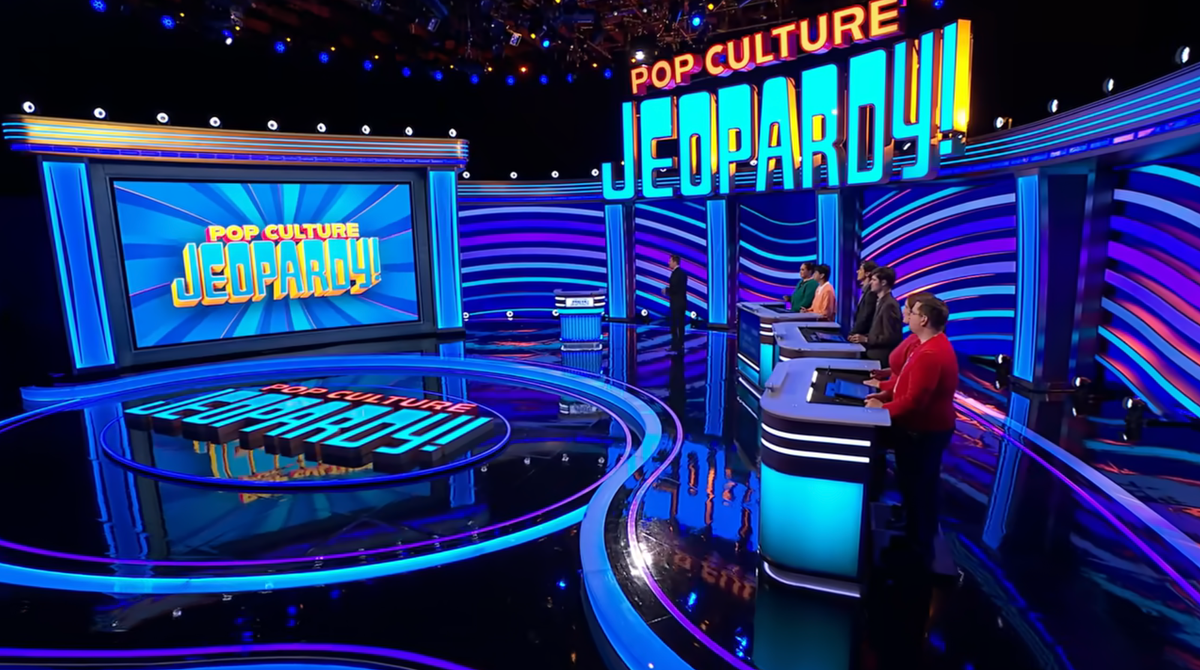
Donna is currently reviewing the fourth season of The Gilded Age here at Episodic Medium. Myles is currently waiting on another season of Pop Culture Jeopardy before taking this particular leap.
 Myles McNutt

Comments ()