Clue-to-Clue: The Definitional Dilemma of Pop Culture Jeopardy!
How the logics of pop culture trivia unavoidably challenge the logics of TV's greatest game show
Week-to-Week is the (mostly) weekly newsletter of Episodic Medium, in which I consider developments in television and the media industries at large. For future newsletters and to stay up-to-date on the shows we're reviewing weekly for our paid subscribers, become a subscriber—to receive all those reviews, we're currently running an Anniversary sale you can read more about here.
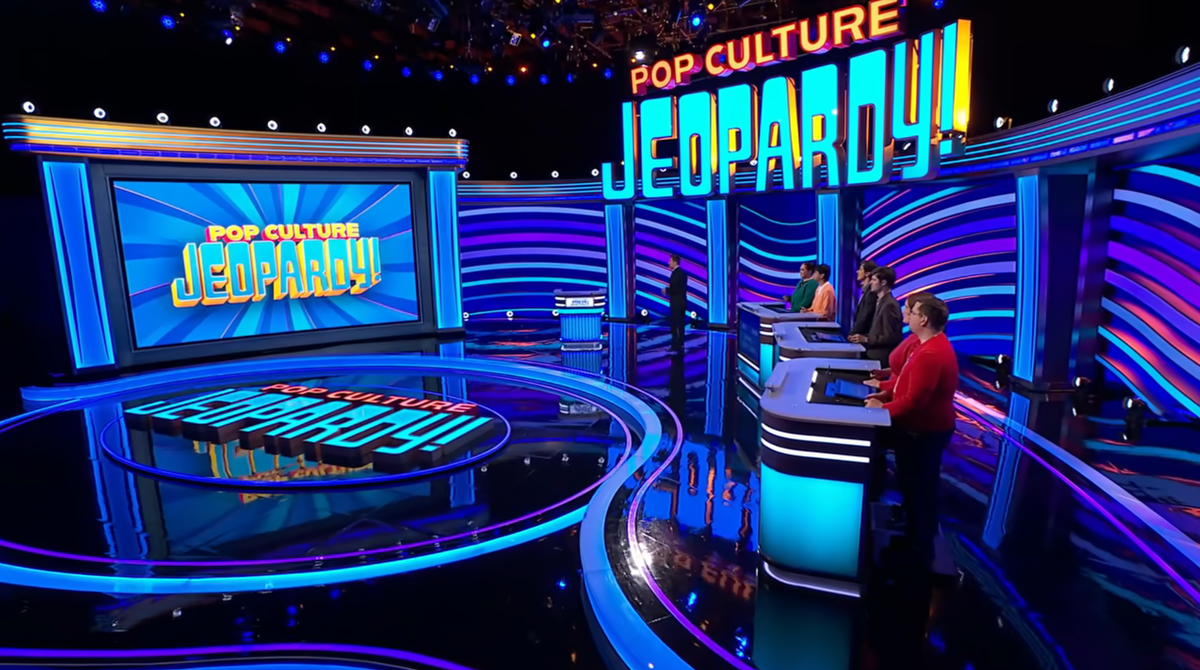
When Amazon announced it was ordering Pop Culture Jeopardy! back in 2024, the press release claims the format would “[combine] the academic rigor of Jeopardy! with the excitement and unpredictability of pop culture.”
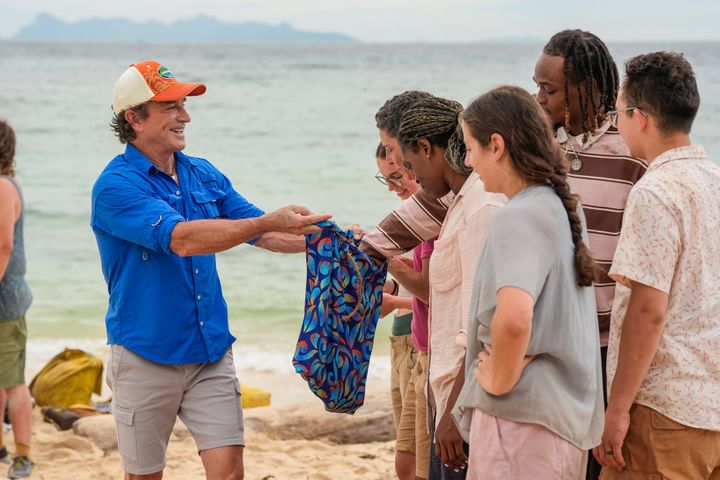
It’s a pretty straightforward description, and that’s all a press release needed. This isn’t the first Jeopardy! spin-off, after all, as Jeff Probst hosted four seasons of Rock & Roll Jeopardy! at the turn of the century, and Dan Patrick oversaw three seasons of Sports Jeopardy! on Sony’s Crackle streaming service and NBC Sports Network a decade ago. Those past examples have introduced viewers to the durability of the show’s format with new topics, drilling deeper into specific areas of knowledge as opposed to the main series’ privileging of breadth.
But once Pop Culture Jeopardy! debuted on Prime Video in late 2024, quickly becoming a must-watch in my household, it became clear that the “unpredictability” of pop culture extended to the writers’ conception of what exactly qualifies as subject areas for the spinoff. The Oxford English Dictionary defines pop culture—which it dates to 1959—as follows:
Culture based on popular taste rather than that of an educated elite, usually commercialized and made widely available by the mass media.
It’s a broad definition by design, arguing that any form of commercial media that is widely available could be considered popular culture, meaning a potential contestant on PCJ! would need to be able to cover a lot of territory across both different subjects (movies, music, TV, etc.) and different time periods.
In the first season of the show, I would argue this was partially achieved through the construction of the three-person teams. There were multiple teams representing different generations of knowledge, with the understanding that older contestants would be more likely than younger ones to answer questions about, say, music of the 1970s, while the latter would be more comfortable answering questions about online creators. The sheer scale of pop culture is too much to be knowable by a single person, and the three-person teams (and their ability to collaborate on Daily Doubles) functions in part as an accommodation to give them the best chance at competing.
However, perhaps not surprisingly, the finals of the first season of PCJ! ended up being three teams composed entirely of millennials. Without wanting to get too sociological in the absence of scientific evidence, Pop Culture Jeopardy! is a game designed for millennials. They’re a generation whose knowledge of older media was cultivated in a time before streaming, where broadcast radio, cable television, and video stores exposed them to media from before they were born at a higher rate; it was also knowledge they started gathering before smartphones made it unnecessary to know things off the top of your head. Speaking of smartphones, though, the millennials are nonetheless a generation who came of age during the advent of social media, meaning they’re more likely to have stayed “up-to-date” on trending culture in an algorithmic era than older generations. They’re also the demographic most likely to be invested in Jeopardy! as a cultural object (having grown up on broadcast TV) but still predominantly frequenting streaming services over broadcast, making them the core demo for a streaming spinoff.
As a result, while budget cuts likely explain the choice to shift to teams to two and a shorter episode order in the second season for Netflix (which concludes with the second episode of the finals today), the choice to predominantly cast millennial teams strikes me as a creative one. (I say predominantly because there are definitely a few that lean closer to upper Gen Z). It’s also a choice that fundamentally changes the conceptualization of “pop culture,” insofar as it sets a clearer metric: it is now the popular taste of a particular generation, occupying a particular moment in history. And for those of us who fit into this generation (basically 30-45 years old, plus or minus a couple), it’s obviously validating to watch a version of a trivia game show that caters so exclusively to the knowledge we’ve accumulated in our pop culture obsession.
However, it is also incredibly disorienting, because the vastness of pop culture makes clarity impossible in crucial ways that disrupt how the game of Jeopardy! functions.
In the first season, it became clear that the shift to pop culture topics had broken a crucial logic of Jeopardy!: the hierarchy within each category. It’s always been a subjective process, as the writers must decide which piece of information is harder to identify. Let’s create an example: if your category is Emmy Winners, which of the following clues is harder?
- Previously nominated for Guest Actress in a Comedy for appearances on Desperate Housewives and The Big Bang Theory, this actress finally won for Hacks in 2022.
- After winning Guest Actress in a Comedy Series in 2014, an Emmy rule change made this actress the first to win an Emmy for the same role in both Comedy and Drama in 2015.
If you’re reading this newsletter, there’s a chance that both of these clues were easy. But there’s a lot of moving parts here: there’s the hyper-specific trivia of Emmy winners, and then the broader markers of knowledge—the shows, the dates—embedded within each question. I would ultimately argue that the first clue is easier simply because there’s more information to go on. However, while I certainly hope people know who Laurie Metcalf is, there’s a good chance younger millennials may be less familiar with her than they would with Uzo Aduba, given Orange is the New Black’s pivotal role in the rise of Peak TV and streaming.
So I don’t know which one is harder, objectively, and I offer this example to make clear that I don’t think the PCJ! writers have an easy job—it’s not black and white. However, it underlines how the subjectivity of pop culture knowledge has created an unsolvable problem within the game’s design. Every episode this season, there was usually at least one category where the higher-value clues seemed wildly easier than lower-value ones in the same category. Sometimes, this happens for reasons I can identify. While I suggest the show has narrowed its approach to millennial knowledge above, we have to acknowledge that there are also different forms of pop culture depending on one’s upbringing. To PCJ!’s credit, while they are largely forced to reflect the unavoidable whiteness of pop culture as a construct, there are whole categories focused on music genres targeting Black or Latino populations, testing the majority white contestants’ knowledge outside “their” culture. However, when those same diversification efforts happen within separate categories, the effort runs into the unavoidable reality of culture intended for white audiences being more widely recognizable, as in this category on Cookouts featuring clues based on Poetic Justice and Varsity Blues.
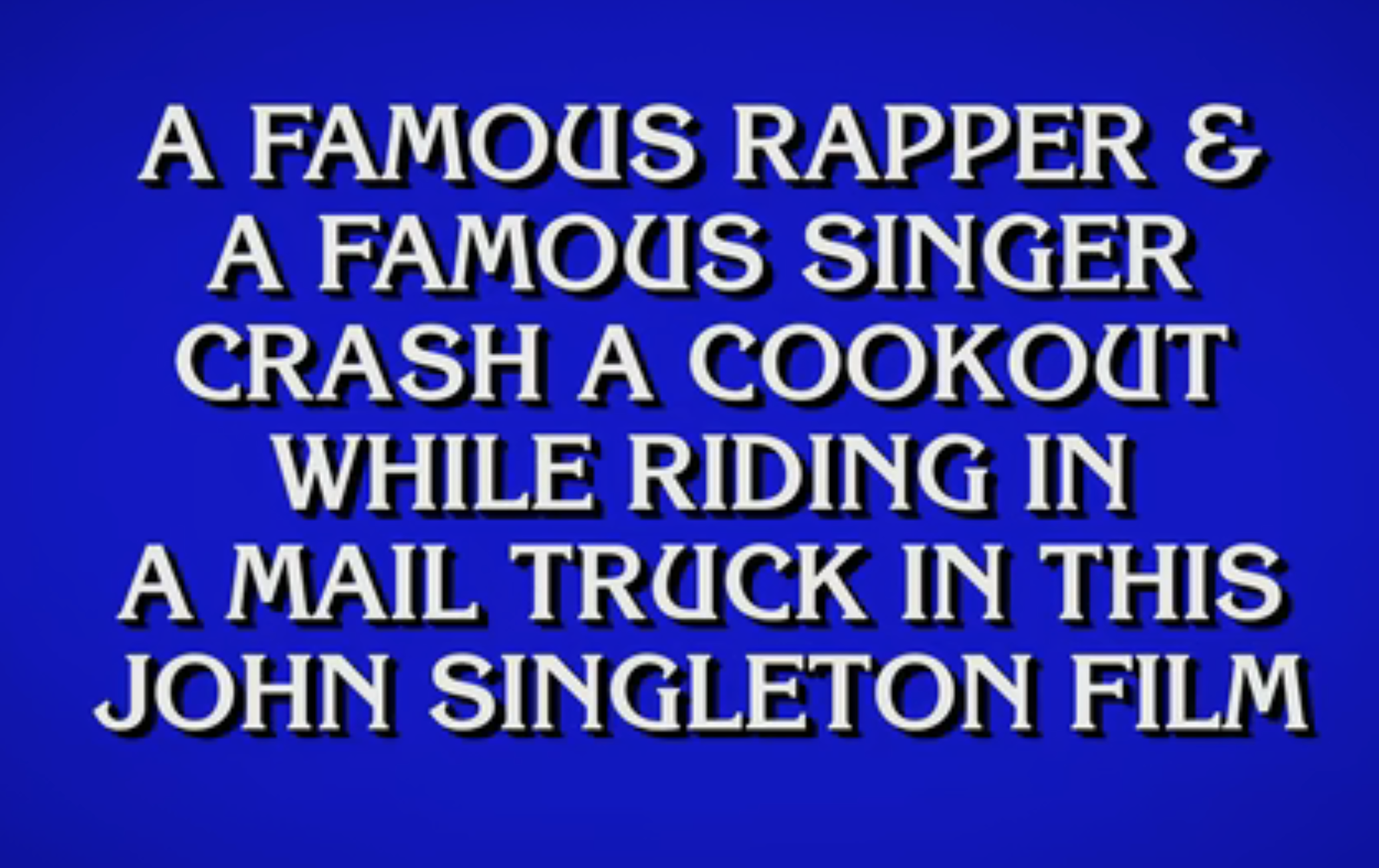
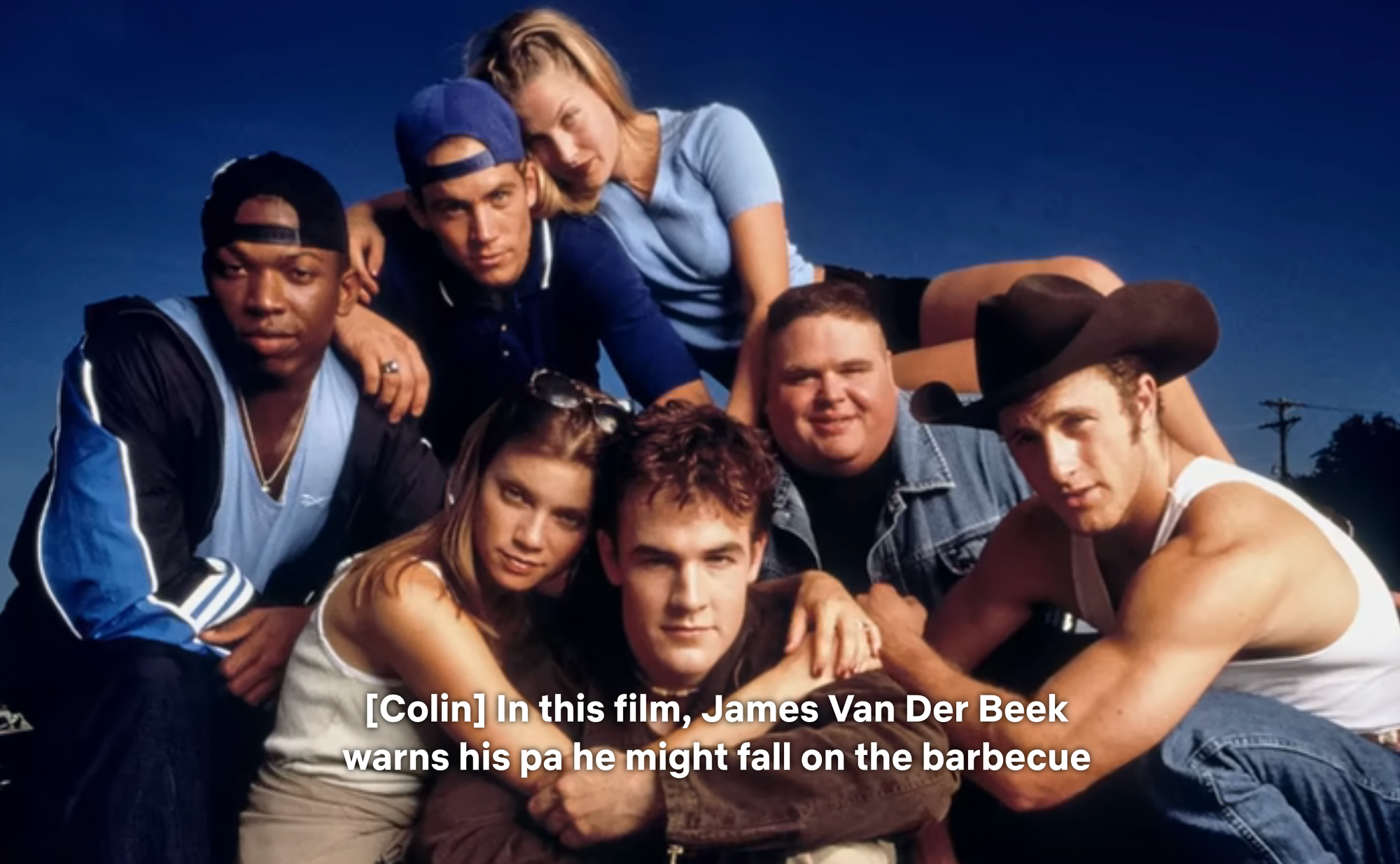
Given it stars Janet Jackson and Tupac, and earned two MTV Movie Awards and an Oscar nomination for Jackson’s #1 hit “Again,” 1993’s Poetic Justice is absolutely pop culture—it just got a Criterion edition! However, it was also a triple stumper as a 600-point clue, and I’ll admit I didn’t know the film existed—while I’m familiar with “Again,” because I listened to a lot of adult contemporary radio at 7, I didn’t even know it was from a movie. Wikipedia suggests it has a cult following within the Black film of the ‘90s, but it seems hard to suggest the film is more objectively recognizable than Varsity Blues, given that film’s higher box office performance, its more recent 1999 release, its parody in Not Another Teen Movie, its use as a name for the Felicity Huffman/Lori Loughlin college scandal, etc. Suggesting that the latter is more difficult to identify than the former just feels wrong.
Now, per my note on subjectivity and the whiteness of it all, I need to put a “to me” on the back of that, but the nature of pop culture is that there is an accepted corpus of what is “general knowledge” that theoretically governs each category’s hierarchy. It’s not a question of whether I know an answer to a question or not: I’ve got blind spots like anyone else. But once you set out to define pop culture, there has to be an objective measure of how likely an average person has been exposed to the context necessary to solve a certain clue. And so it creates dissonance when you get an example where—according to the hierarchy—it is less common for someone to know that Gotham is where Batman lives than the name of the 2025 Netflix miniseries Sirens in a category on Ferries.
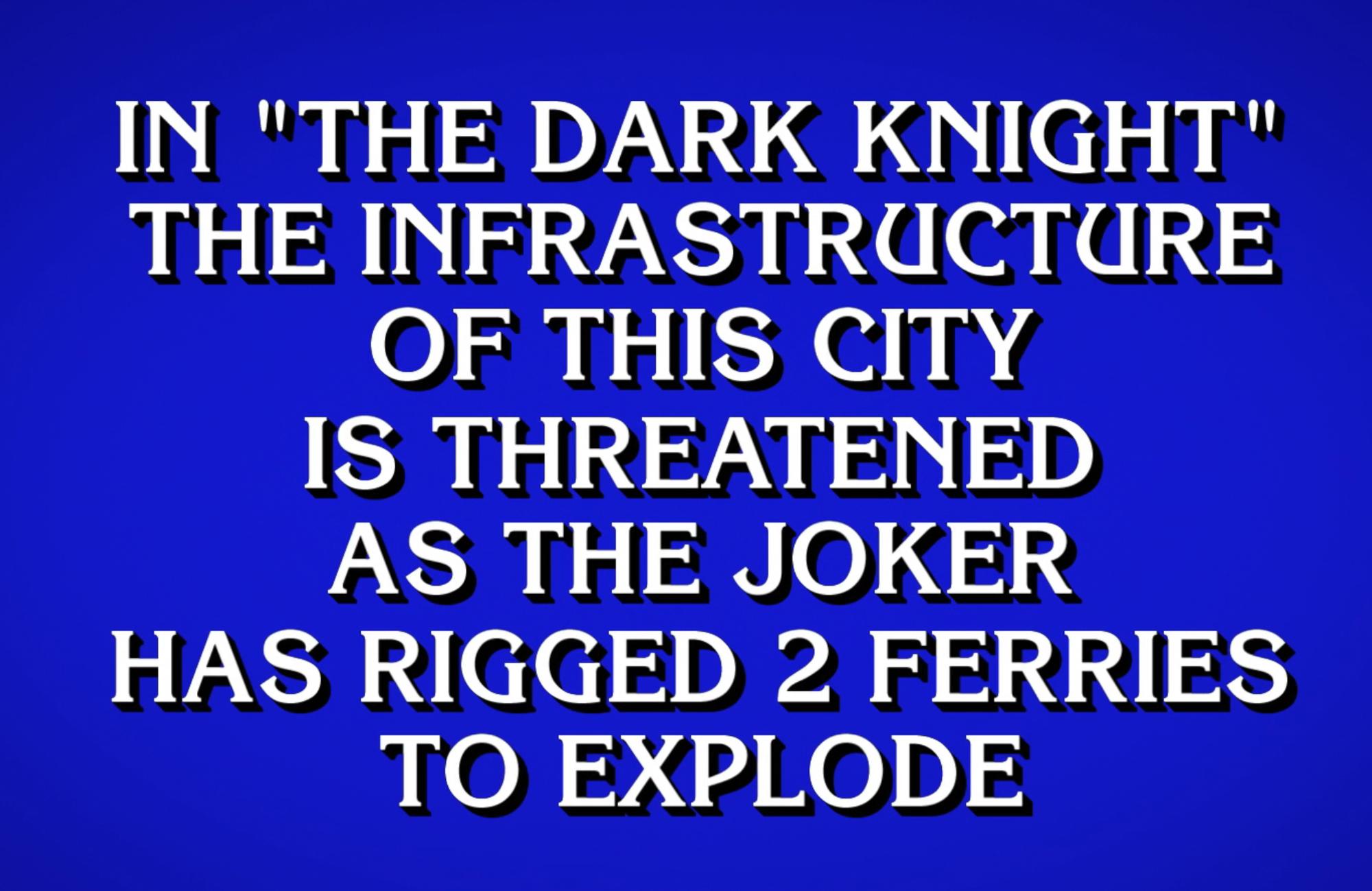
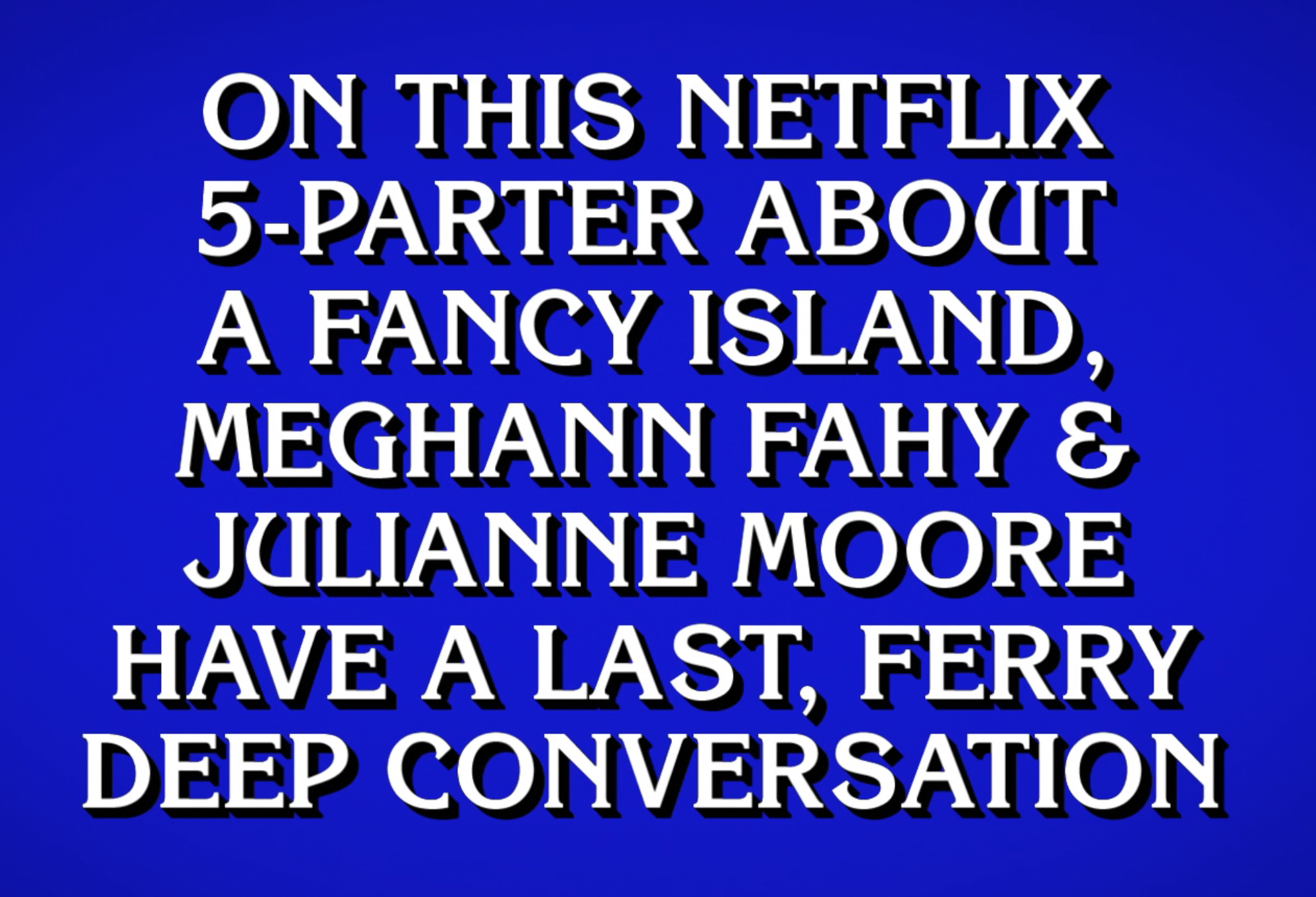
Sirens is a good trivia pull: Netflix releases dozens of TV shows every year, and remembering the names of them is hard, even the ones that manage a handful of Emmy nominations. But the fact Batman lives in Gotham is such a basic fact of pop culture that I don’t even need to explain why people know it, so how was it the 2000-point clue when Sirens (which one contestant did get correct, for the record) was only 1200? This is a cherry-picked example, but it happens often because you can sense the tension within the writing process as to how to treat different bodies of knowledge. In this case, I suppose the argument is that “knowing where something is set” is more specialized knowledge than “the name of a TV show,” but in the age of Peak TV I don’t know that the latter is as easy as they think it is and...the first answer is where Batman lives.
But while some of my objections come down to Comic Book Guy-style nitpicking (guilty as charged), I’d argue the broken hierarchy is also an unintended byproduct of the PCJ!'s effort to treat elements of “lowbrow” culture (internet memes, online creators, reality TV) with the same brush that normal Jeopardy! would treat history or literature. To be clear, as someone who teaches courses on pop culture, the idea of taking devalued objects more seriously is deeply important. There’s a democratizing idea in the idea that knowing Brittany Broski’s online talk show is called Royal Court can matter as much as knowing a famous author, and PCJ! has made this a crucial part of its identity; the show even paid this influencer to highlight all the Gen Z-coded categories to try to convince an extremely online demo that this version of Jeopardy! reflects the content in their algorithms.
However, how do you measure the cultural footprint of algorithmic media in a way that allows you to categorize that knowledge? Note that the OED definition of pop culture relies on media that is “widely available” through the “mass media,” but the latter concept no longer really applies once we leave the worlds of film and TV. There’s a pathway for someone to remain up-to-date in major film and television releases (even though the streaming era means many of those can also fall through the cracks), how does one stay up-to-date on TikTok when everyone’s feed is different? At what point does a meme break through to being pop culture instead of niche culture? Who gets to determine that? I’m not complaining about this because there were clues I failed to recognize, because of course there were: I can’t know everything. But where does one locate the threshold of “knowable” within an increasingly siloed media landscape, and how does that then intersect with the hierarchies of knowledge built into the game of Jeopardy!?
What has emerged this season in particular is an argument for memeification as the predominant metric for cultural relevance. This has manifested most prominently in categories focused on reality television, particularly the Real Housewives. Obviously, the Housewives franchise and Bravo reality shows are part of popular culture, I’m not going to argue otherwise. And I think it’s fair for PCJ! to expect us to be able to match a Housewife to their respective location, as an example. However, the show’s reality TV categories have relied on extremely narrow knowledge of the shows in question, pulling quotes that went viral but which feel like they require being an active fan of the shows in question to know with any degree of confidence, like in this 1200-point clue in a general "Only Fan Accounts" category.
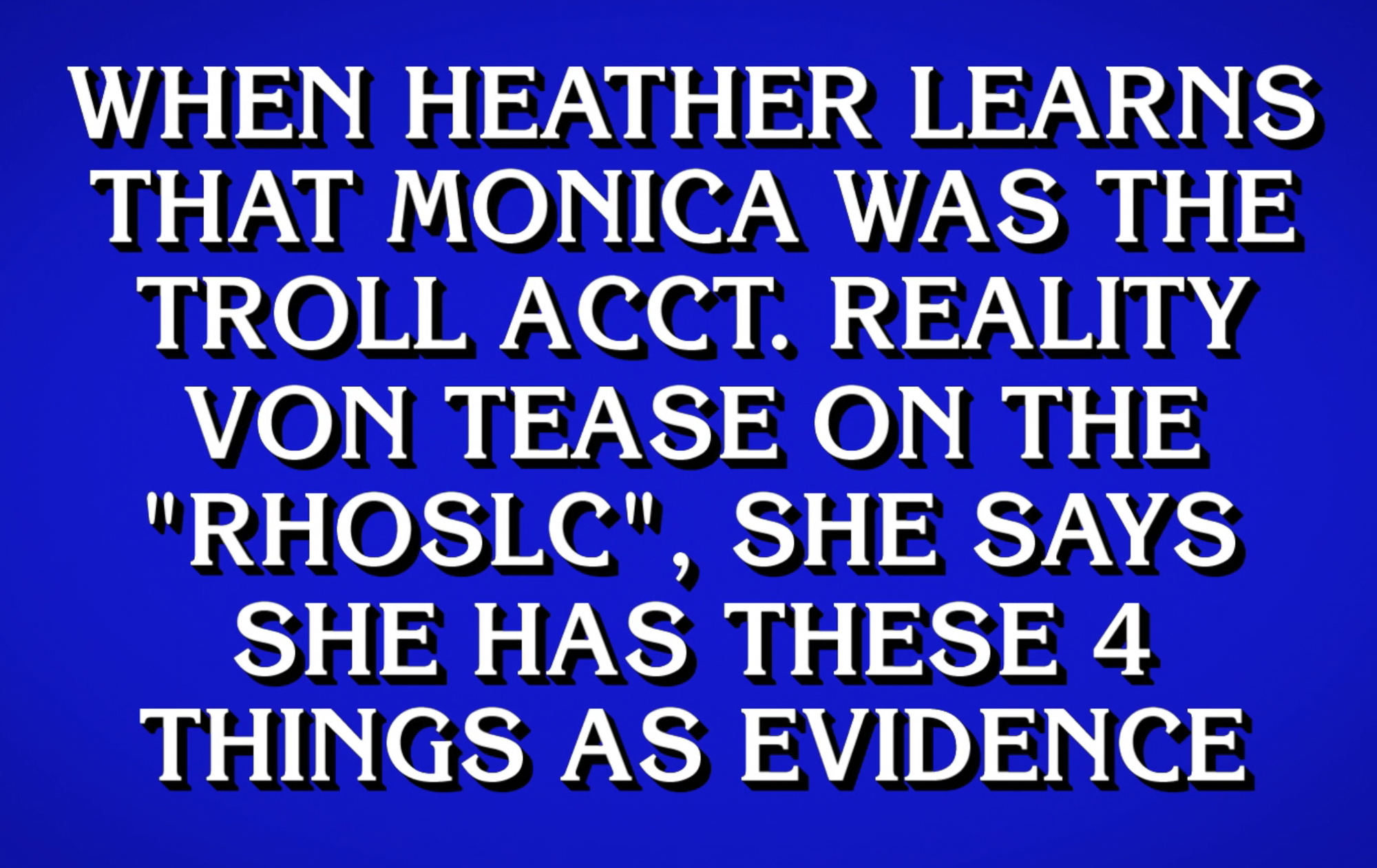
To be fair, though, this approach isn’t just being applied to reality TV shows (aka “low culture”), and my objection stands elsewhere. The show has also increasingly relied on dialogue-related answers for films and TV shows that existed before social media. Take, for example, this 2000-point clue about Gilmore Girls.
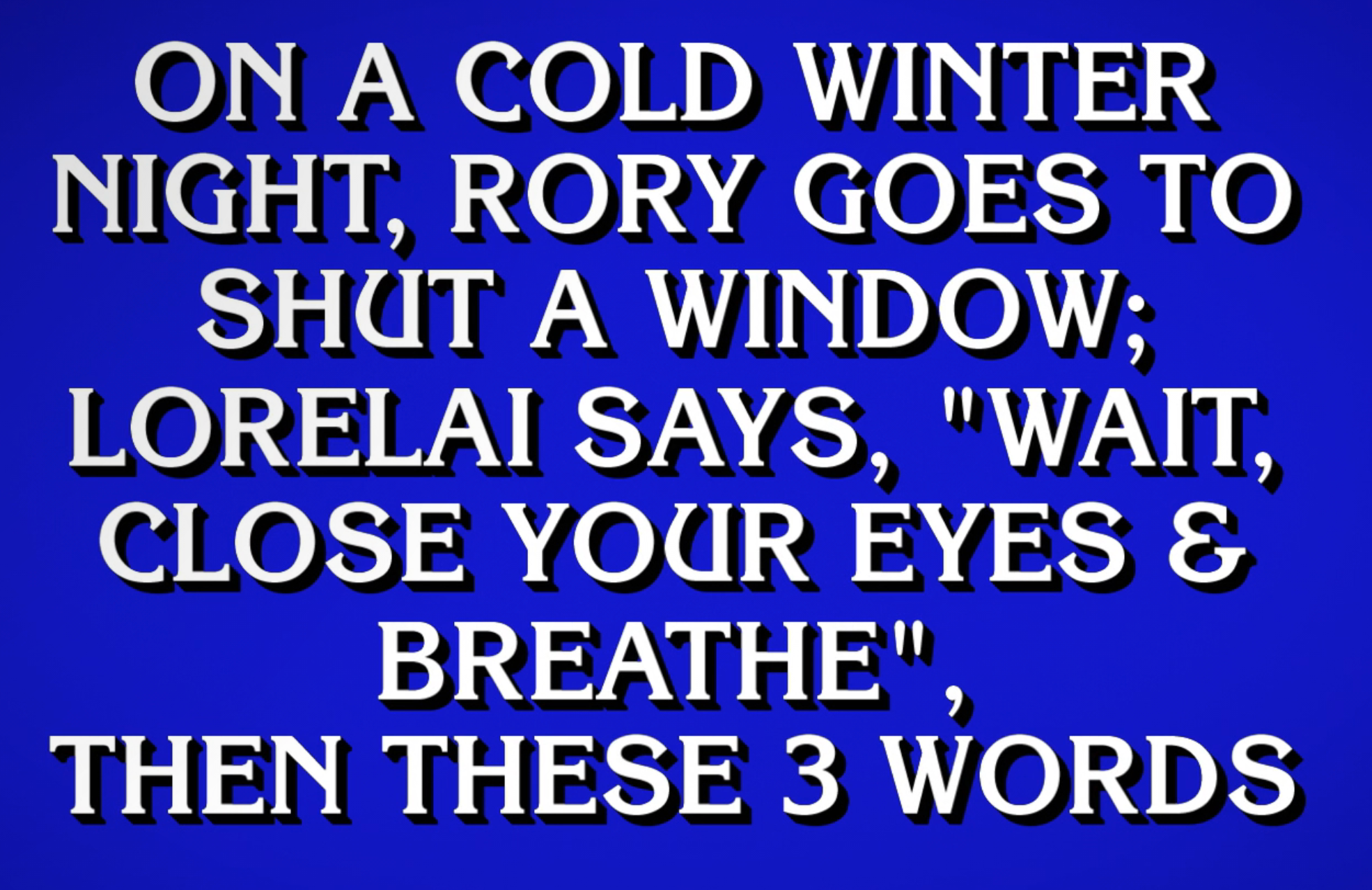
Yes, I’ve seen Gilmore Girls enough times that I knew this triple stumper, but it didn’t feel satisfying in the way that knowing an actual piece of trivia would be. Friend of the newsletter Mary pointed out a good connection to me in this case, as questions like this have the energy of a trivia night focused on a particular TV show. It’s a space where superfans perform their obsessions, and where they separate themselves from “casual fans” who don’t have the same encyclopedic knowledge. And while all trivia has an element of lording knowledge over others, the breadth implied by its title means that Pop Culture Jeopardy! is not meant to be about superfandom. It’s a test of which team (of millennials) has the best grasp of the sheer scale of the (mostly white) pop culture landscape, which is likely why last season’s entire category on Gilmore Girls was carefully written such that the answers were knowable without necessarily having seen the show.
The show’s turn toward superfandom has an additional effect of reinforcing which forms of fandom aren’t given the same privileges. PCJ! seemed to view podcasts—despite often serving very niche audiences—as load bearing to pop culture, but the same often didn’t seem true for theater and video games, which despite much longer histories have been underrepresented in this season’s categories (although in editing this newsletter there was a Broadway category in the first half of the final and a video game one in the second, so I was pleased to see this corrected a bit).
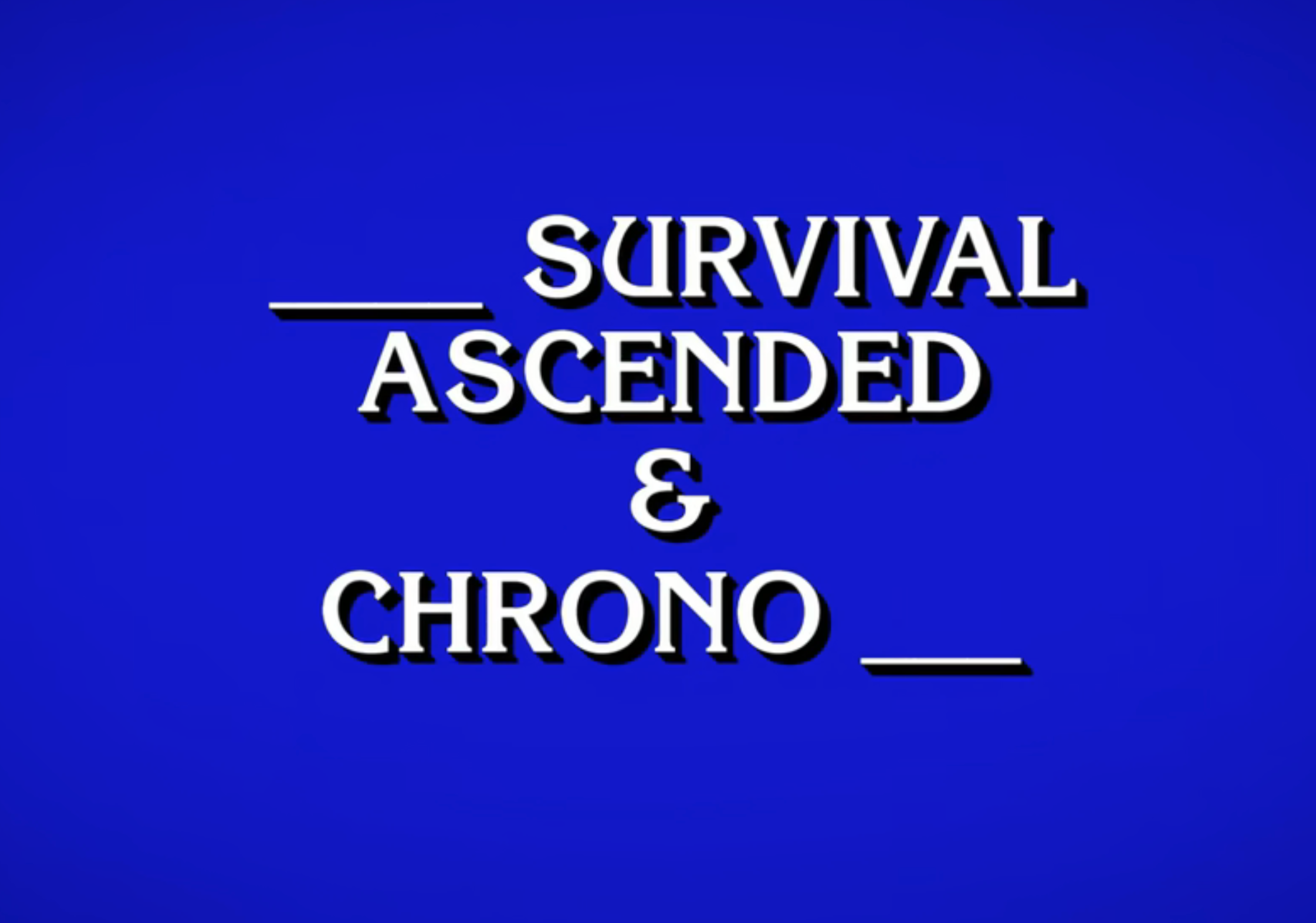
In both cases, the absence of “virality” might be the answer for why they weren't as common: while video games are wildly popular, for instance, the content within them rarely escapes beyond the players themselves unless in film or TV adaptations. (There was a category on those, where I’d have flipped Uncharted and Monster Hunter.) By comparison, podcasts have obviously proliferated on social platforms as video clips, but that returns us to the reality of algorithms that make it hard to gauge which ones are truly part of the pop culture lexicon. And to be honest, when we finally got a category on video games (asking players to identify common words in two game titles) after I spent a few days complaining about their absence, I found it to be way too hard for an average person despite knowing the answers, returning us to the inherent challenge of balancing questions for corners of pop culture that exist outside of movies/TV (although there will always be challenges there too).
I hold Pop Culture Jeopardy! to this level of scrutiny because I desperately want there to be a trivia game show dedicated to the knowledge that consumes my life and the results are often thrilling despite my objections. However, most importantly, I hold the show to a high standard because it is taking on a truly impossible but also important task. It is very rare to see something this high-profile trying to define “pop culture.” It is so much easier to treat it as an amorphous, wildly subjective construct, without need for definition beyond a wave of a hand. The idea of ten people—the show’s credited writers—sitting in a room and determining what does or does not qualify as pop culture is beyond daunting, and the frustration that emerges when their work enters the world of pop culture enthusiasts like myself (whose literal job it is to take pop culture seriously) is an inevitable byproduct of the challenge they have been given to create something for those very people.
It’s also a challenge amplified by the cultural legacy of Jeopardy! itself, and the sanctity with which people treat the game and its design. There might be teams, and the Jeopardy! community itself might at times treat the show like an unwanted stepchild, but this is still a quiz show with standards, and creative choices that ring false are going to resonate more significantly as a result. While sometimes I would argue that a more rigorous enforcement of cultural resonance could clear up some of my quibbles with individual categories, my conclusion is that the very task of defining pop culture breaks the logical hierarchies that Jeopardy! has historically been built on.
There is no way to create a game board that doesn’t reveal the underlying truth that no singular definition of pop culture can be attained in our present moment, and Pop Culture Jeopardy! ultimately exists as the messy, often-thrilling monument to that reality.
Episodic Observations
- While the shift from teams of three to teams of two between seasons no doubt created some tough decisions behind-the-scenes, I can’t argue with the result from a creative perspective: I thought the teams of three were ungainly (and sometimes not well-balanced), the Triple Play never entirely worked, and if this model is perceived as more sustainable long term for Netflix and we get more seasons for me to enjoy/be mad at, that’s fine by me.
- As for the shift to a daily game structure rather than a whole tournament, the jury’s still out on that one. Having some returning champions built narrative—mainly finalist One Baddie After Another emerging as a villain due to a dominant 5-game streak—and the shorter timeframe between the early games and the final rounds meant that we remembered the teams in question better (although a smaller tournament would achieve the same goal). I liked seeing a wider range of players last season, though, and getting more “game” as a home viewer is always going to be preferable. That said, having it as a daily weekday release was a great improvement, and something that really captures the show’s ritual function.
- If they weren’t already the villains by nature of their runaway victories robbing us of close finishes, watching One Baddie roll over their semi in a boring fashion and then following it up with two nail-biter semi-finals really underlined it. The tie-game in the second semi-final was easily the best moment PCJ! has created, which is why it was unfortunate that the triple stumper Final felt too much like guesswork—it seemed like “airline stationery” was trying to situate the players in time, but it was a bit too vague. A specific year or maybe a nationality could have helped make this feel “knowable.”
- Special shoutout to friends of the newsletter Katey Rich and Chris Feil, Two Of Your French Girls, who didn’t have the best day on the board in Game 10 but represented themselves well and got in a shoutout to Joe Reid's Zoom trivia group that I’m honored to be affiliated with. That group is also how I learned that at least one of last season’s PCJ! winners was a subscriber to this newsletter, so if any of this season’s contestants are out there, please let me know.
- The second part of the finals has now aired, and while I was able to watch it this morning before publishing this, I don't want to spoil it by discussing it—while daily episode drops are great, the 3am releases make it hard to have a collective conversation (although I suppose Jeopardy! airs in different timeslots nationally too). We'll discuss once everyone has a chance to catch up.
- For the record, I did ask to see if anyone from the show wanted to talk to me about this, and was told that no one was available. I just want to talk, I promise!

Comments ()