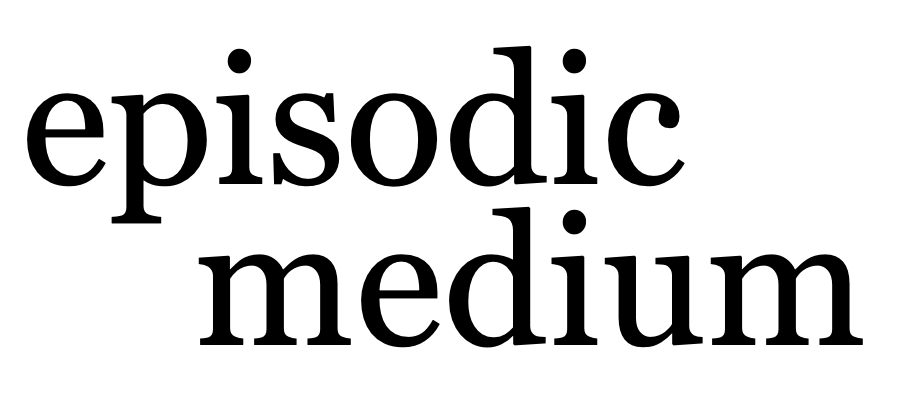
Category-to-Category: Impact, Culture, and the case for Heated Rivalry as TCA's Program of the Year
A historical look at the competing logics governing the organization's biggest prize
Welcome to Week-to-Week, the weekly-ish newsletter of Episodic Medium. To receive future newsletter breaking down developments related to television and media culture at large, become a free subscriber.
Back in December, I wrote a newsletter reflecting on the liminal place of Heated Rivalry within the space of media industry awards. In light of its ineligibility at the Emmys and other major U.S.-based awards due to its Canadianness, I identified two where it would be allowed to compete: the Peabody Awards, which honors “excellence in storytelling” regardless of national origin, and the Television Critics Association Awards, which have no specific rules regarding funding sources.
 Myles McNutt
Last month, on the same night the show broke records at the Canadian Screen Awards, star Francois Arnaud helped accept the show’s Peabody Award, and this morning Heated Rivalry tied for the most nominations at this year’s TCA Awards. This includes nominations for individual achievement in a drama series for both Connor Storrie and Hudson Williams, New Series, Drama Series, and the theoretically biggest prize: Program of the Year.
As my colleagues in the TCA know well, I have a lot of opinions about the meaning of specific awards: I spent the nomination period this year defending the boundaries of limited series and disqualifying Oscar-nominated films from competing again as television, and I’d do it again. But this year offers us an opportunity to reflect as an organization on the specifics of Program of the Year, a category that frankly has struggled to articulate its specific purpose to voters and observers alike.
And yes, a category that I believe Heated Rivalry should win.
Program of the Year, as designated by the TCA, refers to a show that “had a major impact on the medium and culture.” In practice, however, the category appears on the surface to just pit the most well-regarded drama, comedy, and limited series against one another. This year’s nominees are a slight aberration from this, with no limited series reflected and the end of The Late Show with Stephen Colbert giving late night talk its first nomination in the category since The Daily Show during the Bush era. (You can find our episodic coverage of each show by clicking on the links and becoming a paid subscriber.)
- “The Comeback” — HBO Max
- “Hacks” — HBO Max
- “Heated Rivalry” — Crave/HBO Max
- “Industry” — HBO Max
- “The Late Show with Stephen Colbert” — CBS
- “The Pitt” — HBO Max (2025 Winner)
- “Pluribus” — Apple TV
- “Shrinking” — Apple TV
- “Widow’s Bay” — Apple TV
The tension in the category is that while it may be written to account for "impact," in practice it's often just considered "what was the best TV I watched this year across genre/form?" While the idea of a different standard for this category makes sense, it’s inherently difficult—maybe impossible?—to get people voting on awards to change their criteria across categories. You just asked them to decide whether Hacks or The Comeback was the better example of an industry-skewing comedy, but now you want them to switch their focus to “impact,” an inherently vague term? Maybe someone felt Pluribus was the best drama series, but would they also argue that it had the most effect on television as a medium? Should they need to do that to want to honor it in the year's biggest category?
Looking at past years in the category is kind of cheating, since in many ways the Program of the Year criteria is much easier to evaluate in retrospect. However, let’s look at a few specific years to help me articulate how we can reasonably evaluate this in light of this year’s nominees.
2006-2007
- Winner: Heroes
- Nominees: American Idol, Friday Night Lights, Planet Earth, When the Levees Broke, The Wire
Heroes is one of two winners of Program of the Year that aged particularly poorly, but I see how it happened. It was a big and buzzy show, and this set of nominees doesn’t really offer a comparable success story: Friday Night Lights and The Wire were niche shows, American Idol was hardly novel (and this was for the Taylor Hicks season?!), and I don’t know if a documentary series is ever going to compete in a category like this even if “impact on culture” is easier to quantify there. In retrospect, you could argue that The Wire and Friday Night Lights both had a larger cultural impact, but in the moment? Heroes was a pre-MCU Superhero TV blockbuster and a pop culture touchstone.
2009-2010
- Winner: Glee
- Nominees: Breaking Bad, Modern Family, Friday Night Lights, Lost
Glee is the other winner that stands out as suspect in retrospect, if we think of this purely from a quality perspective. But Glee was a legitimate phenomenon, given its influence over music and pop culture, and you can’t argue that the first season wasn’t exploring social issues in a significant way. Looking back, Lost never won this award, losing out to Desperate Housewives and Grey’s Anatomy at its peak, and the idea of Glee beating it for anything feels wrong regardless of how one feels about the final season. But presented with those shows at that time, Glee’s win makes sense, and even if every other show ended up having a bigger impact on the medium only one of them still haunts my Spotify algorithm to this very day. Makes you think.
2013-14
- Winner: Breaking Bad
- Nominees: Game of Thrones, The Good Wife, Orange is the New Black, True Detective
My biggest takeaway from reviewing past winners is that, ultimately, I don’t think a show should win Program of the Year two years in a row. The idea of winning twice—for, say, a first and final season—makes sense, or if a show dramatically reinvents itself. But if an award is for “impact on the medium and culture,” the idea that a show makes enough of a distinct impact in back-to-back years doesn’t make sense to me. This is especially egregious given that this is awarding the same season, technically, as it’s for the second half of season 5. In light of this, I’d argue that Orange is the New Black and True Detective were both making a more distinct contribution to the medium and culture in this moment, even if the impact of Netflix was still in its nascency.
2021-22
- Winner: Abbott Elementary
- Nominees: Better Call Saul, Hacks, Severance, Squid Game, Succession, The White Lotus, Yellowjackets
We’ve entered the maximalist stage in terms of nominations, which does create more data points for voters to sift through. Fun fact: Abbott Elementary was the first broadcast sitcom to ever win this award, and I’d be curious what the voting logics were. In retrospect, it feels hard to ignore the sheer scale of Squid Game’s impact on global television (season three is one of the nominees in this year’s inaugural International TV category), but it’s possible that Abbott’s ability to excite critics despite its origins was a bigger deal than it may seem now that it’s settled into very familiar sitcom patterns.
2024-25
- Winner: The Pitt
- Nominees: Adolescence, Andor, Hacks, The Rehearsal, Severance, The Studio, The White Lotus
This is the first example I personally voted for: while I did select The Pitt as Best Drama Series, my vote for Program of the Year went to Andor. For its ability to merge a massive I.P. with a vital political statement, the show’s second season was operating on a different level than any other show on TV, and this is exactly the category where that should be awarded and reflected. Does this mean there isn’t an argument to be made for The Pitt? No—its impact on the medium of TV was immediate, as the merger of broadcast and streaming logics (15 episodes weekly? In this climate?) became a new template streamers rushed to adapt to new genres. But for me personally, the cultural aspirations of Andor were just more substantial and timely, saying more about our present moment in ways that earned my vote.
So if we return to this year’s nominees with this history lesson in mind, which shows have a meaningful argument for a distinct impact on the medium of television and/or culture in this particular year?
Hacks, Pluribus, Widow’s Bay, Shrinking, Industry
I have nothing against any of these shows, and I might well vote for some of them in their genre-based categories (see below)! But while we could talk about innovation in genre or originality, these feel like “very good TV shows” and not cultural touchstones. As a voter, a Program of the Year winner needs to have a good argument for both the medium and the culture, and the latter doesn’t track here for me.
The Pitt
As established, winning twice in-a-row requires an entirely new contribution to either the medium or culture, and the second season just played the same hits. I already know from past experience that there is no appetite for my desire for hard rules of categorization, but I’d dictate past winners were no longer eligible if I was running a dictatorship.
The Comeback
There’s an argument that not enough people watched this second revival of The Comeback to justify real cultural impact, but here’s my case. First, you have the very novelty of a TV project spread over twenty years, its lengthy hiatuses and eventual returns speaking to its place as a marker for different eras. Its cultural commentary on A.I. also felt more meaningful than anything Hacks managed in its episodic story on the same subject, thorny and complicated instead of moralizing (however justified that moralizing might be). It won’t have anywhere close to enough momentum to win this category, but it’s got a better argument than most of the other options for me.
The Late Show with Stephen Colbert
We know from last year’s Emmys that there is a clear desire within the industry to honor Stephen Colbert in light of Paramount’s politically-adjacent cancellation of The Late Show, and the same is obviously true of critics. They have other outlets for this, though—the show is nominated for Sketch/Variety Series (which it will almost certainly win), and its conclusion could also qualify Colbert for the Heritage Award (which The Late Show with David Letterman won upon his exit back in 2015). There’s definitely an argument to be made that Colbert’s extended goodbye and its commentary on his employer contributed to both the medium and culture in meaningful ways, but for me this feels more backwards-glancing than forward-looking, and thus more well-suited to Heritage.
Heated Rivalry
And then we come back to Heated Rivalry. I would argue you would have to go back to Glee to find a clearer example of cultural impact than this one, and it’s even more significant given its origin. When I spoke to the show’s producers in October, the Canadian series didn’t even have U.S. distribution; less than three months later, there were themed dance parties touring the country. While you could point to the massive (and frankly ungainly) online fandom as evidence, the biggest point in its corner is the way the NHL and the systems around it were forced to reckon with a story born out of its homophobic culture. It forced comment from the league’s commissioner, caused a massive scandal within the male hockey podcast community, and spawned a conversation in a way few shows ever manage—just look at this Page Six video featuring men who went viral at a D.C. lookalike contest paired with the stars of the Heated Rivalry parody musical Off-Broadway, and tell me that any other show this year had an impact like this one did.
The fact it did so while simultaneously pushing back on the marginalization of romance broadly and queer romance specifically means that, based on the criteria provided, Heated Rivalry gets my vote for Program of the Year.
Will members vote this way? There’s no guarantee. The award has clearly been used as “the best of the best” for a long time, and as long as this is true, the same marginalization Heated Rivalry fought against could limit its ability to compete in major categories. While fans of the show are certainly among TCA’s members, and its proponents are (not unlike fans at large) vocal about it, the silent majority may lean back on more traditional criteria. After wondering aloud how the show would have fared if it were Emmy eligible, this is the one chance to see how its navigation of stigma impacts its ability to compete against TV at large, and the jury is still out.
Anyway, with that in mind, let’s break down the rest of the categories, and I’m curious how others feel about this year’s nominations in the comments.
Outstanding Achievement in Comedy
“Abbott Elementary” — ABC (2022 Winner)
“The Comeback” — HBO Max
“The Fall and Rise of Reggie Dinkins” — NBC
“Hacks” — HBO Max (2024 Winner)
“The Lowdown” — FX
“Margo’s Got Money Troubles” — Apple TV
“Shrinking” — Apple TV
“Widow’s Bay” — Apple TV
I’m honestly on the fence between The Comeback and Widow’s Bay on this one.
Outstanding Achievement in Drama
“The Gilded Age” — HBO Max
“Heated Rivalry” — Crave/HBO Max
“Industry” — HBO Max
“A Knight of the Seven Kingdoms” — HBO Max
“Paradise” — Hulu
“The Pitt” — HBO Max (2025 Winner)
“Pluribus” — Apple TV
“Task” — HBO Max
I’ll weigh Pluribus (in an effort to ensure it’s recognized) with Heated Rivalry (in case it isn’t recognized elsewhere) here.
Outstanding Achievement in Movies, Miniseries or Specials
“All Her Fault” — Peacock
“The Beast in Me” — Netflix
“Beef” — Netflix (2023 Winner)
“Death by Lightning”— Netflix
“DTF St. Louis” — HBO Max
“Half Man” — HBO Max
“Lord of the Flies”— Netflix
“Love Story: John F. Kennedy Jr. & Carolyn Bessette” — FX
I only finished two of these, and I don’t really have strong feelings about either? I’ll flip a coin, or maybe watch a third.
Outstanding New Program
“Alien: Earth” — FX
“The Fall and Rise of Reggie Dinkins” — NBC
“Heated Rivalry” — Crave/HBO Max
“A Knight of the Seven Kingdoms” — HBO Max
“The Lowdown” — FX
“Margo’s Got Money Troubles” — Apple TV
“Pluribus” — Apple TV
“Widow’s Bay” — Apple TV
If I don’t go with Widow’s Bay in Comedy, I’ll vote for it here.
Individual Achievement in Drama
Marisa Abela, “Industry” — HBO Max
Sterling K. Brown, “Paradise” — Hulu
David Harbour, “DTF St. Louis” — HBO Max
Katherine LaNasa, “The Pitt” — HBO Max
Ken Leung, “Industry” — HBO Max
Myha’la, “Industry” — HBO Max
Rhea Seehorn, “Pluribus” — Apple TV
Connor Storrie, “Heated Rivalry” — Crave/HBO Max
Hudson Williams, “Heated Rivalry” — Crave/HBO Max
Noah Wyle, “The Pitt” — HBO Max (2025 Winner)
The Hollanov voting bloc went into the nominations knowing a fundamental truth: they can try to get both boys nominated, but they need to pick one if they want to win. Storrie is the best path to victory.
Individual Achievement in Comedy
Hannah Einbinder, “Hacks” — HBO Max
Elle Fanning, “Margo’s Got Money Troubles” — Apple TV
Harrison Ford, “Shrinking” — Apple TV
Lisa Kudrow, “The Comeback” — HBO Max
Kate O’Flynn, “Widow’s Bay” — Apple TV
Matthew Rhys, “Widow’s Bay” — Apple TV
Jean Smart, “Hacks” — HBO Max (2021, 2024 Winner)
Tim Robinson, “The Chair Company” — HBO Max
Presented with these options, I’m likely going to pick the person wildly unlikely to be recognized elsewhere, although I sort of hope this nomination helps Kate O’Flynn’s Emmy chances as well.
Outstanding Achievement in News and Information
“60 Minutes” — CBS (2012 Winner)
“The American Revolution” — PBS
“CBS This Morning” — CBS
“Disneyland Handcrafted” — Disney+
“Frontline” — PBS (Eight-time Winner in Category)
“Have I Got News For You” — CNN
“Marty, Life Is Short” — Netflix
“Mr. Scorsese” — Apple TV
This is 100% going to end up going to 60 Minutes for the same reason the next award is going to Colbert.
Outstanding Achievement in Variety, Talk or Sketch
“The Daily Show” — Comedy Central
“Jimmy Kimmel Live!” — ABC
“Last Week Tonight with John Oliver” — HBO Max (2018, 2019, 2021 Winner)
“Late Night with Seth Meyers” — NBC
“The Late Show with Stephen Colbert” — CBS
“The Muppet Show” — Disney+
“Saturday Night Live” — NBC
See above, although I need to vote for The Muppets on principle, sorry.
Outstanding Achievement in Reality
“Couples Therapy” — Showtime/Paramount+ (2021 Winner)
“Finding Mr. Christmas” — Hallmark
“The Great British Baking Show” — Netflix
“Love on the Spectrum” — Netflix
“RuPaul’s Drag Race” — MTV (2014 Winner)
“Survivor” — CBS
“Top Chef” — Bravo
“The Traitors” — Peacock (2024, 2025 Winner)
Drag Race hasn’t won this award since 2014?! That’s so long ago! Anyway, anything but Traitors again here, that’s so boring! Survivor should have won this at some point, but I’m not sure I can stomach voting if it means awarding Probst for some of his choices in 50, y’know?
Outstanding Achievement in Family Programming
“Disney Twisted-Wonderland: The Animation” — Disney+
“Electric Bloom” — Disney+/Disney Channel
“Percy Jackson and the Olympians” — Disney+/Hulu
“Phineas and Ferb” — Disney+/Disney Channel
“Stranger Things: Tales from ‘85” — Netflix
“Vampirina: Teenage Vampire” — Disney+/Disney Channel
“Wizards Beyond Waverly Place” — Disney+/Disney Channel
“WondLa” — Apple TV
I’ll vote for Phineas and Ferb because I like Dan Povenmire’s TikToks and because he was coincidentally at the hotel for what will be the last TCA Awards show and I freaked him out by acknowledging him by name.
Outstanding Achievement in Children's Programming
“Carl the Collector” — PBS KIDS
“The First Snow of Fraggle Rock” — Apple TV
“Mickey Mouse Clubhouse+” — Disney+/Disney Jr.
“Phoebe & Jay” — PBS KIDS
“Snoopy Presents: A Summer Musical” — Apple TV
“Sofia the First: Royal Magic” — Disney+/Disney Jr.
“Weather Hunters” — PBS KIDS
“The Wonderfully Weird World of Gumball” — Hulu
Did I watch this Fraggle Rock special? No. Will I vote for it anyway on principle? Yes. I don’t apologize for it.
Outstanding Achievement in Animation – New Category
“Bob’s Burgers” — Fox
“Haunted Hotel” — Netflix
“Invincible” — Prime Video
“King of the Hill” — Hulu
“Long Story Short” — Netflix
“The Simpsons” — Fox
“South Park” — Comedy Central
“Star Wars: Maul – Shadow Lord” — Disney+
“Women Wearing Shoulder Pads” — Adult Swim
I’m really curious how this shakes out. I liked both Hulu’s revival of King of the Hill and Long Story Short, and I’m curious how the larger voting body lands on this.
Outstanding International Series – New Category
“The Boyfriend” — Netflix
“Crime Scene Zero” — Netflix
“Drops of God” — Apple TV
“The House of the Spirits” — Prime Video
“Last Samurai Standing” — Netflix
“Squid Game” — Netflix
I admittedly never watched the second or third season of Squid Game, and so here I need to vote for The Boyfriend, which I find very charming and which also has some really enjoyable gibberish needle drops that my boyfriend and I still recall.
Episodic Observations
- Why do categories have different numbers of nominations? Great question! When this happened in previous years, I was told that it was based on not nominating shows that had very few individual votes, so presumably this meant that categories with fewer nominees tending to be more homogenous. This would track with International Series—which, for the record, disqualified English-language non-U.S. programming—having the fewest nominations.
- I don’t have a complete record of my choices, but I think most ended up being represented here. My one biggest criteria was always ensuring that I was nominating a balance of men and women in the acting categories. Everything else was kind of just vibes.
- I’m not shocked that Industry broke into some major categories, but three actors was…a bit more surprising. I don’t think any of them would have likely stood a chance if there was only one of them, but interesting that it was that show and not The Pitt to flood the field.
- Look, say what you will about Glee creatively, but I still regularly see fan edits set to Glee cast versions of songs and the comments are all “Using the Glee version was diabolical (complimentary)” and that’s impact, baby. The Glee Cast still has over 4 million monthly listeners on Spotify—TCA vindicated! (There is no vindication for Heroes, let’s be real).

Comments ()