
Sketch-to-Sketch: They Finally Just Made The Muppet Show
In crosstalk form because one 40-ish white man nostalgic for the Muppets simply was not enough
Week-to-Week is the weekly-ish newsletter of Episodic Medium, covering the media industries. Sign up to receive future newsletters as well as learn about the shows we're covering weekly for paid subscribers (including, if they choose to bring it back, this one).
Erik Adams: When news of a Muppet Show revival broke this past September, I couldn’t have been alone among Muppet fans (or fans of classic TV in general) in feeling a mix of both anticipation and trepidation. Kermit the Frog and company’s Disney era has just been so hit-or-miss, and its output so intermittent. Even with the characters back in a variety-show format where they’ve always excelled, there was no telling which Muppets we’d be getting with this new Muppet Show.
Since The Walt Disney Company acquired the rights to the characters in 2004, they’ve been at the center of a reverent-to-a-fault comeback movie, a much stranger (and, in hindsight, funnier) sequel that squelched hopes for any future sequels, a far-too-mean TV mockumentary that almost found its footing before it was canceled, and a string of Disney+ projects that failed to make much of a dent beyond the demographic of TV critics jonesing for anything to make them feel something during the first summer of COVID. And that’s without mentioning all the questionable and ill-fitting places the Muppets were wedged into during the past 22 years (not counting YouTube there—why did they give up on YouTube?) that were not, to my increasing dismay, The Muppet Show.
All of these projects yearned for the friendly confines of the Muppet Theatre. Sometimes outwardly: A save-the-theater telethon in the style of The Muppet Show is staged at the end of 2011’s The Muppets, and the final episode of the ill-fated 2015-16 ABC series of the same name all but declares “We should’ve just been doing ‘Veterinarian’s Hospital’ and full-song performances by Dr. Teeth and the Electric Mayhem this whole time.” No matter what convoluted framework was being forced onto them, the Muppets seemed to return to their natural state. And so when I finally pressed play on what’s being billed as a one-off special (but certainly has all the markings of a backdoor pilot), I hoped I was opening an uncomplicated package featuring some new Muppet sketches and production numbers with a compatible celebrity guest. But you can understand why I thought I might not.
For the most part, I got what I was hoping for. Updated tech specs (which I’m looking forward to digging into with you, Myles) and reference points aside, the spirit of the vintage Muppet Show is restored, right down to the canned laughter. The jokes are corny, the mood is earnest, and Sabrina Carpenter fulfills her “human Muppet” role. And while I’m still adjusting to Matt Vogel’s portrayal of Kermit after all these years, the backstage arc is true to aspects of the character that I’ve come to relate to more and more as I get older.
Before we go any further or deeper, I want to get your first impression of the special, Myles. What did you like? And what had you flinging the tomatoes that were delivered to your opera box?
Myles McNutt: So Disney’s embargo on the special suggested that we were not allowed to reveal certain details, which included the specific songs that Sabrina Carpenter performs. That ask seems a bit silly, but I understand that they’re trying to preserve a degree of surprise.
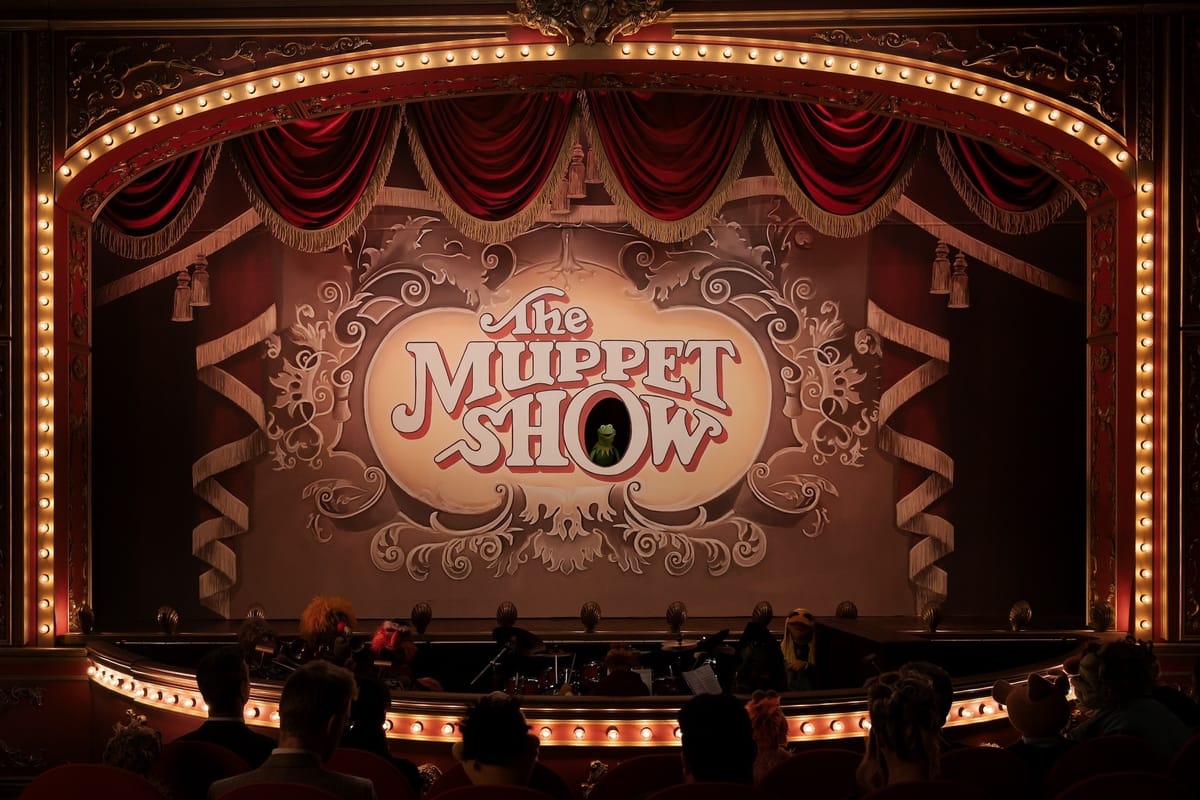
What was more confounding, though, was the request that we not reveal that they meticulously recreated the opening sequence. I suppose technically speaking that I didn’t know they would be doing this (although it's literally in the trailer?), but the fact they did is so fundamental to understanding how the special operates. When it starts, it hits that raw nerve of nostalgia built up by the melancholy return to the studio space, but I was preparing myself for some kind of modernization. We’re so conditioned to the idea of the “reboot,” and even “revivals” often try to update the appeal of something for a contemporary audience. And so as the intro progressed, and it was just shot-for-shot what we had come to expect, it sends a remarkably clear message that they really are doing what you note we’ve been arguing for years: making The Muppet Show as though it has just as much reason to exist today as it did back in 1974.
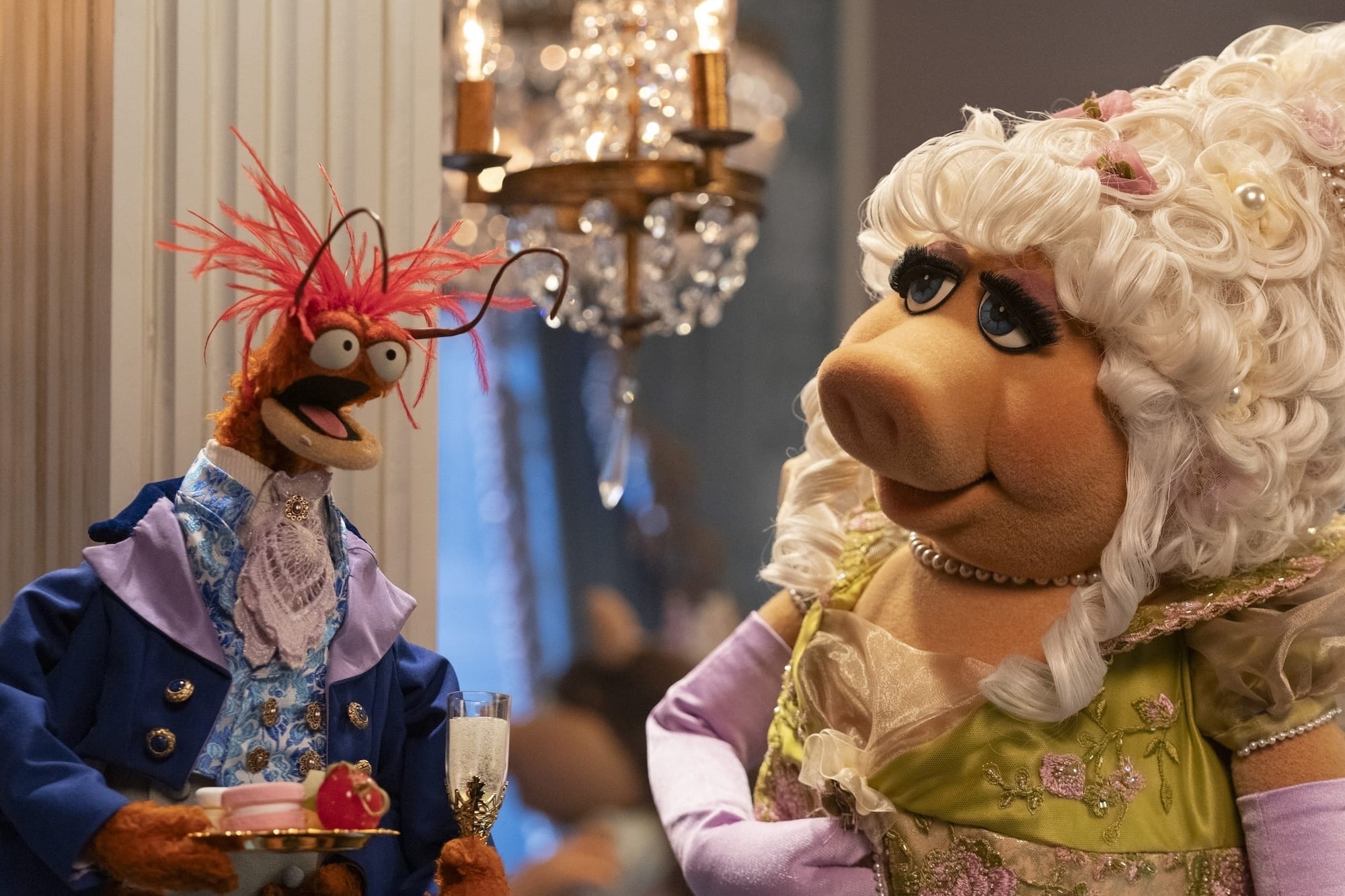
The idea that anyone was supposed to review the special without talking about such a powerful symbolic statement is at least a bit absurd, especially since the broader philosophy revealed by this choice also means there’s not a lot else to talk about. A lot of the words I would use for this special might read as insults: no one is rushing out to watch something a critic might call “workmanlike,” for example. But the truth is that The Muppet Show seems very purposeful in its desire to avoid reinventing the wheel, although notably without just playing “the hits.” The choice to do a Bridgerton riff, Pigs in Wigs, as opposed to Pigs in Space is emblematic of a larger desire to walk a fine line: they want to create something new and more contemporary, but they want it to feel born out of the same creative impulses that defined the show originally. It doesn’t want to feel like an extra special premiere or a one-off special. The writing and production of the show are as though the show just picked up exactly where it left off, and—outside of the backstage narrative acknowledging the diegesis—this is just another episode of your favorite musically-driven variety sketch show.
I don’t want this to read as too cynical, given how absolutely earnest this whole affair is, and how silly it allows itself to be. But there’s a very particular emotional journey that it created for me, where I was primed to receive it as something momentous, adjusted to the reality that its ambitions (despite some cameos from additional guest stars) aren’t necessarily in that vein, and then reached the point where it became clear that its ambitions nonetheless feel momentous because of how long we’ve waited for them to keep it simple, stupid.
Erik, to your point, I look forward to hearing from Alex Timbers about how they approached this from a production perspective, but I feel we need to dissect the host a bit more. As you note, as both a legitimate pop star and a byproduct of the Discom star system, she’s absolutely the right person to take on this task, but I almost ended up feeling like she was too in-the-pocket, insofar as there was little room for surprise. I’d be interested to see how this production team approaches someone who wasn’t quite so in the wheelhouse.
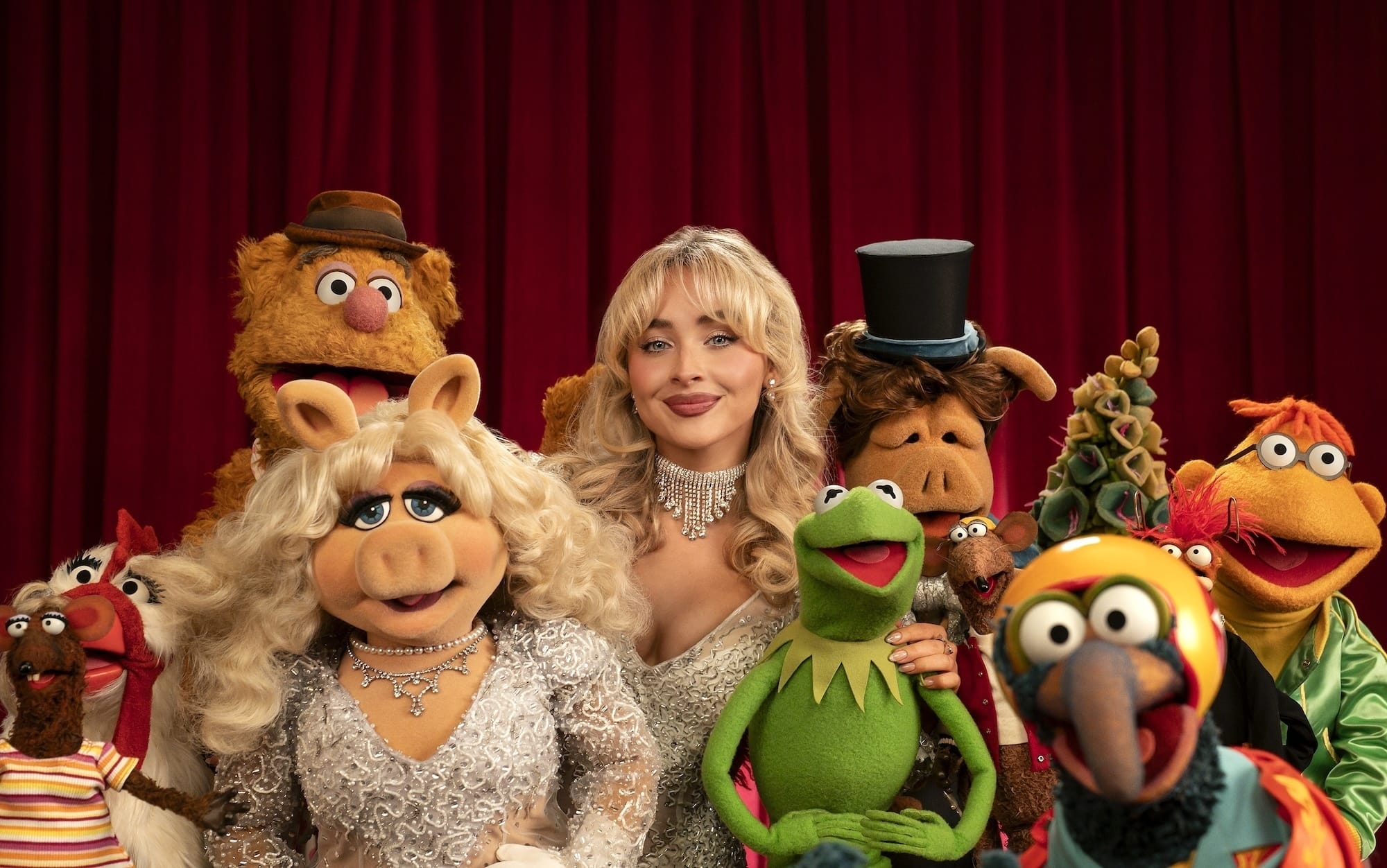
EA: I can see what you mean: All of Carpenter’s segments—the “Manchild” opener, her backstage sketches with Kermit and Piggy, and the “Islands in the Stream” duet—play to her established persona. There’s nothing here that stretches her skills the way that, say, her recent Saturday Night Live episode did with “Snackhomiez.” The only real adjustments she has to make are audience-minded, with The Muppet Show’s all-ages demographic requiring that she turn the dial down from “diminutive pervert” to “cartoon vamp.”
It feels like this goes hand-in-hand with the decision to keep “Manchild” within its familiar Casios-and-slide-guitar arrangement, rather than throwing some ’70s variety-show cheese on it—which I was going to make a bigger stink about before realizing that, a few Muppet-y flourishes aside, “Crocodile Rock,” “Bennie and the Jets,” and “Goodbye Yellow Brick Road” pretty much sound like their studio versions in Elton John’s Muppet Show. And when Carpenter’s smashing a beer bottle over the head of one Frackle and swinging another around by its neck, then I have even less to complain about.
Given the “this might be are only shot at this” nature of the project, I can’t really blame anyone involved with playing things safe. This is an incredibly difficult needle to thread: You have to please the diehards, but not play to them exclusively; you have to welcome in the kids who’ve never seen the original or Carpenter stans who are just dropping in to watch their fave, but not get bogged down in over-explaining why the pig is lusting after the frog. The “ain’t broke, don’t fix it” axiom that Statler and Waldorf riff on at the top of the show seems to have been the guiding principle here, and I think it led Timbers and company to a good place. It’s not anything that completely knocked me out, or feels entirely new, but at this juncture, experimenting is for Muppet Labs. If they want to prove they should make more of these, I think they have to prove that they can get the original formula right first.
Any of the small tweaks that were made to that formula come across as intentional and considered. I still haven’t quite calibrated my eyes and brain to a Muppet Show with such dynamic camera work and angles, but being too precious about the proscenium might’ve given off the wrong kind of retro vibe. And putting people and puppets in the audience not only sets up the Maya Rudolph runner (Beautiful Day Monster, how could you do this Paul Thomas Anderson when he’s this close to Oscars anointment!), but it means the show doesn’t have to rely on the same couple of stock shots every time it needs to show a crowd reaction.
Even my main gripe is relatively small, and it’s along the lines of one that I made about Muppets Most Wanted (and then received a stern correction from a performer about), so I’ll choose my words wisely here: The Muppet Labs segment has such a fine sense of magic and texture to it, with the vapor blowing off of the flasks and the classic gag of Beaker’s eyes lighting up when he’s electrocuted. This carries over to the first two beats of the Focus Pocus routine, in which Beaker’s eyes physically pop off the puppet, and a simple stop trick sells the illusion that his eyes have grown back. I’m pretty sure that when additional eyes start shooting through his empty sockets, that’s happening in-camera as well. But if—and I’m only saying if here—there are some VFX eyes mixed in there when he turns to the camera and the action cuts to the audience, I do feel like that deflates some of the wonder and the comedy of the segment.
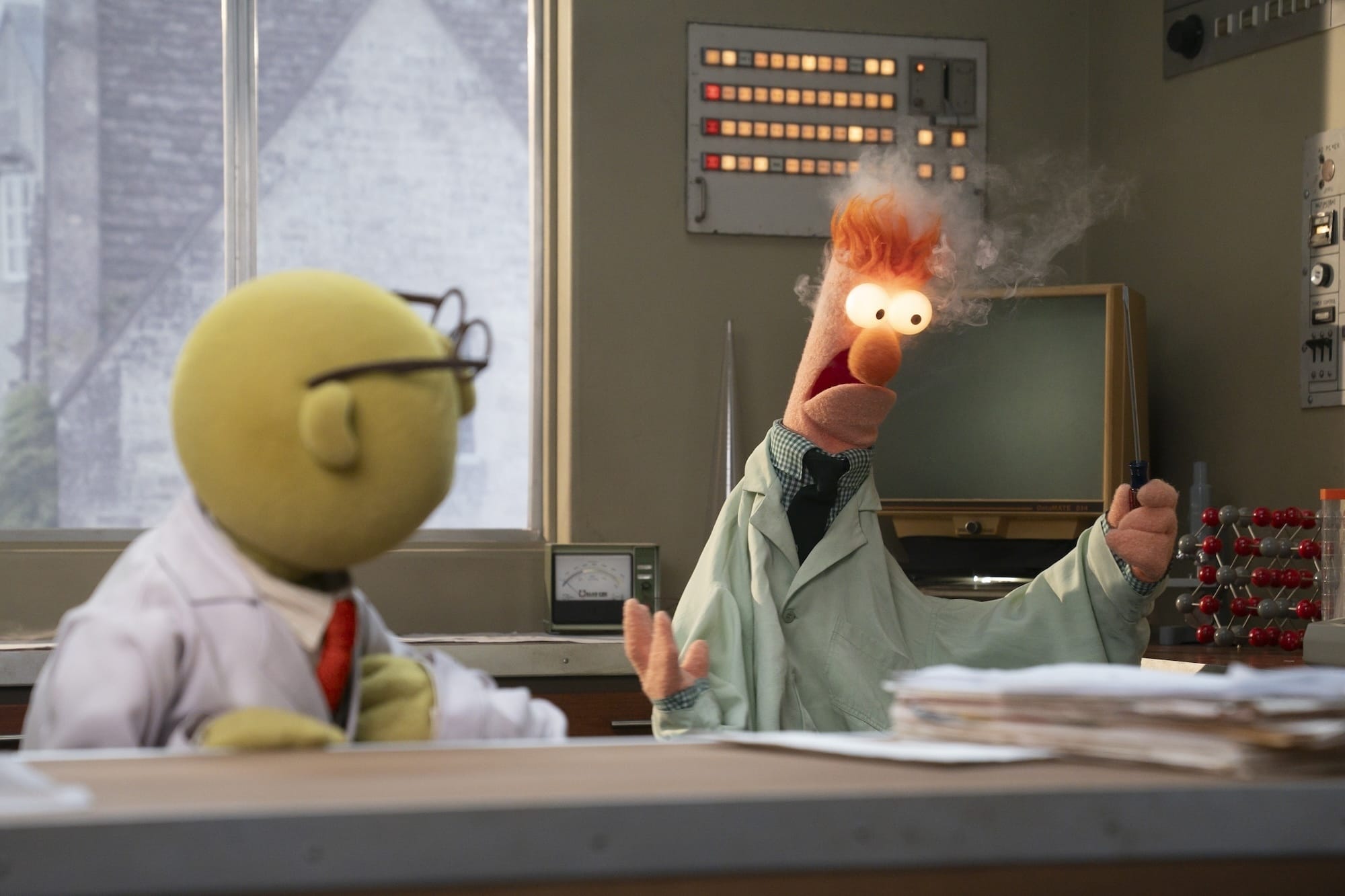
Was there anything here that got under your skin in an similar fashion, Myles?
MM: I wouldn’t say the “Blinding Lights” scene with Rizzo got under my skin, exactly, but I kept waiting for a point? I know that this was heralded as a welcome return for both Rizzo and Pepe, but it struck me as a case where they wanted another music moment and never found a thesis for it. A cursory Google suggests that Beauregard’s clumsiness is a running gag, but it doesn’t actually break the lights? It’s just a couple minutes, but I guess in classic sketch show style I wonder what else could have taken those two minutes, or how they could have been improved.
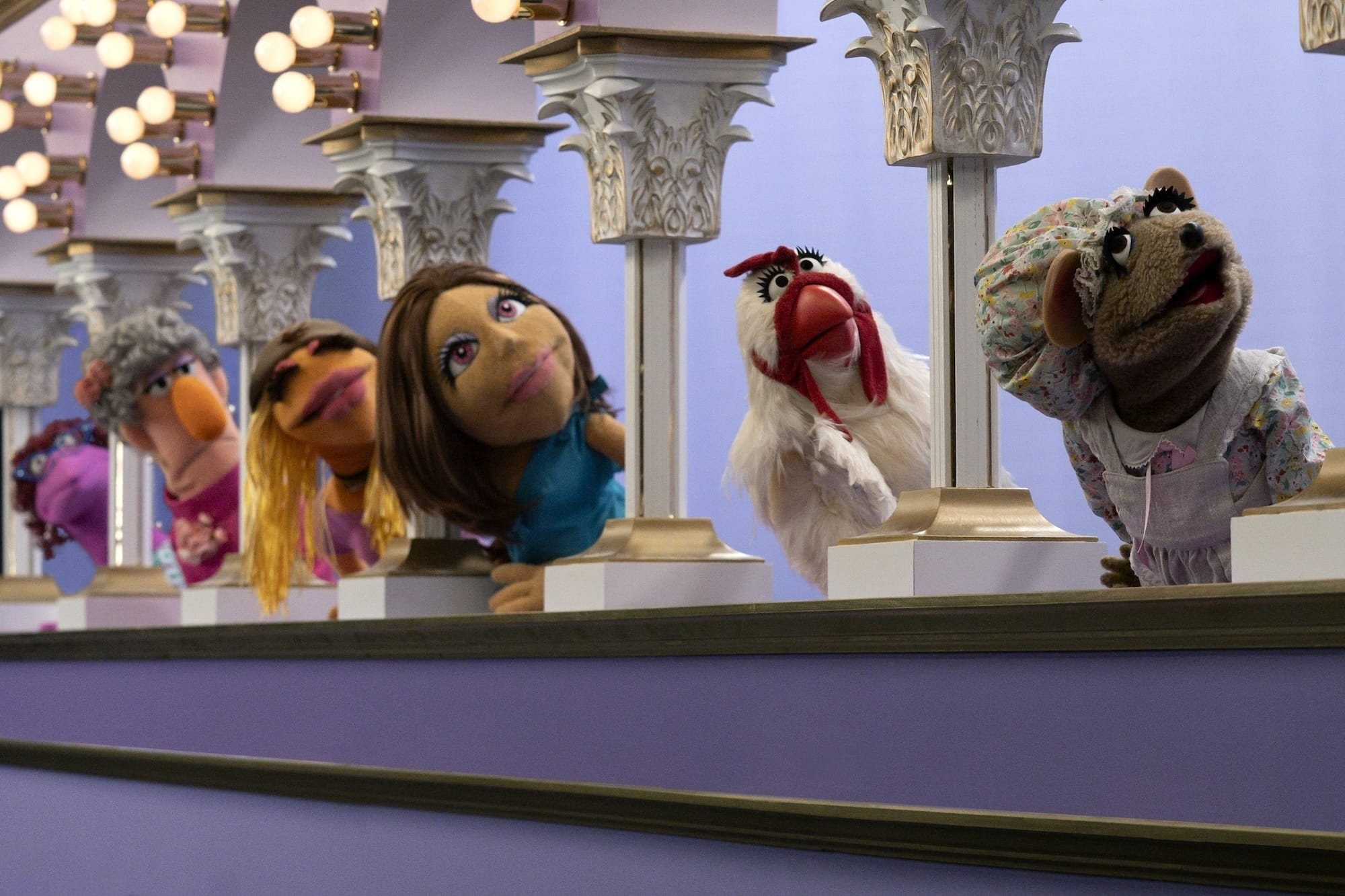
My other primary issue is that human/Muppet audience, not because it’s a bad idea but rather because it requires the theater to be lit nothing like a theater. This was especially egregious to me in the Rudolph inserts, where even the extras around them were lit like they were onstage. I get they want us to see the dynamic, but most of the humans look and act like extras, and are sometimes more distracting than effective. Even if you just dim the lights a bit on the crowd shots so that I can’t be playing a game of “wait, is that original cast member of Alex Timbers’ Moulin Rouge! Max Clayton?” it would be for the best. (At least Griffin Newman actually got to sit next to a Muppet).
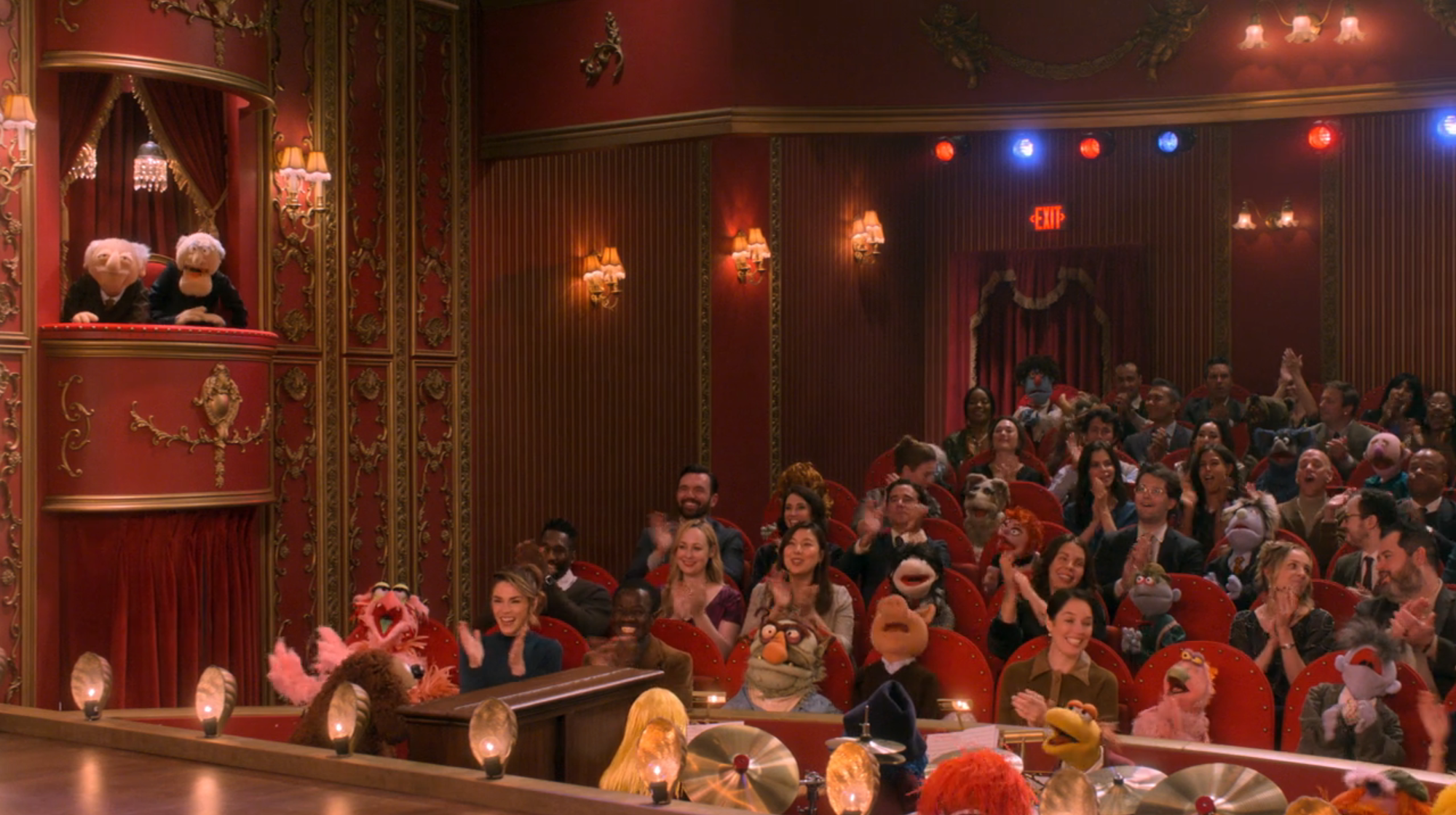
But, ultimately, there’s nothing here that struck me as a warning sign for any future iteration. There’s no suggestion that those in charge have the wrong idea about who the Muppets are, or what The Muppet Show was, or are on the precipice of falling into any number of traps Disney has fallen into before. I don’t know what this cost, and what they’re estimating future episodes might cost now that they’ve built all this infrastructure, or how they’re assessing the “value” of such a program based on its straddling of streaming and broadcast. But making this a monthly event strikes me as a no-brainer in this or any other moment.
EA: Oh man, I totally missed Downtown Griffy Newms out there in the audience. Between this and his cameo in the Golden Globes podcast bit, he’s living the dream!
As for my dreams: I think the monthly cadence you’re proposing sounds just about right. Frequent enough to keep the Muppets in the public eye without risking oversaturation, while still allowing for guest bookings that feel (to borrow your phrasing from earlier) momentous and not overtaxing performers who are still committed to making a number of Sesame Street episodes every year.
Above all, I just want more of this. Like Myles, I feel reassured that the show is in the right hands; any apprehension I was feeling was pretty much cleared up by the time Scooter poked his head into the dressing room to call 30 seconds to curtain. It’d be nice to see what this team can produce when some of the grand-opening salesmanship pressure is off: If they can tap into some of the weirder energies of their predecessors, or if they can pull off something like the old John Cleese, Gene Kelly, or Bob Hope episodes that make a joke out of the guest’s reluctance and/or unavailability. (This is real “last thing I watched”-brained, but is Brett Goldstein too much of an avowed Muppet fan to make that work?)
The song for the special’s closing number is smartly chosen: “Don’t Stop Me Now” connects this iteration of The Muppet Show back to the “Bohemian Rhapsody” clip that was, in all likelihood, a lot of viewers’ first introduction to the Muppets. (My 4-year-old among them.) And while the number doesn’t quite reach the daffy heights of that viral video (194 million views and counting), it does make a statement: The Muppets are having such a good time, they don’t want to stop at all. And there’s nothing on display here that indicates they should.
Stray observations
- Gonzo’s Supporting Actress bit does feel very micro-targeted, but I’m going to say that ending on Dianne Wiest as the punchline does feel like stepping on Boyle’s toes a bit. Feels like there were options to create their own pathway there? [MM]
- Or is this just a nod from Brooklyn Nine-Nine writer/current Muppet Show writer Gabe Liedman? From a purely pedantic standpoint, I did kind of wish he was going in chronological order with the Oscar winners. Also, if I may suggest a fix to the Rizzo number: That could’ve been an easy blackout gag where Beauregard makes the lights literally blinding, and the rats stumble around the stage a bit with constricted pupils à la the flashbulb kicker to The Great Muppet Caper’s “Happiness Hotel.” But I suppose that would’ve been a poor use of the music-licensing budget. [EA]
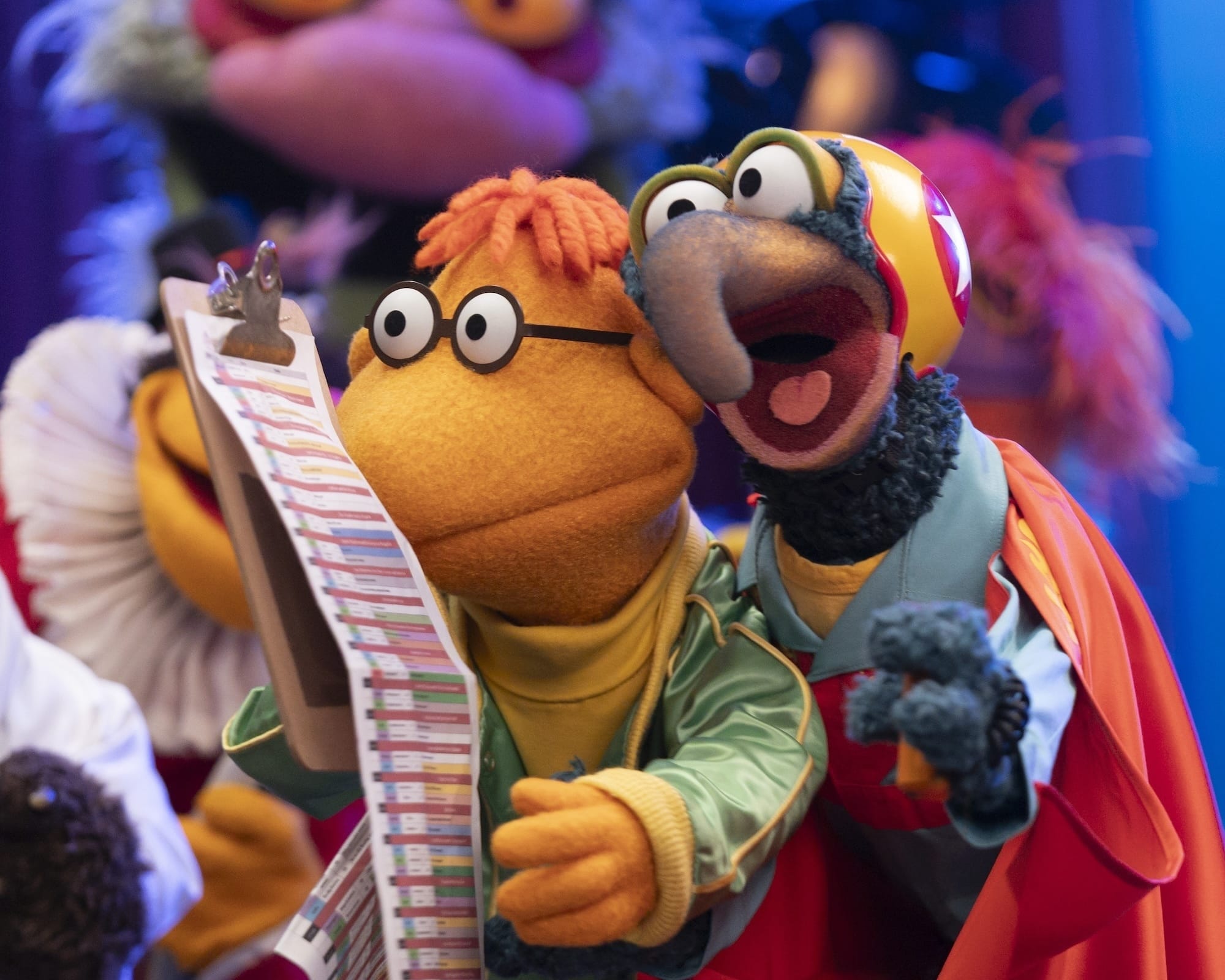
- I might’ve missed it somewhere, but there’s not a single mention of Jim Henson in the credits, is there? That “Based on Disney’s Muppet Properties and Characters” lower-third after the theme song is some cold shit. [EA]
- I had sort of wondered if Henson might have been among the photos on the wall during the opening, but doesn’t look like it. Curious how they landed on the guests they did include. [MM]
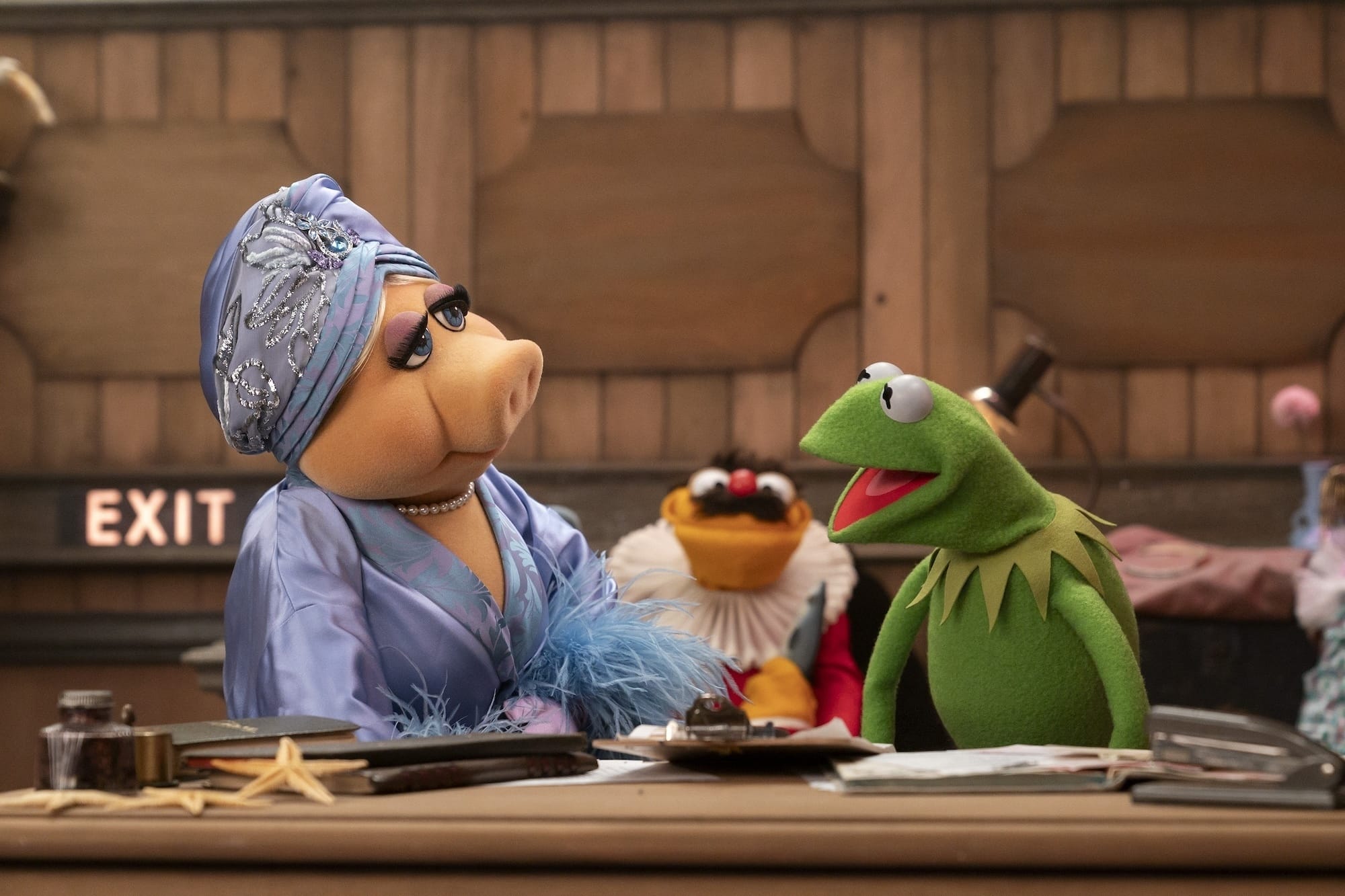
- I alluded to this above, but I think Kermit being hoisted by his own people-pleasing petard is some top-shelf writing for the backstage storyline. Of course there would be too many acts fighting for stage time, and of course this particular producer and emcee would struggle to make the tough calls, and of course the one he thinks he’ll be able to skate by with is cutting Piggy’s second number. Chalk up another win for keeping it simple. [EA]
- On that note, though, I do think it would be interesting to see how much a monthly format (let’s stick with my call here) explores the idea of seriality. I’m not suggesting some kind of deep narrative, but does Scooter (for example) get a raison d’etre? Focusing on Kermit and Piggy here is a logical choice, but there’s a deep bench here. [MM]
- In those crowded backstage scenes, there’s a good mix of Muppets from various eras: Faces that didn’t really stick around past the first season of The Muppet Show like Hilda the seamstress or the corny vocal act Wayne and Wanda, as well Muppets Tonight additions like Bobo and Johnny Fiama. But, as always, the Jim Henson Hour crew get the short end of the stick. The people (or maybe just I) demand Digit! [EA]
- I know we’re always talking about Kermit’s voice being different, but to be honest the Henson/Whitmire character whose transition was the most jarring to me was The Newsman, because his section of A Muppet Family Christmas is burned in my brain in a very singular way. [MM]
- Great line read from Dave Goelz, who may no longer be the most agile puppeteer at age 79, but hasn’t lost a step when playing Dr. Bunsen Honeydew: “A little teeny drop, this won’t hurt me at all.” [EA]
- On that note, I’m interested in learning more about the designation of “Muppet Performer” as opposed to “Supporting Muppet Performer.” I presume it just has to do with contractual commitments to the Jim Henson Company, but would love to know when people graduate. [MM]
- The humor of Janice’s hippie-dippieisms in the old shows and movies is that they were stuck in the ’60s and ever-so-slightly out of step with where the counterculture was at the moment—so who would’ve thought that spiritual woo-woo like reading auras would have some relevance 50 years later? [EA]
- They're willing to make jokes about Sabrina Carpenter's kinks, but do we think that they're tied to guests whose fame is at least PG-13 at worst? [MM]
- A related conversation starter for the comments: Who are your wish casts for future Muppet Show guests? If that Miss Piggy movie comes to fruition, Cole Escola, Emma Stone, or Jennifer Lawrence feel like no-brainers. [EA]
Comments ()