Review: The Lowdown, “Rupidoop” & “Whiskey Bent and Hell Bound” | Season 2, Episodes 1 & 2
It’s time to take another trip to Tulsa. Hallelujah.
Welcome back to Episodic Medium's coverage of FX's The Lowdown, which returns for a second season with Tommy Lee Jones and Betty Gilpin in tow. As always, this first review is free for all, but subsequent reviews will be for paid subscribers. This is the last few days of our yearly sale on annual subscriptions, so take advantage now!
The Lowdown’s second season was ordered and put into production well before this year’s Emmys, which makes me wonder: Was Sterlin Harjo counting on the show picking up a few nominations? Maybe even a win or two?
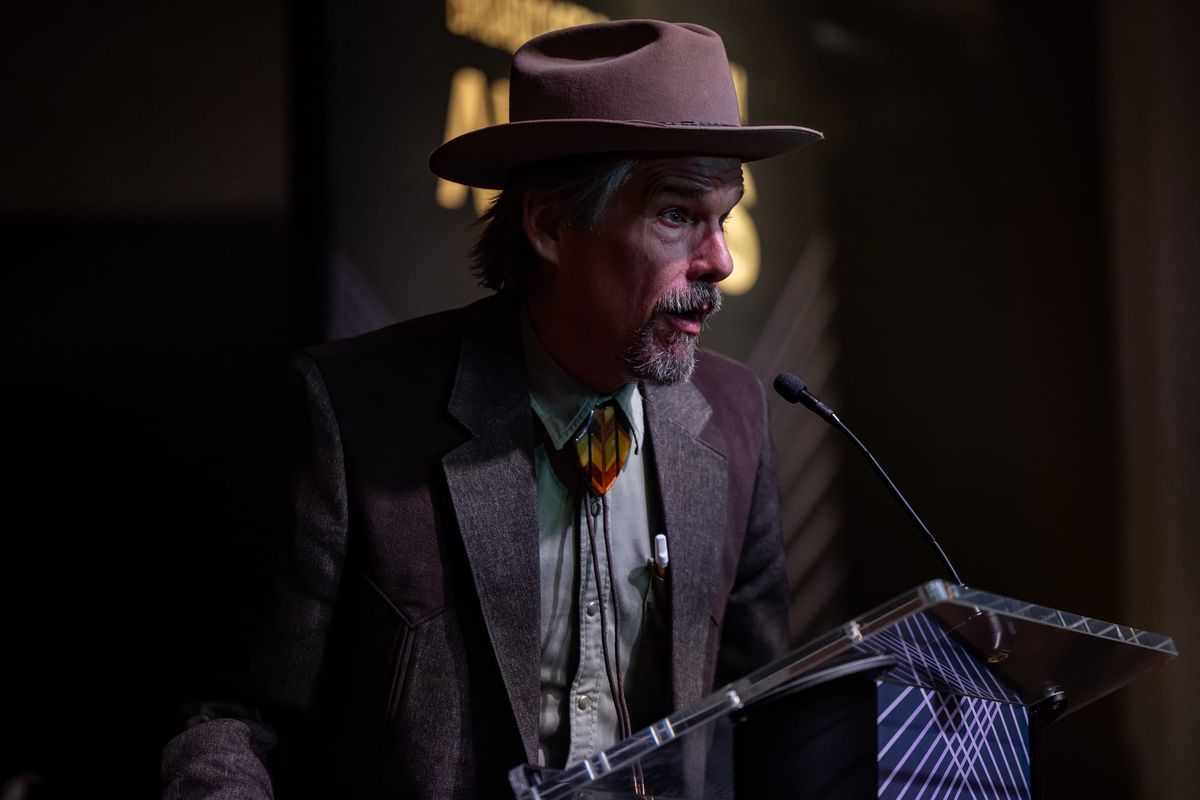
If you’ve seen the season two premiere, you know why I’m asking. This round of The Lowdown begins with our trusty Tulsa “truthstorian” Lee Raybon receiving an award from a local press association (Citizen Journalist Of The Year!) for the big Dale Washberg story he broke last season. Lee feels pretty conflicted about it. Is he part of the establishment now? Or worse: Does this mean people are going to expect things from him?
If this storyline is a case of Harjo using art to reflect his anxieties, he can rest easy on the first point. The establishment totally ignored The Lowdown come Emmy time. As for the second point, I am sorry to report to Harjo that we do have expectations. He delivered one of the best series of the 2020s with Reservation Dogs and followed it up with what is on pace to be another modern TV classic. No pressure, but we’d like him to sustain that.
Judging by the new season’s first two episodes, Harjo and company haven’t lost a step. There are a couple of moments in the premiere that made me a mite worried about how the season as a whole might go. But the second episode is peak Lowdown, with Lee having strange and harrowing encounters with some of Tulsa’s most fascinating oddballs.
The Lowdown hits hard at times, but it’s also a weirdly welcoming place to visit for an hour a week. It’s nice to hang out at Sweet Emily’s and Hoot Owl Books. And it’s a joy to catch up with some of the colorful side characters who fill out this show's environment, such as…
…the detective-turned-alt-weekly-editor Marty Brunner (Keith David), whose gravely narration kicks off season two with a mini-history of Tulsa. (According to Marty, “It’s the kind of place a man would be proud to go missing from.” Also, did you know that the city spelled backwards it’s “a slut?”)
…the chirpy, sexually adventurous real estate agent Vickey Williams (Abbie Cobb), who gives this season its title—“Four Of Cups”—when she draws that tarot card repeatedly while trying to read Lee’s fortune, in bed. She explains that the card represents a man who refuses to accept the opportunities being offered to him. (Sending Lee out the door: “Believe in yourself, make good choices, don’t ignore the cup.”)
…Lee’s schlubby lawyer neighbor Dan Kane (Macon Blair), who at the start of the season two is obsessively working out in his office—“Gotta close my rings, man!”—to keep up with the other man that his wife Lindsay has brought into their marriage. (Lee, describing the situation: “Lindsay’s in an open marriage and you’re married to her.”)
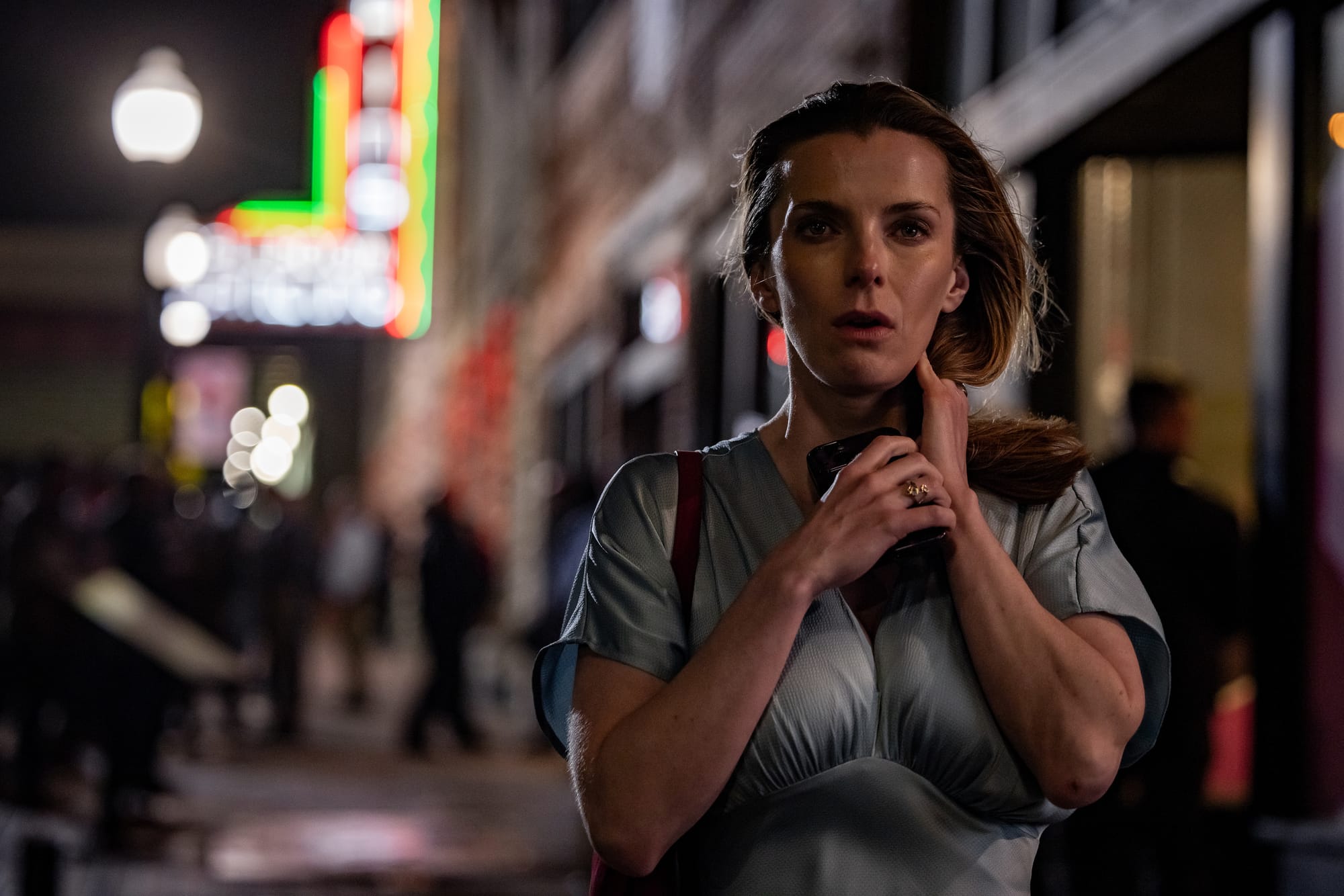
Then there’s the most significant new character introduced in the season two premiere. Betty Gilpin plays Ginger, a public defender who gives Lee a chance to be the gallant knight at the press awards when he finds out she’s being stalked by two thugs. He later drops by her office, and not knowing her last name—and there being two Gingers in the department—he asks for the “hot” Ginger. (The receptionist, without missing a beat:“Third door on the left.”) There he learns Ginger has a client, Mekko Dean, who has gone missing from Boontill State Penitentiary. Ginger’s inquiries have drawn intimidation tactics from a shady prison guard cabal. And so this season’s plot is set in motion.
Gilpin is a great addition to the Lowdown cast. Her line-deliveries fall right into the rhythm of this show: alternately motor-mouthed and halting. She delivers some the premiere’s funniest dialogue almost under her breath—like when she scopes out Lee’s ride and says, “Good guy in a white van, it would be history’s first.” And without saying a word, Gilpin’s expressive face conveys Ginger’s pervasive anxiety and her conflicted feelings about Lee. She’s attracted by his passion—and attention—while also recognizing that the man’s a mess.
Speaking of having mixed feelings about Lee Raybon, my one major qualm about the first episode is that Lee is headed in some concerning directions. I mentioned his jittery reaction to the sudden fanfare surrounding his work, which has led to a bad case of writers’ block. (Marty and his fellow Heartland Press editor Elijah have partially paid Lee for a piece about an archaeological dig near the city, which hasn’t exactly inspired our man to start typing.) Lee’s also drinking the hard stuff again, after being sober-ish last season.
It’s too common these days for sophomore seasons of well-liked shows to amplify their protagonists’ flaws, in a ham-handed attempt to make them seem more complicated. (See: Ted Lasso; The Pitt.) But Lee was just the right level of screwed-up in season one: obsessive, bull-headed, overconfident, reckless. He also seemed to have reached an understanding with his daughter Francis (Ryan Kiera Armstrong), who as season two starts now finds him embarrassing. “You don’t always have to blow everything up,” she sighs, after he gives an ungracious speech at the award ceremony and accidentally drops and breaks his prize.
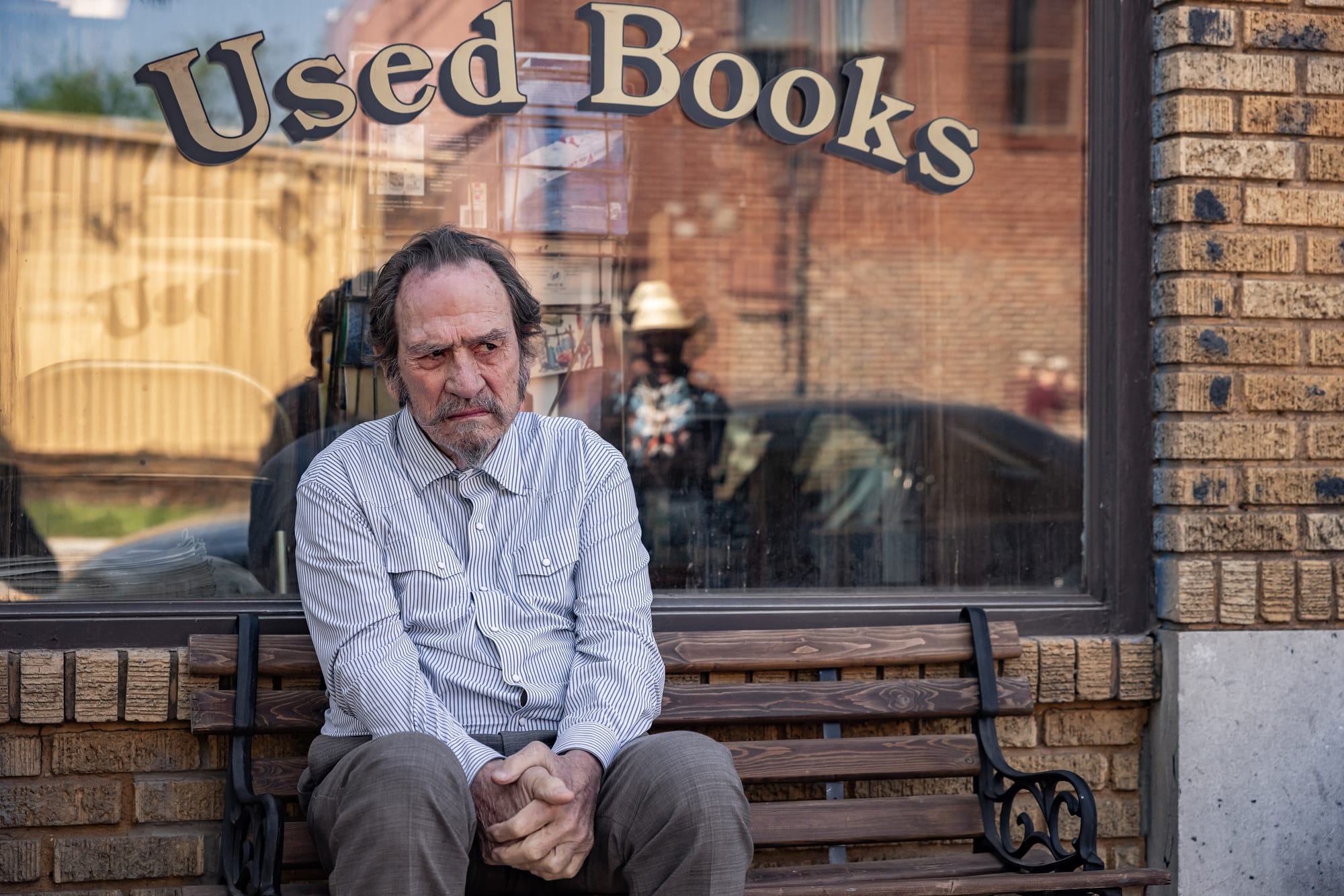
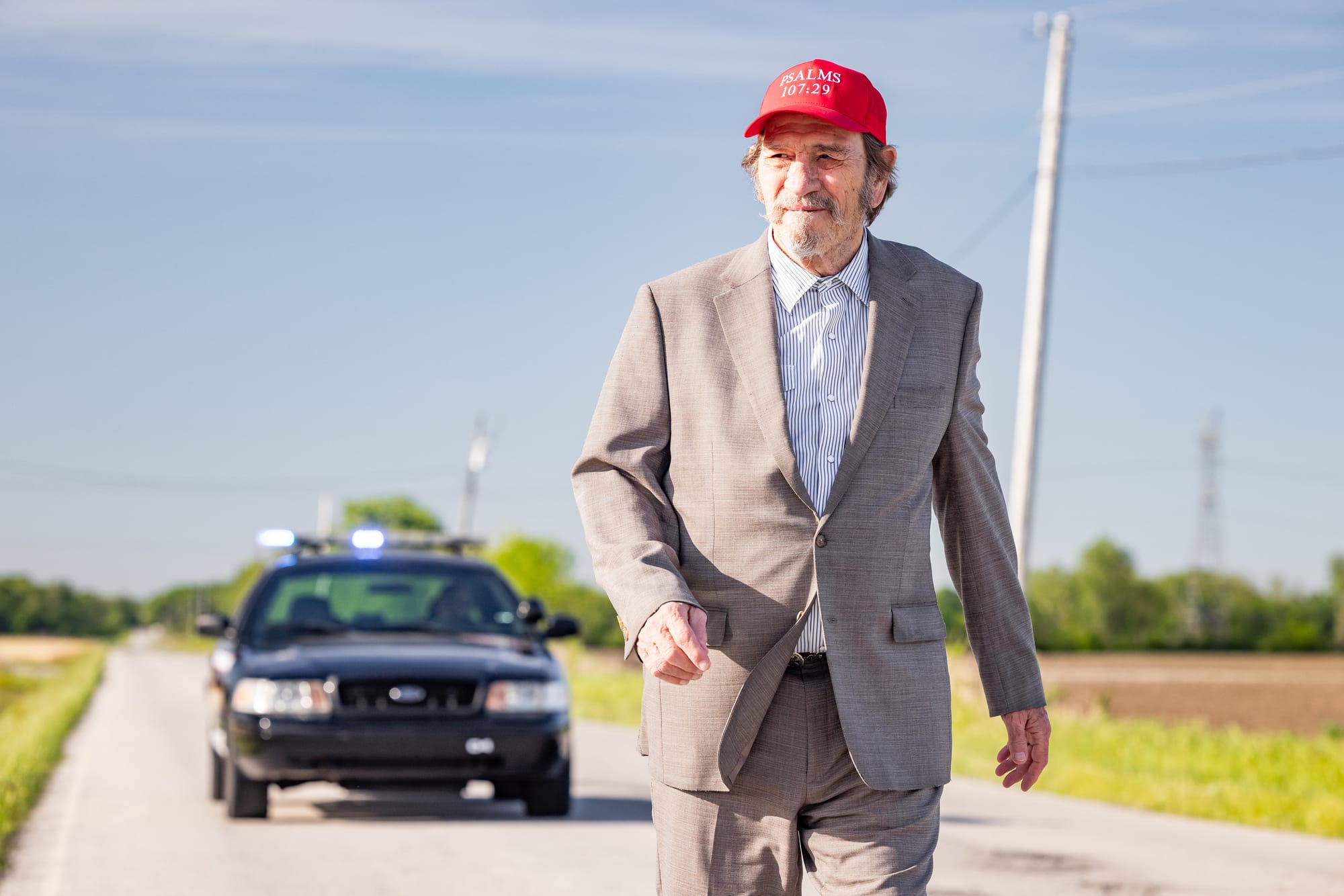
There’s a pretty deep wrinkle to the Francis material in these episodes, though. It involves another major new character, seen briefly in the premiere and then more prominently in episode two. Tommy Lee Jones plays Lee’s father, Lee Sr. (a.k.a. “Frog,” a nickname he picked up in Vietnam). Absent from Lee’s life for decades, the old man rolls back into Tulsa because he has read in the news about his son’s success. There’s the journalism award, sure, and the bookstore Lee owns. (Lee Sr. also once owned a bookstore…well, a porn store.) But there’s something else, too. “Paper mentioned you had a daughter…?”
Jones also fits The Lowdown well, with an acting style that comes pre-tuned to this show’s key. Lee Sr. says whatever’s on his mind. (“That’ll wreck your life, that dope-weed,” he growls at a puffing Waylon, who is not persuaded.) But he’s not forthcoming about where he’s been, why he’s back, or what he wants. He’s only clear about his fascination with Francis, whom he wants to get to know, for reasons as-yet-unexplained. I don’t think his intentions are ill—at least not judging by the wistful way he says to himself, “He named her Francis.”
As for Lee, his idiosyncrasies become more endearing once he actually has something to do—although he does immediately start blundering when takes on Ginger’s case, and people do get hurt. He flashes a press pass to get into Boontill and asks to see Mekko, but instead talks to an imposter—a “rupidoop”—and spills too much about Ginger’s investigation. The result is that someone tries to break into Ginger’s house and she scares the interloper off with gunshots. (This gives Gilpin a chance to play Ginger in a “hilariously flustered” mode. After she shoots at her intruder, Lee paws at her to see if she’s been shot and Ginger snaps, “I don’t have bullets in my tits, Lee.”)
Lee’s bigger boondoggle happens in episode two, when he decides to dig up some intel on the Boontill prison guard mafia. At a strip club Lee cozies up to a recently fired guard with the Pynchonian monicker Chili Franks. Chili is the kind of naturally friendly guy who knows every stripper’s name (and where they’re from!). He’s also irreparably broken. He looks like he’s perpetually flinching from the world, even as he keeps a strained smile plastered on his face.
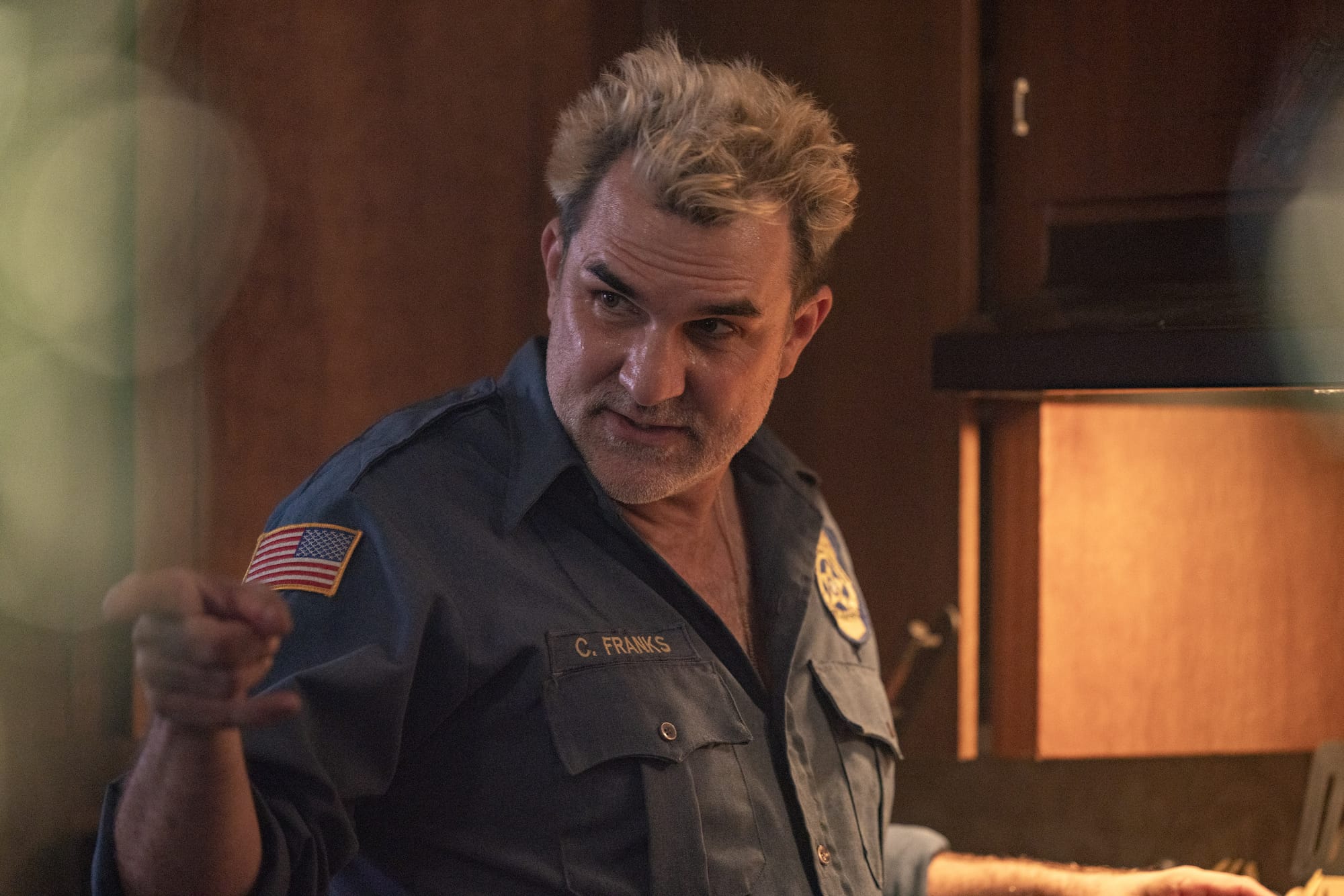
Paul Schneider plays Chili, in a performance that’s like watching a great magician doing sleight-of-hand. Chili’s voice is unnervingly high and raspy. When he boasts to Lee about his cheeseburgers (“the oil and the beef flavors itself!”) or his Tae Kwan Do trophies (“been known to whoop a little ass!”), he’s equal parts sweet and creepy. It’s hard to tell from second to second which way his mood will turn. Lee keeps Chili talking, hoping to learn more about the guards’ big boss, McMann (Shane McRae). But as Lee probes, Chili becomes increasingly “lowdown,” until eventually he grabs a shotgun, looking scarily close to ending his life—or Lee’s.
Harjo, who directed these two episodes, stages an ending to episode two that’s as funny/sad as Chili himself. Lee accompanies Chili on a beer run that ends up at McMann’s house, where Chili begs for his job back (“I’m no lost cause!”) while a gun-toting McMann chases after Lee. Everywhere that Lee tries to hide on McMann’s property, a motion-sensor light catches him. It’s a sequence that is lovely to look at and also terrifying, with the cloak of darkness repeatedly pierced by those dumb, buzzing floodlights.
Lee’s pretty hapless, as always. Before he escapes though, he learns that McMann has no idea where Mekko is. He also watches McMann shoot Chili dead. And so another low-key hang ends someplace chilling and grim. Welcome back to life in The Lowdown.
Stray observations
- And welcome back to Episodic Medium’s weekly Lowdown coverage! I’m always stoked to return to this assignment, given my love of Harjo and Hawke, my love of this particular genre, and my personal experiences with Tulsa. We’re going to have a lot to talk about in the weeks ahead.
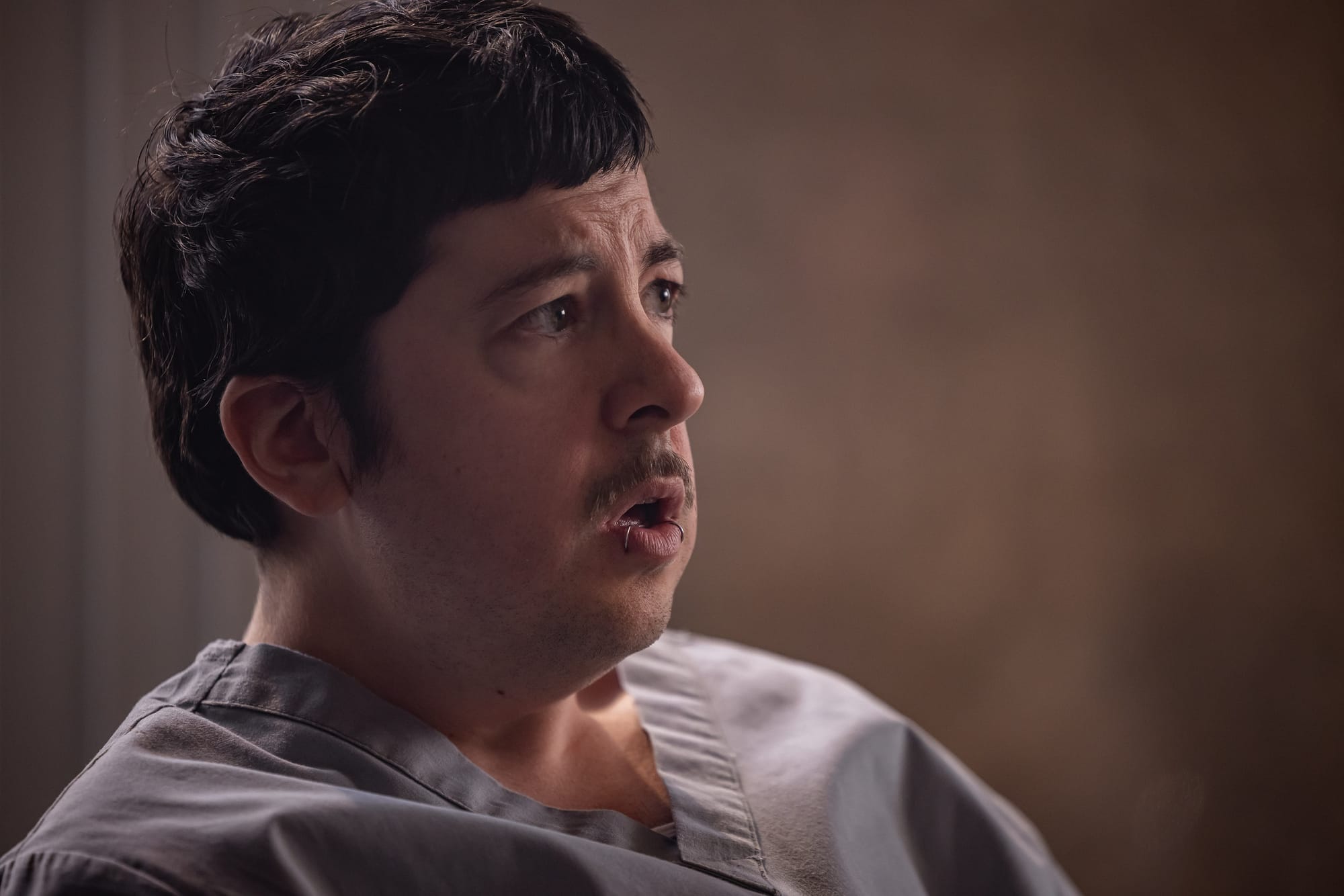
- As surprised as I was to see Paul Schneider pop up on this show, I was doubly—nay, quadruply—surprised to see Christoper Mintz-Plasse, looking almost unrecognizable as a pierced-lip perv named Pooky. Before he gets sent off to Boontill, Pooky gets a favor from Ginger, who lets him slobber over one of her bare feet in exchange for becoming her inside man at the prison. Mintz-Plasse is hilariously sleazy throughout this scene, but Gilpin’s even more impressive, as she casually teases Pooky and at one point bends her whole leg to her head, pretending her foot is a phone.
- This week’s movie references include Lee doing karate moves in the mirror in his underpants, like Dirk Diggler in Boogie Nights. When Lee gets knocked out, his head fills with floating tarot cards, kind of like the spinning bowling pins in The Big Lebowski. And the introduction of Lee Sr.—wandering down a rural road in a red cap—makes him look exactly like Harry Dean Stanton’s character in Paris, Texas.
- This week’s Tulsa cultural signifiers include Cain’s Ballroom (where the press awards are held…I’ve eaten pizza at the place next door!) and the Larry Clark poster at Hoot Owl Books. I’m always impressed by how this show captures Tulsa’s general vibe, as in the scene where Lee talks to Ginger in downtown while the winds—Oklahoma is so windy—whip up the dust around them.
- And then of course there are the Sterlin Harjo self-references. I see you, bag of Flaming Flamers on Chili’s coffee table.

Comments ()