
Review: The Last Of Us, "Convergence" | Season 2, Episode 7
We have met the enemy, and she is us—or something
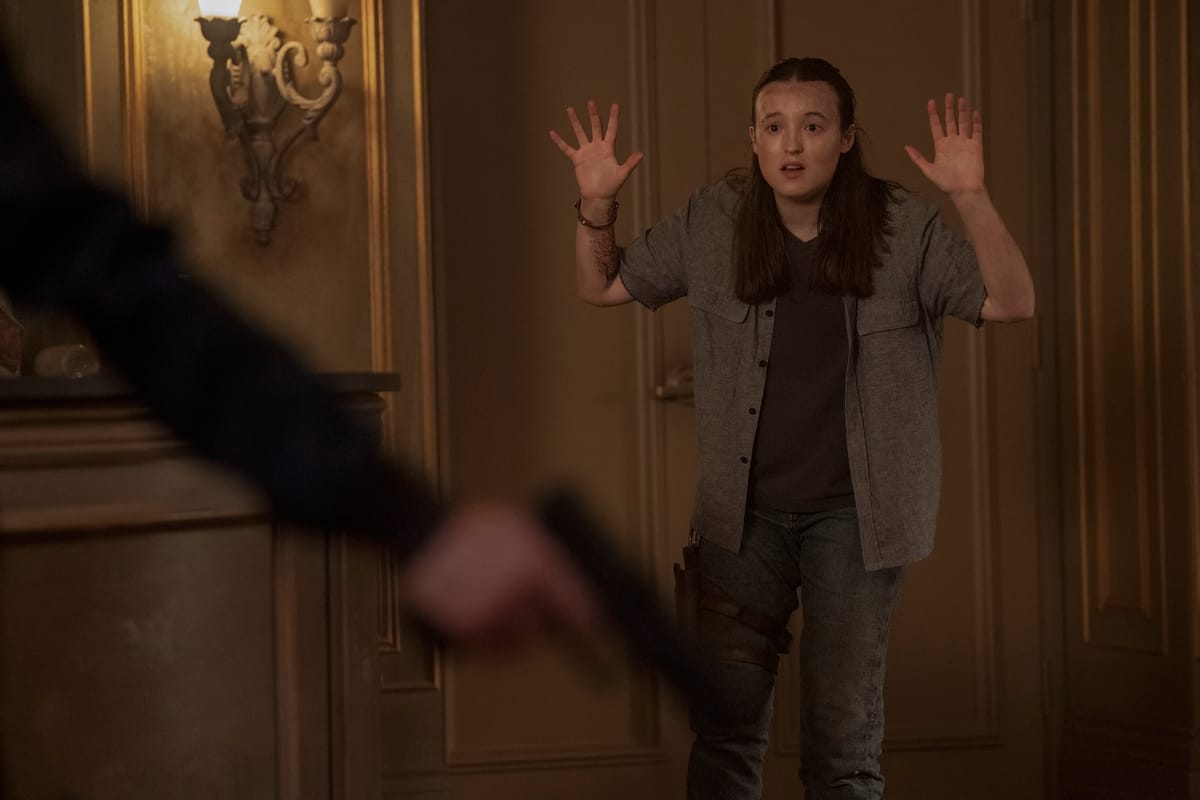
In case you were wondering what this season of The Last of Us has been all about—all the meandering, all the shocking violence, all the increasingly questionable decisions—tonight’s episode has you covered. Early on, Ellie and Jesse leave the theater on a mission to find Tommy. They take shelter in a bookstore with a children’s section, and we’re very intentionally shown a wall with a message about stories having morals in them. Then Ellie finds a copy of The Monster At The End Of This Book. Then Jesse sits down in a chair conveniently seated under the painted logo about morals and gives Ellie a lecture about community responsibility. The point is, uh, difficult to miss, especially in the light of the deaths to come. Ellie is the monster at the end of this book, and unlike Grover, it’s not a happy ending.
There were several moments in “Convergence” that had me raising my eyebrows or (I’m sorry) laughing out loud. The Monster moment wasn’t one of them; yes it’s thuddingly obvious in an “authors who use subtext are all cowards” kind of way, but I appreciate the effort to make this season have some kind of narrative or thematic cohesion. Because without that meta level, what the hell did we just watch? Two people that we’re supposed to like making increasingly poor decisions in a place that none of us want to be. When Jesse says, in essence, “fuck these people, let’s go home,” he is absolutely one hundred percent correct, although that’s not enough to save him in the end. But if the WLF/Seraphite conflict isn’t worth watching, and if Ellie keeps being a vengeance idiot, what’s the story that’s supposed to engage us? What are we supposed to care about?
Ellie is particularly infuriating this week, her behavior swinging rapidly between “deep trauma over the violence she’s driven herself to commit” and “mindless enthusiasm to keep finding new ways to commit more violence.” Her decision to abandon the search for Tommy because she suddenly figures out a dying woman’s last words is baffling. Hours earlier, she was telling Dina about Joel’s crimes, and wrestling with the idea that maybe Joel got what he deserved. (Yes, she was also saying that it was “easy” to beat a dying woman with a pipe, but if we’re supposed to think this is Ellie going full psycho mode, I’m not buying it.)
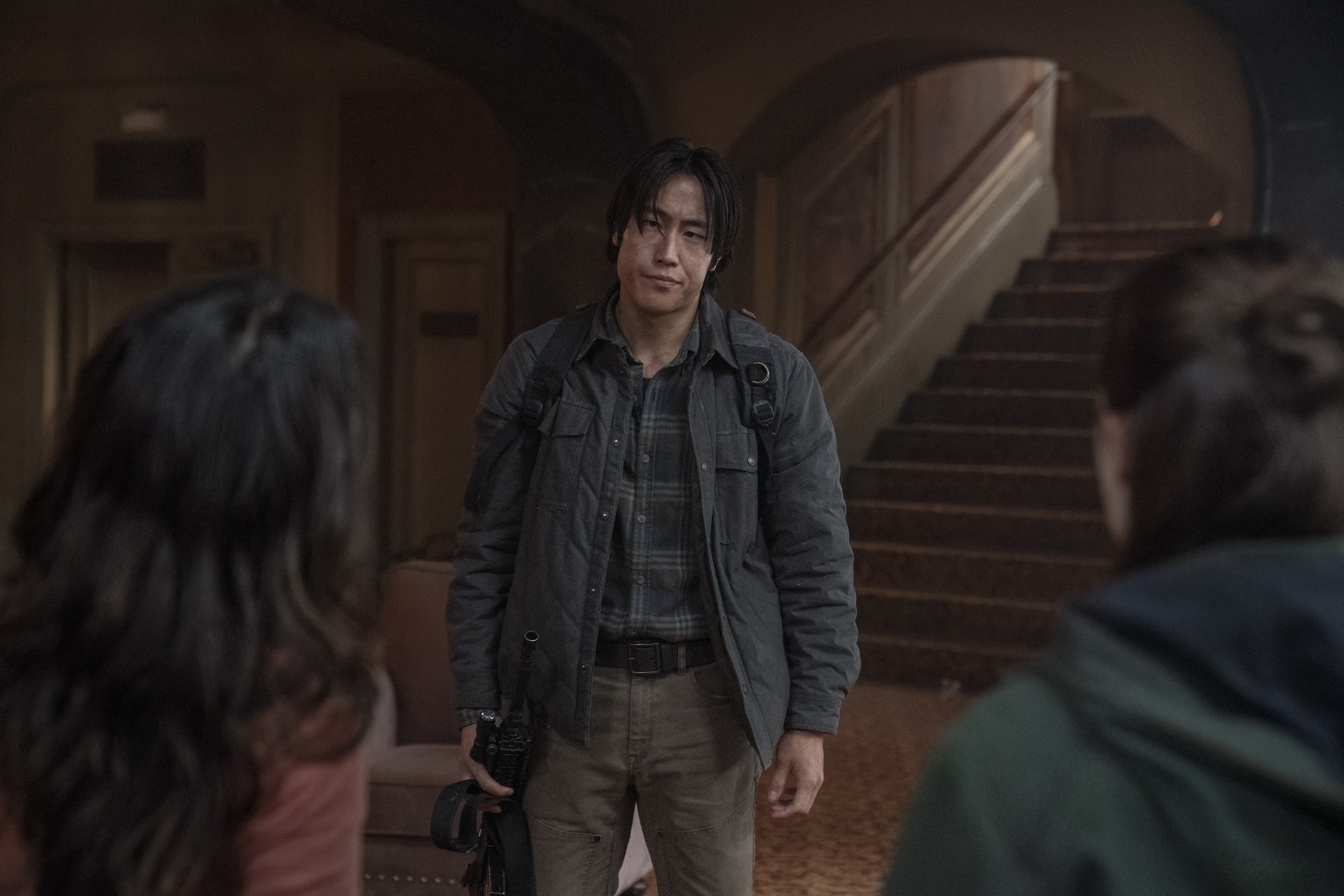
It’s the same problem that’s been dogging the show ever since Ellie and Dina arrived in Seattle and learned the situation was much, much worse than they thought it would be. Why are we still doing this? And now we have Jesse (poor, doomed Jesse) to lecture Ellie repeatedly on how stupid this revenge thing is. I, as an audience member, get it. I got it before this season even started, if you want to know the truth; and I’m finding it increasingly difficult to care about what happens next in a story that keeps saying the same obvious thing over and over even as its main character refuses to accept it.
I’ve been wrestling with this, honestly. Why am I happy to watch characters make bad choices on other shows, but struggle with it here? But the thing about anti-heroes is, the bad choices they make have to make some kind of sense to us. Walter White (sorry, Breaking Bad is, like, my go-to reference for this stuff) was an asshole who constantly did things that made the world worse for everyone, but those decisions came from character traits that were clear more or less from the start. Much of the tension of that show came from hoping he would somehow push back against his worst instincts and do the right thing—and when it became clear that that was never going to happen, his descent still made internal sense. Even when he stopped being sympathetic, he was still interesting because of his impact on the world around him, and because his monstrousness kept creating interesting situations.
Ellie is not that. The show needs us to have sympathy for her choices because without that, there’s no real reason to keep watching. Ellie has to be coherent for the show to be coherent, and she’s just…not. I don’t understand why she’s doing this. I get that we had a whole flashback last week reminding us how much Joel meant to her, but that flashback was complicated, because her relationship with Joel was complicated. And “complicated” makes maintaining the single-mindedness needed for revenge pretty damn difficult.
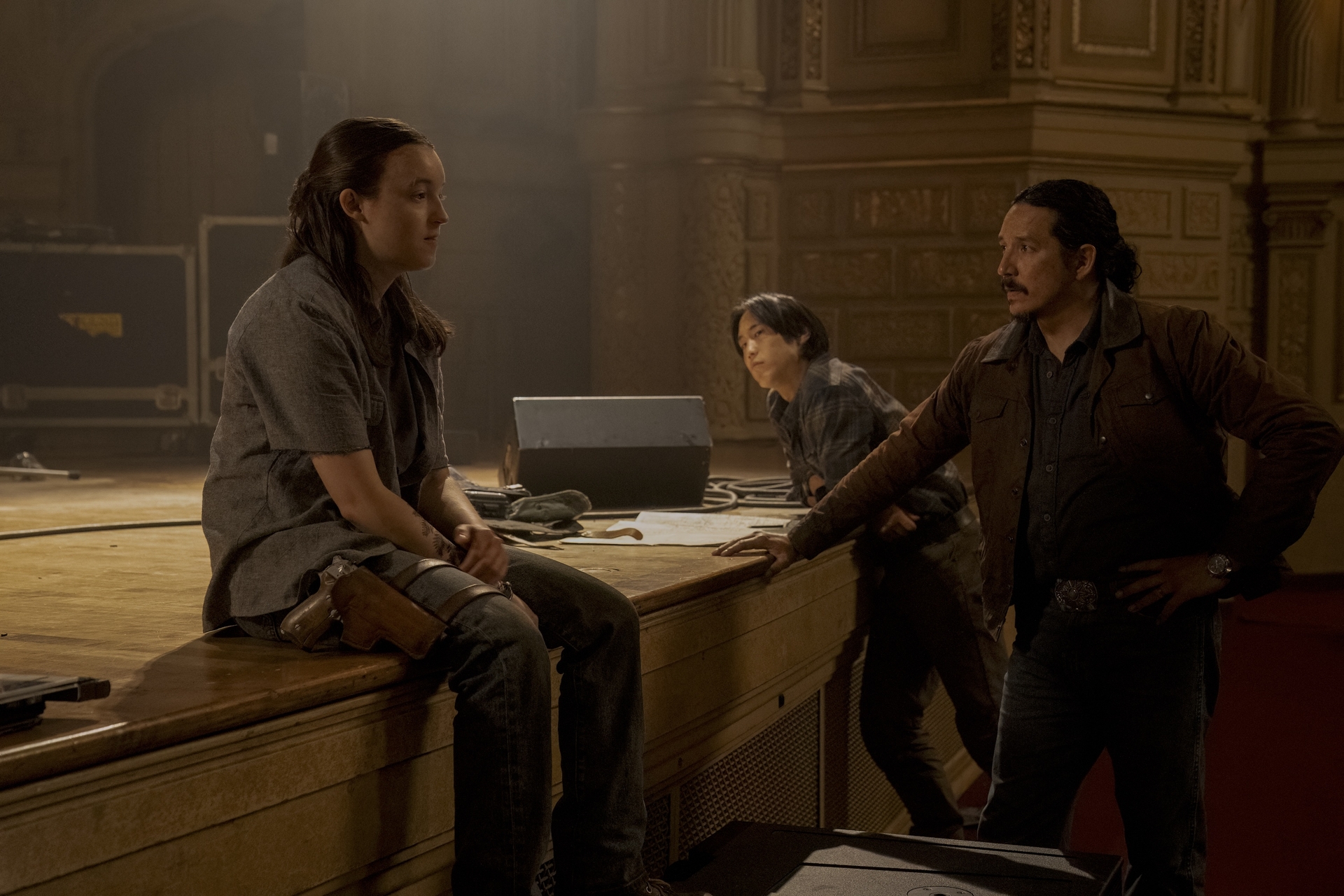
There’s a bit near the end, right before all hell breaks loose, when Ellie sullenly says “but Abby gets to live.” This is mere hours after Ellie’s last attempt to find Abby resulted in the unintentional deaths of two people, one of them pregnant. The pregnant woman’s death was particularly traumatizing; grazed by a bullet that killed another man, she begs Abby to perform an impromptu C-section to save her child, only to die mid-instructions. I won’t say this sequence shocked me—by that point in the episode, I was no longer really in a shockable state. But it sure as hell shocked Ellie. The fact that she’d go from sobbing over what she’d done to fixating yet again on her hatred for Abby is baffling. Yes, you can squint and claim that she’s trying to subsume her guilt by turning it into rage, but that level of self-delusion requires its own kind of effort. Ellie’s whole thing is that she’s reckless and raw and she feels everything; she’s a kid struggling to make sense of a nightmare world, and she’s never indicated she’s capable of this level of self-delusion.
What I’m saying is, it’s contrived. The only reason Ellie makes the decision earlier to head to the aquarium is because the story needs her to accidentally murder Owen and Mel. There’s a gleam of truth in that sequence, in showing how even with the best of intentions, bad things will happen when you point a gun at someone. But it took so much effort to get there that I found it impossible to be affected by any of it.
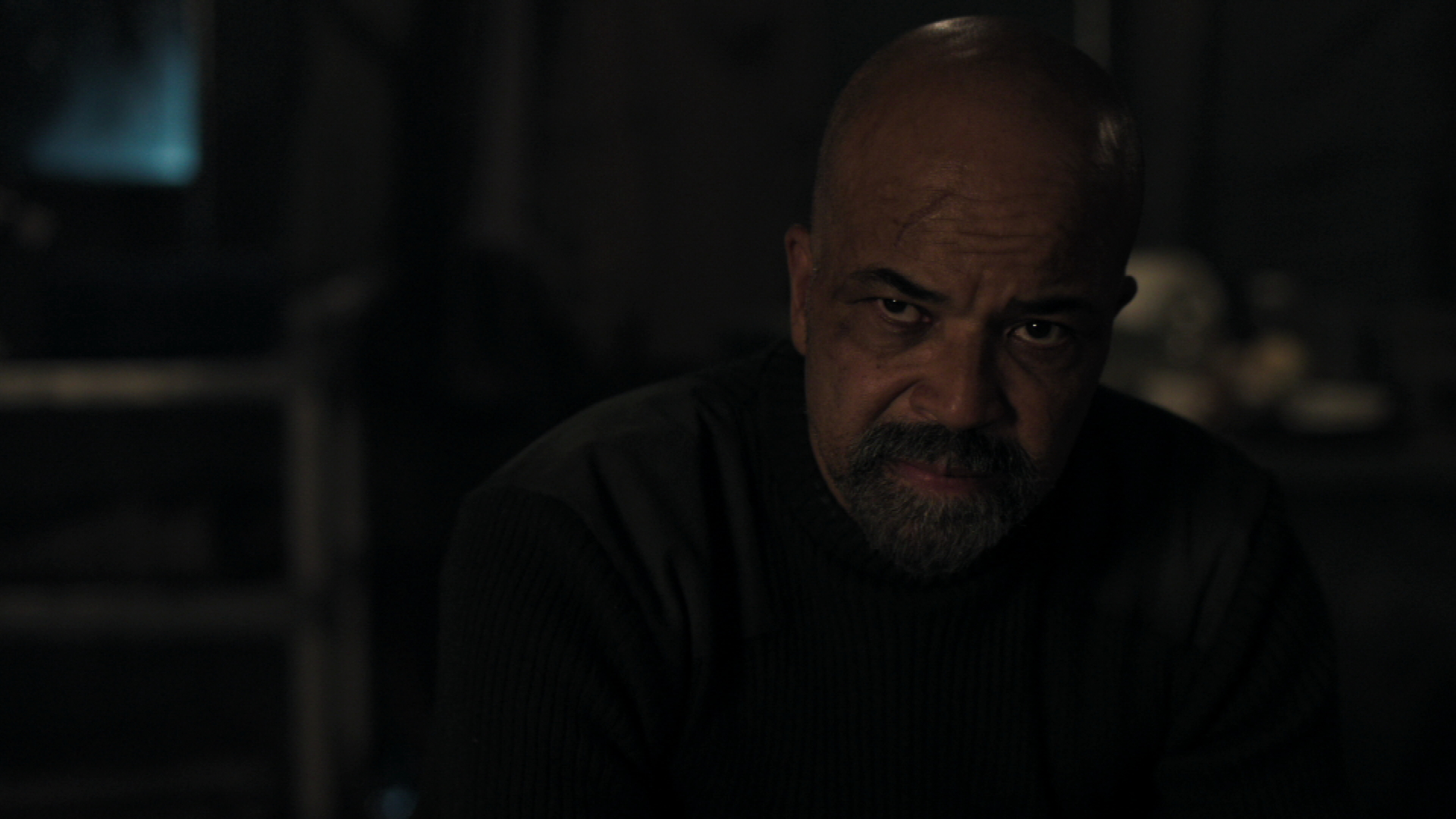
There are just so many heavy-handed moments in this episode. Take, for instance, the scene with Isaac bemoaning Abby’s absence. For one, this is a conversation that will make little sense to the audience until next season (which will be about showing us what Abby’s been up to while Ellie’s been killing her friends); for another, the need to single Abby out, to make her “important,” is absurd. I don’t care if Isaac thinks she’s the only one who can lead the WLF because that’s silly (nothing we’ve seen of Abby has been particularly charismatic), and because I don’t care who leads the WLF. Sure, maybe I will next season, but that’s no good for me right now; as is, this is a teaser stuck in the middle of a season finale that doesn’t tease me about anything I’m invested in, so… why?
I guess you could argue that the Isaac scene is to establish why Ellie sees the WLF gearing up to go on a boat raid, which then pays off after Ellie crash lands on the Seraphite island and nearly gets her guts spilled, but god, what a pointless cul-de-sac of a sequence that is. Ellie steals a boat to head to the aquarium over storm seas; a wave sends her and the boat to over to the island, where she’s immediately captured, and then released when the WLF attacks the Seraphite’s village. It’s supposed to be a terrifying reminder that the Seraphites are just as awful as the WLF, but the abruptness of it, the convenience of Ellie’s boat just happening to wash up on shore right next to her, and the outright comedy of a Scary Little Boy ordering her execution—I’m not ashamed to say I laughed.
All of this is supposed to be very serious, of course, but just because it presents as serious doesn’t mean it actually is. If this season has a story to tell, it’s that in pursuing “justice” for Joel’s death Ellie has lost pieces of her soul and become embroiled in a larger conflict. It’s a very expensive, very long version of “be kind to others because everyone is fighting their one battle.” And it doesn’t work. We’ve been given barely any reason to care about anything that happens to anyone outside of Ellie, Dina, Jesse, and Tommy, and even them I’m iffy on at this point. There should be some shock in realizing that Ellie is the monster, that Ellie’s quest has made her the villain of someone else’s story, but that would require the audience to have been supporting Ellie throughout. It’s not a surprise to discover that a person doing shitty things is doing shitty things. That’s just life.
“Convergence” is, of course, gorgeously directed. The sequence of Ellie struggling to cross a stormy ocean is beautiful, the shots of her and Jesse walking down the overgrown streets of Seattle are… well, okay, at this point, I think I’ve seen enough of that particular visual to last the rest of my life, but it’s still nicely done. The acting is strong, with Young Mazino giving it his all for presumably his last appearance, and Bella Ramsey doing her best to find coherence in Ellie’s shifts and swerves. For all intents and purposes, this episode (and this season) had the signifiers of something tense and moving and harrowing. And sometimes, it earned those signifiers. But by the end, I don’t think it added up to much of anything. Here’s hoping next season’s shift in focus will find a purpose again.
Stray observations
- I wonder if there’s a checklist in the writer’s room where they have to make sure each script reminds us that the WLF and the Seraphites are both awful.
- The scene where Ellie wants to save a Seraphite from a WLF troop feels right to me; she’s impulsive and short-sighted, but she wants to do what’s right and protect the vulnerable. Which is why it doesn’t make sense to me that she splits up with Jesse to go after Abby. There’s no one to protect, nothing to save. Yes, she has a speech about how Joel was her only “community,” but… was he? It’s not like the people of Jackson were cruel to her. She’s in love with Dina, she obviously cares about Jesse and Tommy. Are we supposed to believe Gail is right? That there’s just something broken in Ellie that makes her incapable of learning or growth?
Video Game Corner
- Hey, I called it: the season ended with the end of the first Ellie section of the game, which means next season is going to spend the bulk of its time telling us Abby’s story. I have no idea how that will work. Abby’s story is more effective in some ways because the character behavior makes a lot more sense, but it also requires viewers to get invested in a bunch of new people, many of whom we already know are going to die.
- Jesse is much harder on Ellie in the show than he was in the game. It’s not a bad choice, writing-wise; show Ellie is more annoying than game Ellie, and more childish, so a lecture makes more contextual sense.
- I almost wish I hadn’t played the game before seeing this episode, if only so I could get a better sense of how the Owen/Mel scene plays to new people. Is it completely baffling? I understand the context (too well, really; I keep confusing game and show knowledge), and I knew more or less what would happen, so for me, it was just one more step closer to getting us to that final scene in the theater.
- Mel begging Ellie to take the baby out of her is new to the show, and it’s an effective way to make a bad moment even worse (in the game, Ellie discovers Mel’s pregnancy after Mel is already dead). It’s just, the whole sequence is so incredibly grim that it threatens to cross the line into camp for me, especially coming after the very odd (and, again, added for the show) scene with the Seraphites. How obvious does it need to be that your doing dumb shit, Ellie?
- I still have no idea how Kaitlyn Dever will be in the role of Abby. Dever’s a talented actor, but so far, all she’s really done is frown a lot.


Comments ()