Review: The Comeback, “Valerie Gets a New Chapter” | Season 3, Episode 1
Outside some expositional concerns, the most meta show on TV hasn’t lost its touch
Welcome to Episodic Medium's human-generated coverage of The Comeback's, well, comeback for a third season. As always, this first review is free, but subsequent reviews are only for paid subscribers. To follow along all season—and see how many human-deployed em-dashes Ben uses—become a paid subscriber.
In 2005, the world wasn’t quite ready for HBO’s The Comeback. The series managed to pick up a few Emmy nominations, sure, including a much-deserved Lead Actress nod for star and co-creator Lisa Kudrow, but it ultimately got canceled, failing to register as prescient at the time. (I guess that’s the whole thing about prescience.) By the end of the decade, though, it seemed obvious, at least in an if-you-know-you-know way: this was not only a sharp, darkly hilarious satire of reality TV, but a poignant study of a flawed yet oddly sympathetic character.
Season one landed the year before the premiere of The Real Housewives of Orange County, which birthed a massive franchise and changed reality TV forever. When HBO aired its widely acclaimed revival season in 2014, Valerie Cherish was dropping frequent Housewives references, even pitching a pilot to Andy Cohen (who appeared briefly as himself). Season one skewered the rise of exploitative reality TV in the early 2000s (while vividly capturing the state of the entertainment industry in general, especially through the gendered ageism that follows Valerie wherever she goes), and season two updated that story for a new decade, deepening the characterization and taking Valerie’s delusions to painful new heights. And then that beloved finale: a conclusion that subverted the show’s signature pessimism and “Hollywood ruins everyone” mentality by offering Valerie a little grace. She got everything she wanted by earning an Emmy, but her real win was leaving the ceremony and documentary crew behind to visit her longtime hairdresser and friend Mickey in the hospital.
That finale would’ve worked fine as a series finale, and it did for over a decade. Yet the announcement of a third season of The Comeback didn’t fill me with dread the way some revivals do, because the door always felt open for another chapter. It’s fitting, then, that this final stretch of episodes arrives over 11 years after the previous one, just like season two aired a little over 11 years after the first. With many or most sitcom revivals, those gaps of time turn out to be deadly. Even if the original cast and writers come back, the show usually just doesn’t hit the same—the jokes are less funny, the character stories less essential, the format in general less surprising and novel. With this show, though, the gaps in time are the point; each season is meant to touch down on a different era for the entertainment industry and the ever-evolving reality TV machine. The announcement of a new season of The Comeback never reads as “hey, we realized we can juice more money out of this!” It reads more like “okay, now we’re ready. We have something else to say.”
And based on “Valerie Gets a New Chapter,” the show does still have something to say. I’ve heard plenty of jokes about AI on TV as of late, but I’m not sure I’ve ever seen a show poised to tackle the specific subject of AI in Hollywood like this, and we don’t even know what that could look like yet. Perhaps The Comeback could get preachy in a way it never quite has; after all, Kudrow and Michael Patrick King certainly endorse Fran Drescher’s strong words from the 2023 SAG/WGA strike featured in this premiere (itself a funny, characteristically meta touch).
More likely, AI will exist in this season mainly as a vehicle to explore Valerie’s own issues: her general narcissism, sure, but also her ongoing struggle as an aging actress who’s sick of being called an “aging actress” in an industry that moves far too fast for her to keep up. After all, Val spends the majority of that strike scene clout-chasing and attention-seeking, endlessly dragging out a photo opp with Fran and eventually receiving a polite but firm chiding in return (“Honey, we’re on strike. Let’s just prioritize here”). And she left her production of Chicago in the first place mainly because she wasn’t qualified for the job, not because she truly believed it was wrong to go on Broadway with an impending SAG strike. Maybe she has some principles, but this is still the same Valerie Cherish, and Valerie is typically most concerned with herself.
In general, this feels a lot like the old show, albeit perhaps not quite at the comedic heights that we know it can achieve. But season two also took a couple episodes to settle into the new format and loop all the old characters back in, so I’m not too put off by this exposition-heavy premiere. Most of “Valerie Gets a New Chapter” is about moving Valerie into a position where she would accept a starring role on a sitcom written by AI, pushing past her kneejerk skepticism (“Is that allowed?” “Well, it must be, cause they’re doing it.”) and taking an ethically compromised gig when she can’t find anything better out there.
Part of the tension in this choice comes from Valerie’s supposed connection with the writers she met during the strikes, and her fear of being accused of hypocrisy. But I’m not sure that part lands as much; the strike scene in 2023 has no real direct connection to the 2026 proceedings outside of setting up AI as a widely agreed-upon threat in Hollywood, and in general that three-years-ago prologue creates a bit of structural bumpiness for this premiere, necessitating two different rounds of exposition to catch us up on the various characters.
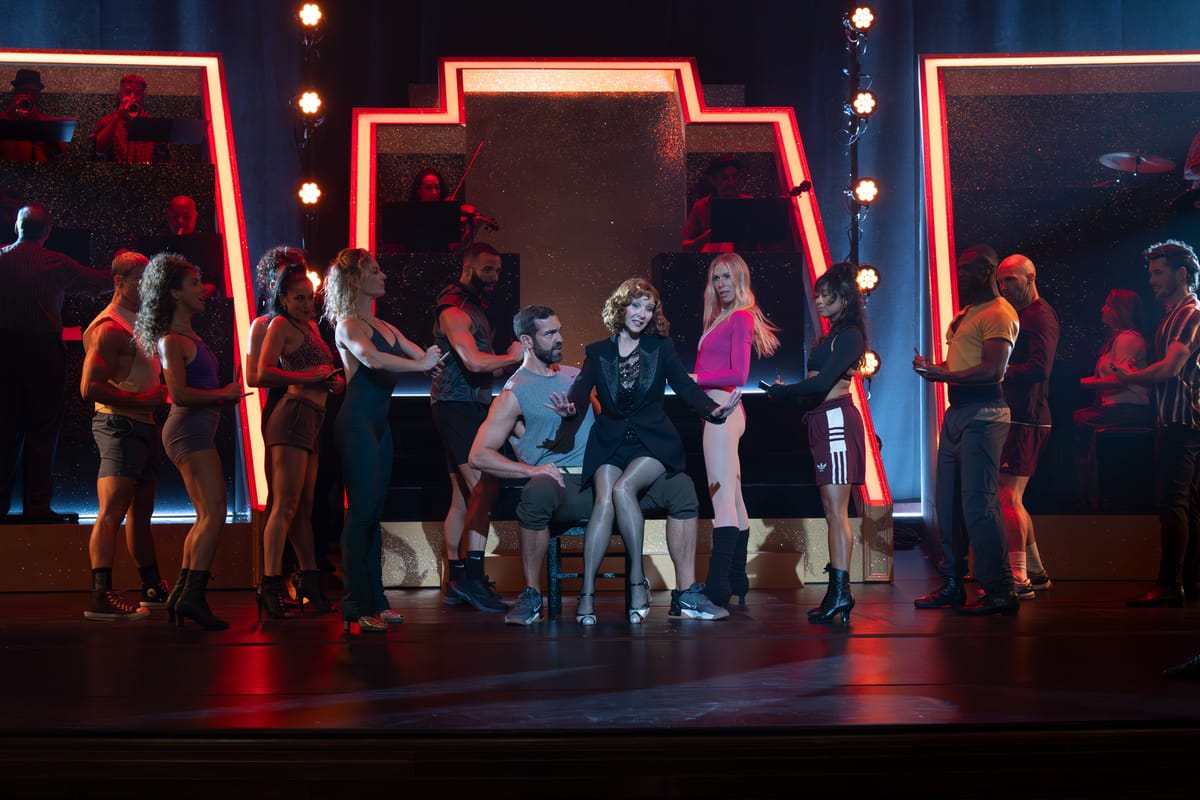
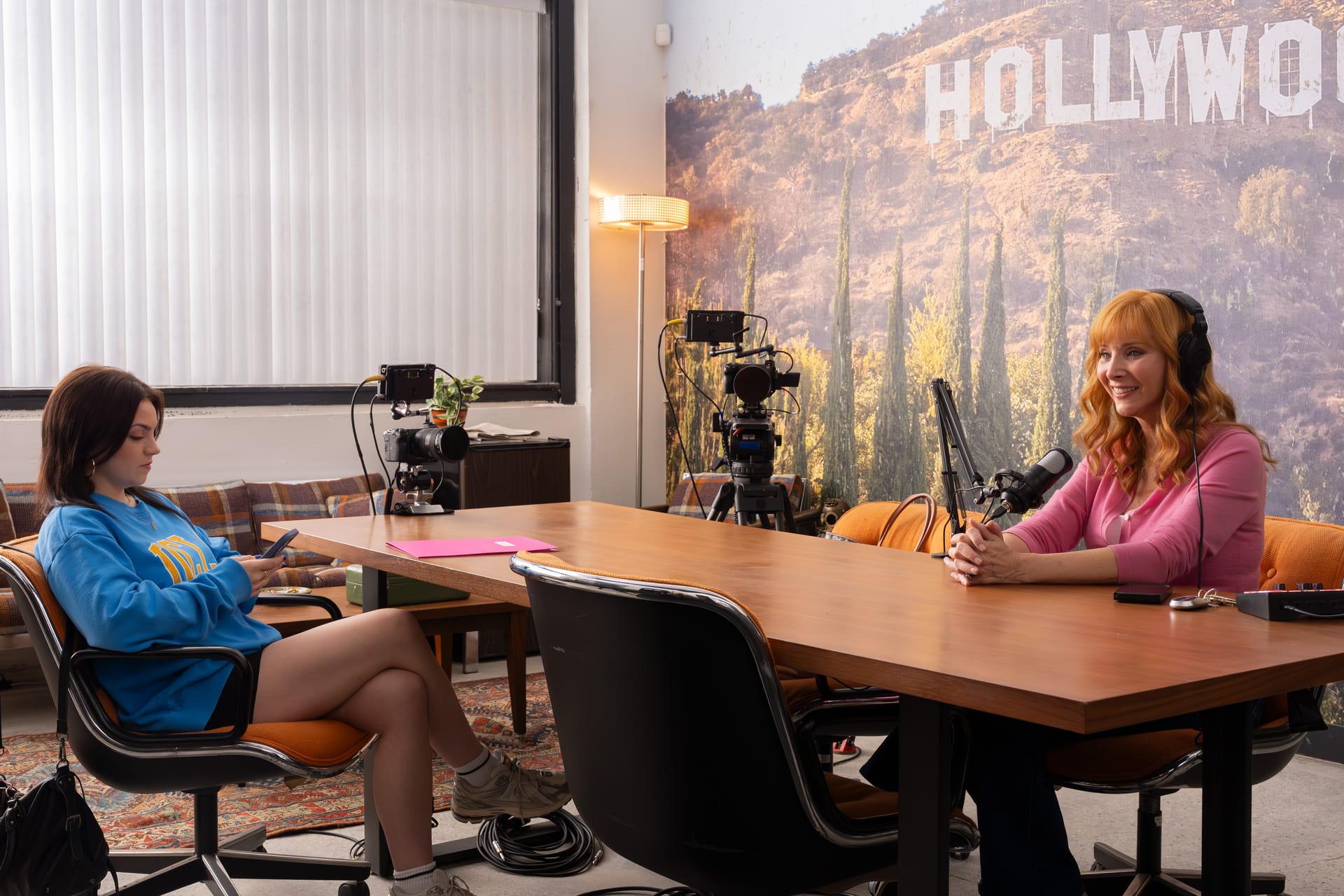
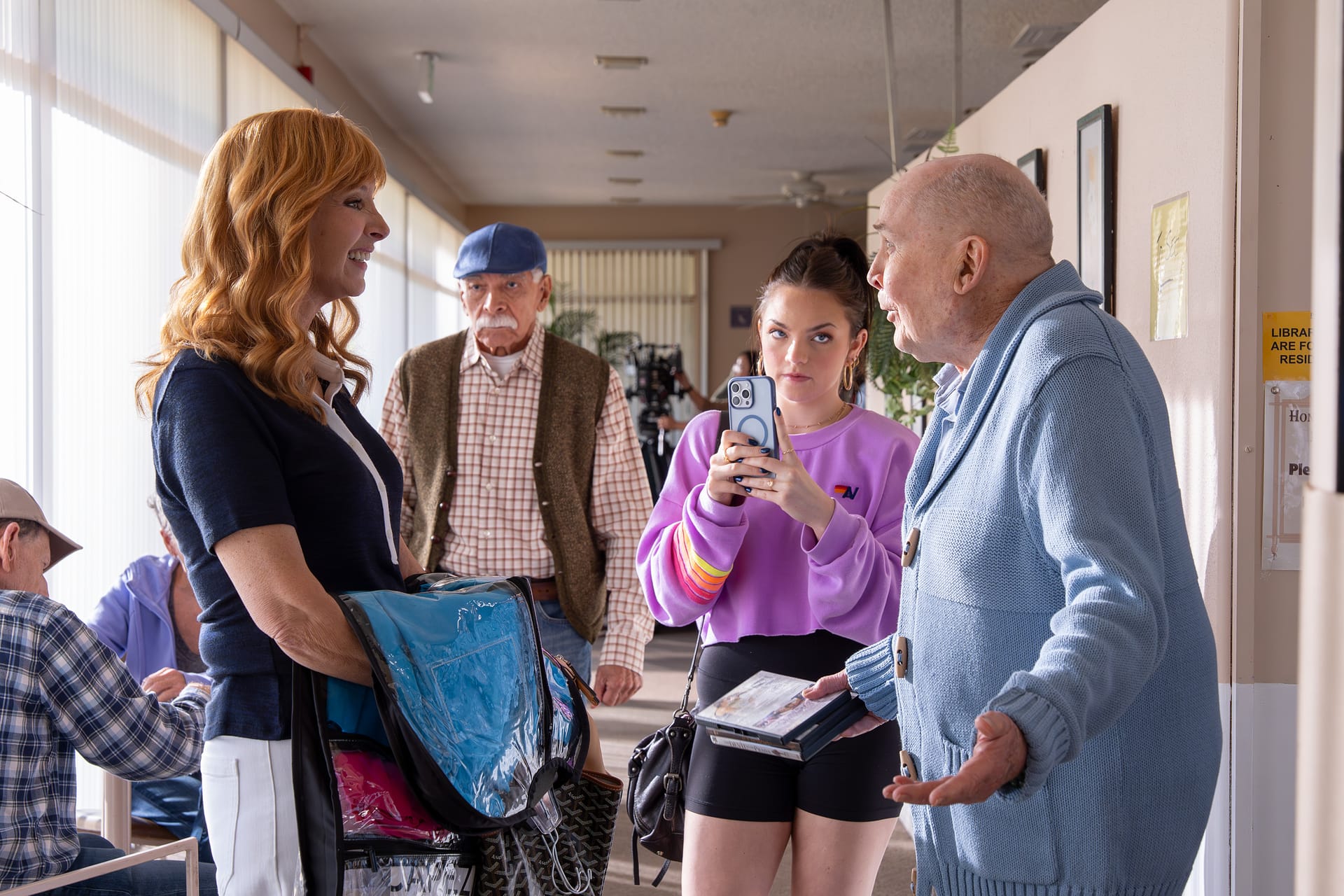
Kudrow and King’s script technically devises three different failing Valerie Cherish projects to push her reluctantly into the arms of artificial intelligence: her Broadway debut, her guestless podcast Cherish the Time, and the indie tear-jerker where she plays a fitness trainer for the elderly. Truth be told, this episode probably only needed one, but the projects accomplish different goals. Our brief time with Val in rehearsal for Chicago introduces us to Patience (Ella Stiller), the bored-looking 23-year-old who does her social media and suffers from a variety of vague afflictions—so far a bit of a Gen-Z stereotype, but not without her funny moments. It also establishes the circumstances of Jane’s current presence in Valerie’s life (at least in 2023): Val recently lent her a lot of money, which has shifted their dynamic into something strange and lopsided. With the younger, more online-savvy Patience around, Jane’s skills are becoming obsolete—she’s an aging woman in Hollywood just like Valerie, another avenue for the show to explore the same central themes. And the indie film project mainly serves to introduce Tommy Tomlin (theatre director Jack O’Brien), who’s clearly meant to be “the new Mickey.”
To a certain extent, though, these side projects are meant to just reorient us in the world of The Comeback, to reintroduce us to the same Valerie we remember. Maybe there’s something a tad shallow about these early high-concept ideas, like you can imagine the writers’ room spit-balling: What if Valerie went on Broadway? What if Valerie was on strike? What if Valerie had a podcast? What if Valerie was in a sitcom written by AI? But there’s something comforting about seeing her in these new settings nonetheless, and to see everyone treat her the same way they always have, with few exceptions. (Jane is one.)
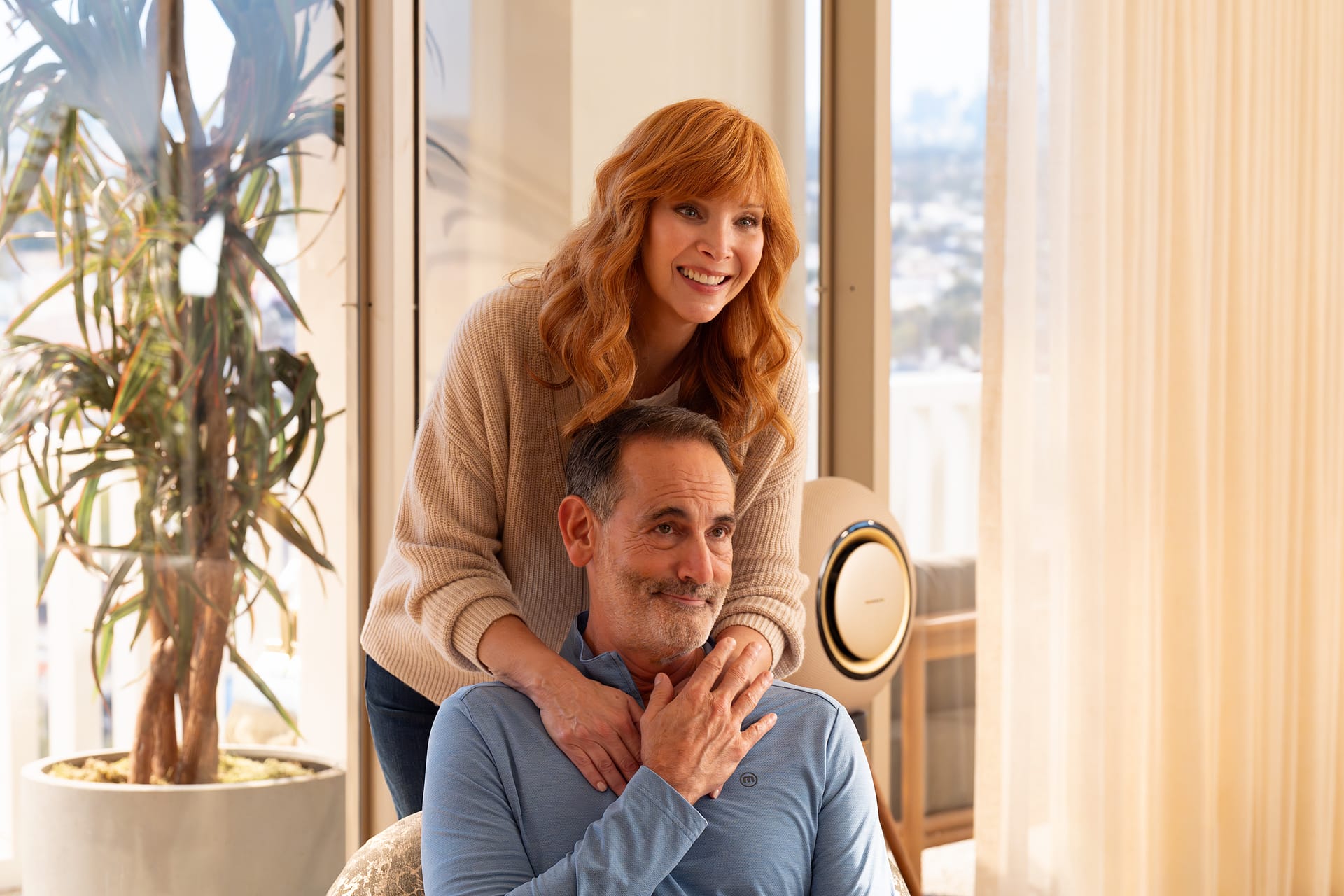
At the conclusion of that last finale, Val left the cameras behind, and The Comeback broke from the found footage format accordingly. This wouldn’t be the same show if it ditched the mockumentary elements entirely, and it hasn’t—but this premiere also doesn’t go back on that stylistic change, barreling forward with a more “objective” and yet equally meta version of its usual storytelling. (Just look at Jane’s line about how this feels too similar to the doc they already did ten years ago.) I’m not sure this third and final season will be able to reach the heights of the first two—that’s a high bar to clear—but I sure am excited to see it try.
Stray observations
- Happy to be discussing this beloved show with you all! I covered Survivor and The Traitors most recently for the site, and it doesn’t feel like I’m leaving the reality TV space behind entirely this time.
- I didn’t have much time to discuss Mark yet, but it’s great to see that he and Valerie are in a fairly good place, at least compared to the trenches of season two. That said, he’s still the same Mark, which means he’s less enthused about their gorgeous new status-symbol apartment than Valerie is, and he doesn’t have much patience for Patience. He also seems insecure that his wife is the only reason he got a job as a financial expert on Finance Dudes, which could become a bigger source of resentment as the season goes on.
- Also curious to see how this season pays tribute to Mickey (and the late Robert Michael Morris), who died of COVID in-universe during the first wave.
- “I feel like I’m indentured.” “No, you’re not. You’re paying me back by the work you’re doing.” “Yeah, that’s what ‘indentured’ means.”
- “I was doing Chicago on Broadway.” “I wish they’d stop calling me about that.”
- “Did you see that cute Nivea post of mine?” “Oh yeah, is that a collab?” “No, it’s to show that I’m open to collabs.”
- If I had one concern about this season, it was Michael Patrick King’s recent track record on And Just Like That, a show that felt out of touch throughout basically its whole run. But so far this writer’s room seems…stronger? Maybe Kudrow can curb some of his tendencies.
- Curious to see if this season will stay laser-focused on AI or paint it as just one example of a larger issue, possibly even a scapegoat. When Mark points out to Val that the strikes were also about the flawed streamer business model, not just AI, he gets cut off. (All the stuff with The Net becoming The NuNet is funny enough, albeit the type of joke that The Other Two or Hacks would’ve already made.)
Comments ()