
Review: The Boys, "15 Inches Of Sheer Dynamite" | Season 5, Episode 1
This show has one major lesson: Don't lose hope
Welcome back to Episodic Medium's coverage of The Boys, which concludes its five season run on Amazon. This review of the premiere is free for all subscribers, but subsequent reviews—including Alex's review of the second episode that debuted today—will be exclusively for paid subscribers. To keep reading and join the conversation, consider a $5 monthly subscription.
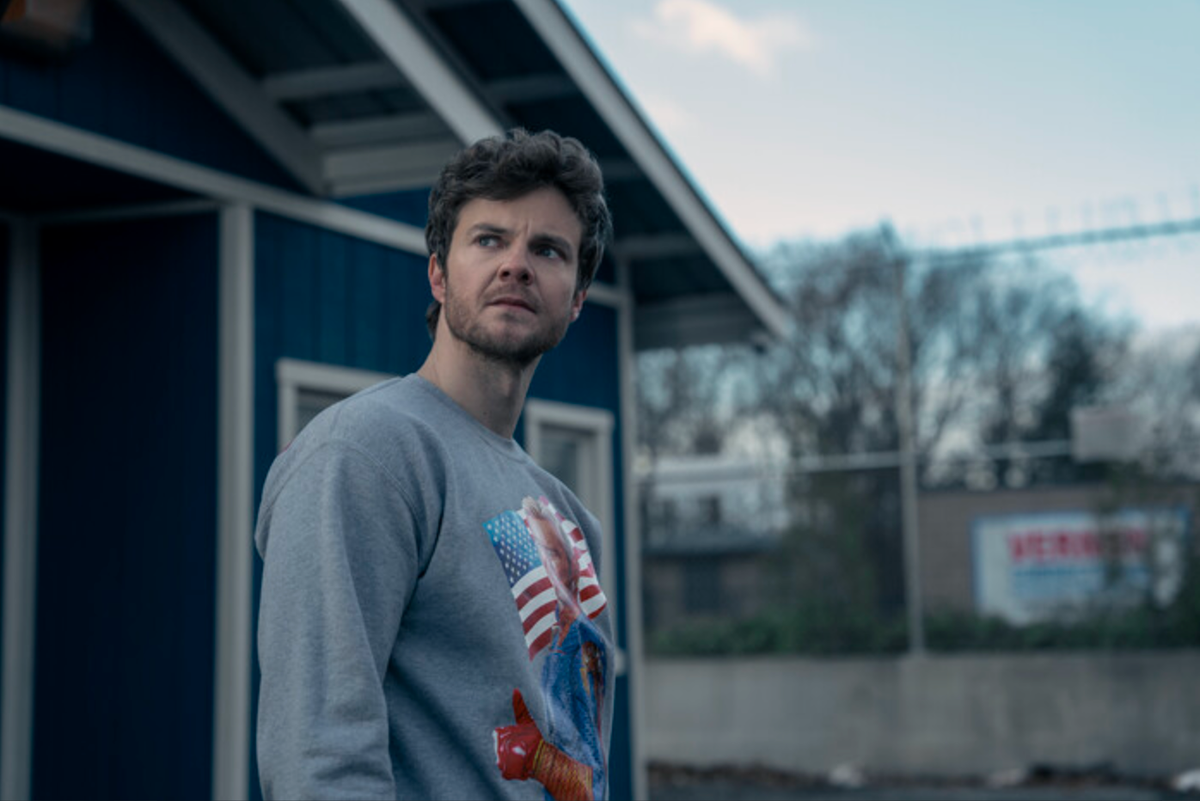
It's a relatively simple sequence, all things considered: While preventing Frenchie from getting shivved inside one of Homelander's "Freedom" (read: internment) Camps, Hughie Campbell bumps into Ivy, his old coworker from the Federal Bureau of Superhuman Affairs. (It's okay if you don't remember her—as far as I know, she hasn't been seen since season three, and this show burns through story like it's fueling a bullet train.) She, like most there, is frightened, sad, and feeling pretty despairing about the state of the world. "This is hopeless," she says, and it's hard not to share in the sentiment. But Hughie isn't having it. "I should be dead," he reminds her, reviewing several of the past incidents that, by any reasonable estimate, should have led to his demise. Instead, he tells her to embrace one simple emotion: hope. "If you lose hope in here, you're not gonna make it," he says.
And as if to prove his point, a frantic prisoner makes a break for it, only to be exploded by unhinged, bald-headed former Sage Grove resident Cindy. (Another person whose name it's okay if you don't remember. They don't say it much, but she's distinctive enough that you remember her anyway.) You need to keep your head—quite literally—if there's going to be any chance to...well, what counts as a win these days?
Keeping hope alive has become the animating purpose of The Boys. And with good reason: It's gone from being a reassuring but perhaps slightly banal cliche to one of the most vital necessities of modern life. Given the state of the world—and specifically in the case of this show, the downhill slide of the most powerful nation on earth into a hotbed of hateful authoritarianism and petty, nightmarish cruelty—hope has become more than a mere platitude akin to one of those "Hang in there, baby!" kitten-in-tree posters on your high-school guidance counselor's wall. It is, this show argues, absolutely fundamental to our existence. Without hope, we succumb—and not just to despair. As Hughie's rousing speech from the season 4 finale emphasized, without hope we also succumb to our own worst impulses. We may not lose what makes us human, but we lose what makes us a good human. What makes our lives worth living.
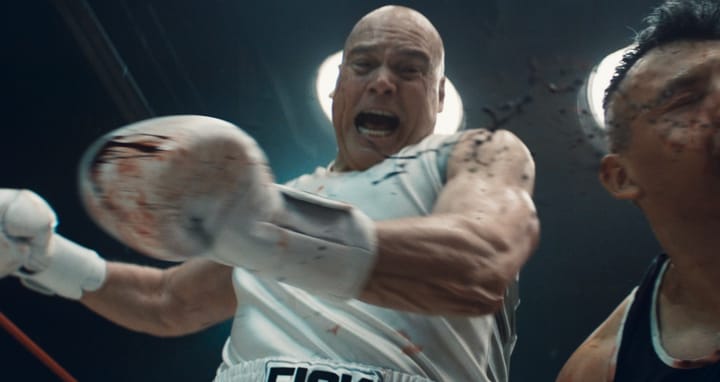
That's a mighty grandiose statement for a show whose season 5 premiere features an extended sequence of a superhuman beating someone down with his mutant-sized penis, but that's always been the not-so-secret essence of The Boys. Beneath all the cartoonish gore, savagery, puerile sight gags, and expletive-laden dialogue lies a deeply humanistic heart. And that heart gets a workout in the start to its final season, as the show allows the Venn Diagram of real-life American politics and the satire of its supe-riddled fictional world to finally become a circle, or at least as close to one as it can get.
"15 Inches Of Sheer Dynamite" takes all the horrors of our contemporary world and ladles them into the new status quo of the show with little visible effort, probably because a lot of this is what we've been living with for a while now. Things that would have been broad, can-you-believe-this gags in the past are almost casual asides, now. Whether it's the dismantling of racial progress and rolling back rights for women and minorities (cue Ashley: "Isn't white a color, too?"), the establishment of internment camps for "domestic enemies" (Homelander's Freedom Camp has nothing on Alligator Alcatraz when it comes to "how is something this stupid and evil real"), or just purging anyone working in government who dares question or dissent from our supreme leader, we're all too used to it. It's not so good for a laugh any more.
Luckily, The Boys is always up for some gallows humor. If you can't keep your sense of humor, the show's secondary message goes, than you've already let them take some of that humanity. And whether it's watching Deep argue with a Hammerhead shark about how long it took them to travel across the Atlantic, or Ashley justifying the aforementioned camps by exhorting to a cameo-ing Chris Hayes, "Who doesn't love freedom? Or camp?!", there's still plenty of good times to be had.
Thank goodness, because we're nearly 800 words in, and I've barely scratched the surface of what happens in this episode. It's hard not to immediately launch into comparisons to reality, and that's very much intentional. The Boys wouldn't be doing what it does if it didn't want to generate the discussion, something for which I am very grateful. (More shows should have the courage of their ostensible convictions.) There's been a lot of talk about Trump/Homelander parallels, but I've always been wary of that, largely because Donald Trump has nowhere near the degree of self-awareness that our series' biggest antagonist does. If anything, this episode reaffirms that Homelander is something more akin to a superpowered JD Vance—a pitiful, insecure, vainglorious bully who is ruled by his emotions and never met a person he wouldn't rather hurt than talk to, but who is driven more by fears than any blinkered braggadocio, and who desperately, desperately wants to be thought of as cool. "Take away these powers, and what are you?" A-Train asks Homelander at the end of this hour, right before the blond titan snaps his neck. "Nothing." It's the ultimate insult, because Homelander has no retort. He's looked in the mirror one too many times to argue the point.
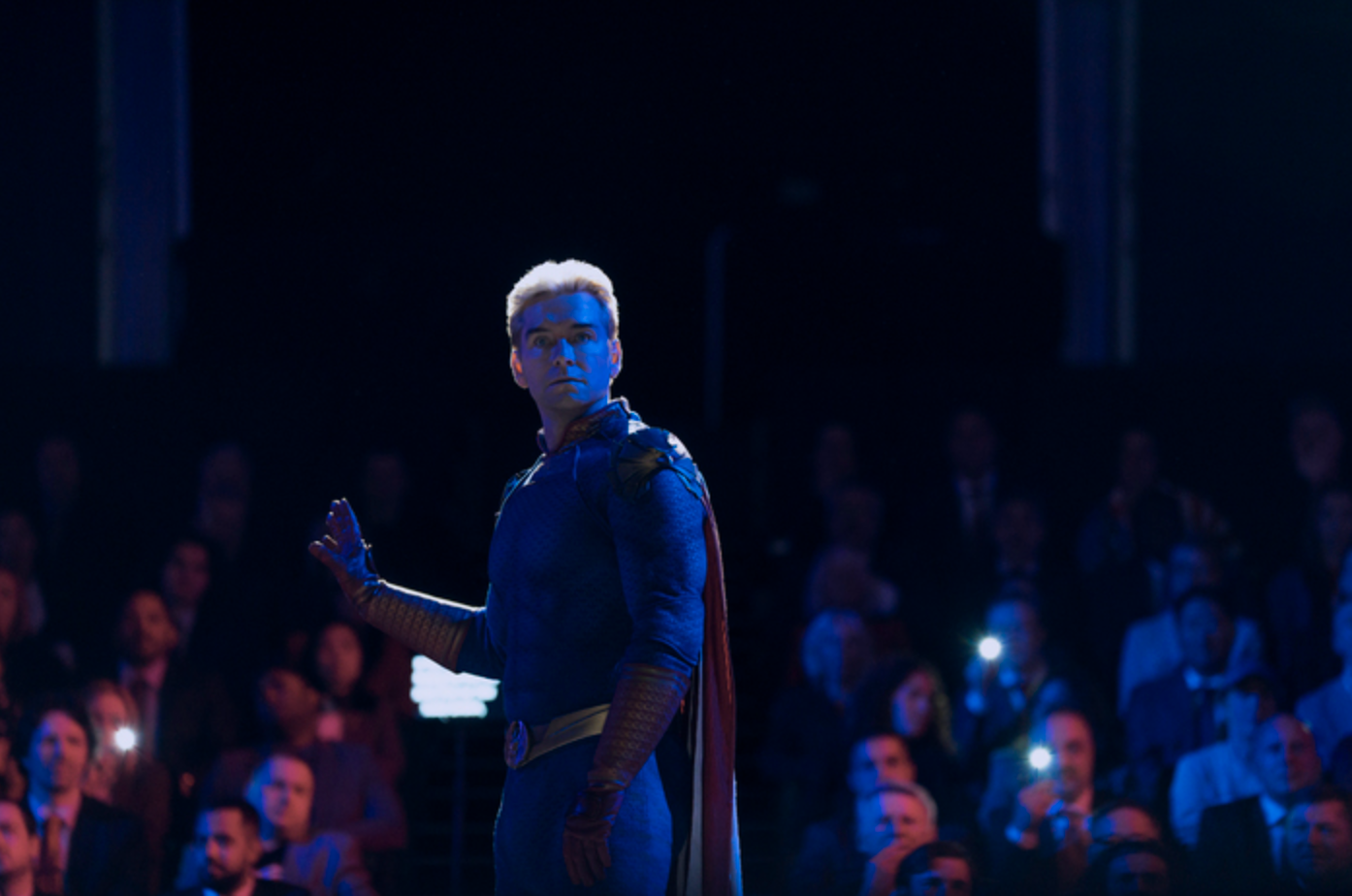
The emphasis on Homelander is understandable, because Antony Starr has played the hell out of him for five seasons, and between his performance and the arc the writers have crafted for him, he's one of the most nuanced characters, which would've been hard to believe back in the first few installments. Just look at how they've shaded him in, progressively making him less and less able to accept any boundaries to his perceived invulnerability. He used to enjoy cracking jokes with fans and posing for photos; now, it takes everything he's got not to vaporize the terrified makeup artist just trying to make him look good. He's less Julius Caesar (despite his shorthand with Sage) and more Caligula, shedding sanity and humanity while demanding to be worshipped as a god.
And his sinister shadow has come full circle with him. Butcher is now fully aligned with the cancerous monster inside him ("It's beautiful," Homelander tells him with something approaching admiration), and giving himself over to his worst impulses. Gone is the dying man who believed Ryan would do the right thing; in his place is a guy who, if on the surface doesn't seem that different from the same ol' bastard, has definitively crossed a line into vengeance at all costs. (Yeah, he said that back in season one, but he demonstrated repeatedly—nowhere more so than in his team-up with Homelander in the season 3 finale—that he didn't really mean it.) Look no further than his exchange with his dad, which almost certainly ended with the older man's gruesome death. "Son, please...it's pointless," says the cancer-riddled patriarch when Butcher approaches with murder in his eyes. "I know...," Butcher says, "...but it'll give me a good fucking laugh."
We've got a lot of plot to cover, so let's check in on the rest of our heroes while we try and cover the bases. (Good god, a lot happened, didn't it? Things that would have been the foundation for an entire episode in the past are maybe the 6th most noteworthy thing that happened here!) After our reintroduction at the Vought shareholders' meeting, where Homelander plays to the crowd about how well things are going, Annie busts in and finally reveals to the world the series' biggest MacGuffin: the phone footage from the flight massacre, where Homelander's villainy is on full display. But Sage knows best: Rather than let her partner in crime lose his temper, she lets the media do its thing, and soon enough, all the red-pilled Vought believers are convinced it's an AI fake and doing TikTok dances to the audio track.
Still, the damage to Homelander is done: He's furious, and despite Sage's assurances, he quickly moves from general anger to demanding anyone who shares memes making fun of him online be rounded up, too. (Ashley's laundry list of government agencies they've already purged of anyone not loyal to Homelander, instead of the Constitution, is a little too true-to-life to be funny.) Which leads to the central driver of the episode: The planned execution of Hughie, M.M., and Frenchie as a trap to draw out Annie and Butcher. This lets us see where they stand: M.M., surprisingly, is the most hopeless, drinking and getting into fights because he doesn't see a way to win. (Luckily, he wants to kill Love Sausage—the monster-penis guy—more than he wants to give up.) Frenchie is dedicated to the cause and fully on Team Hope (Team Hughie?), and the three of them plan to escape before the others even arrive, knowing it's a trap and Homelander will be waiting. Oops.
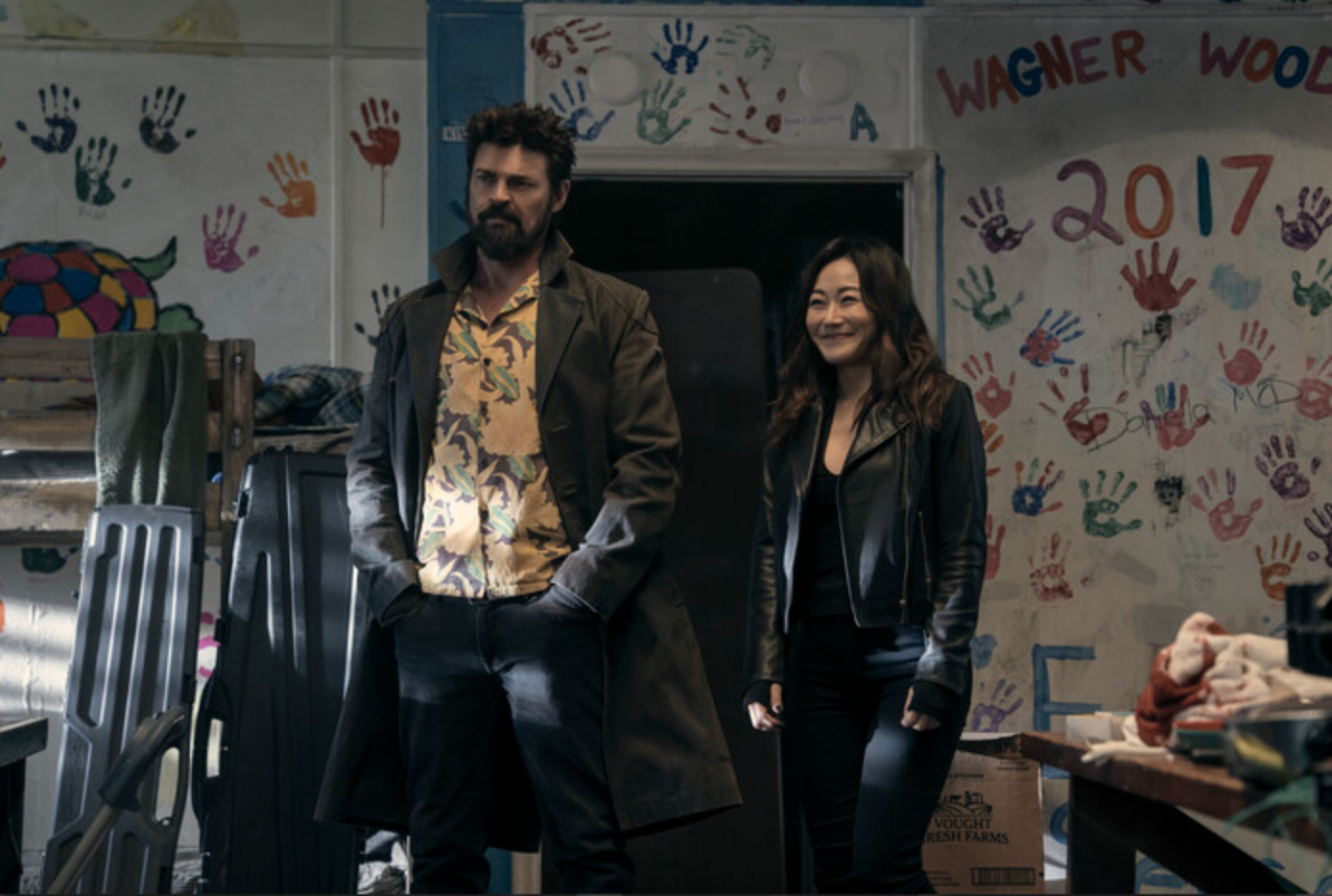
So naturally, Annie, Kimiko, and Butcher join forces to spring them, despite the fact they'll likely run into Homelander. (Honestly, the plan isn't too bad: Annie unleashes a light eruption so intense that it temporarily blinds the fascist supe.) Is this a good place to say that KIMIKO TALKS NOW?! And her voice is a delightfully chipper, half-step-removed-from-Valley-Girl source of pep and light. (She learned via lots of therapy and TikTok.) As a result, Karen Fukuhara gets to deliver some of the best lines (or deliver lines, period!), but more importantly, the character's fundamental role as the heart of the show gets reinforced, especially once she's finally reunited with Frenchie during the Freedom Camp jailbreak. Sure, Annie would just as soon Butcher die—and the feeling is likely at least a little mutual—but these people know they need each other for the time being, even if they also know their respective plans (Butcher's supe genocide vs. Annie's literally-anything-else) are setting them on an inevitable collision course.
But the soul of the episode belongs to poor, doomed A-Train. Or rather, it would, had his storyline not been burned through so fast that it felt like more of a B-plot hastily added to maximize emotional impact. But honestly, his arc does come full circle: The man who kicked off the series by vaporizing Hughie's fiancée because he plowed through her at super-speed has become someone who saves people. As his brother stresses, he has done good, now, keeping his family and loved ones safe. As a result, despite his protestations to Annie, he shows up just when needed, saving our people and leading Homelander away from the rescue. The show even provides an admittedly on-the-nose bookend for A-Train, as he sacrifices himself to avoid running through a random woman during the chase. The man who didn't care about anyone but himself has now chosen to end his life at Homelander's hands, rather than hurt another innocent person. R.I.P. A-Train—you were a real piece of shit for a lot of your life, but you came through in the end.
We touched on just about everyone this episode: Firecracker's still a Vought News tool, though her superhero days might be behind her, given how weak her heart is from the drugs she took to provide breast milk for Homelander last season. Deep and Black Noir are now manosphere podcaster bros, which honestly couldn't be a more fitting direction to take dimmest, most bro-y member of The Seven. Sage is busy trying to keep Homelander from undoing all her hard work, and spurning the attempts from Ashley's new beau (or beard, rather?) to pull some "we're in this together, my sister in Christ" bonding. Speaking of: Ashley is the goddamn Vice-President! I couldn't be happier for this turn: Colby Minifie has made a meal out of that character, and with her new mind-reading powers, I suspect a key role yet left to play for her.
This season is going to be bleak, there's no question. Things are still terrible for our heroes, and even the threat of the supe virus is being mocked by Homelander. But let's bring it full circle back to Hughie, because this episode reminds us why he's the protagonist. When Homelander ridicules him, asking why truly powerful people like Annie and Butcher would waste their time on someone with no powers—a true nobody, in Homelander's eyes—Hughie's answer doubles as a reminder of what they're fighting for. When asked why they would risk everything to rescue a zero like him, Hughie answers: "Because I'd do it for them." You've got to have hope.
Stray observations
- Welcome, everyone, to the reviews for the final season of The Boys! I couldn't be happier to be back talking about it (again, hoo boy, is there a lot to talk about), and I'm looking forward to reading your comments and discussions.
- I guess this is as good a place as any to do some quick venting and get it over with. You may recall my rant from episode five last season, when the show had the temerity—nay, the unmitigated gall—to introduce key plot points and characters from Gen V with little to no warning, to the point that the "previously on" montage included elements from that wholly different show. I won't re-litigate my argument here, but suffice to say, if you haven't been watching Gen V, you might want to start, as this episode was referencing plot developments left and right. (You could get away with not watching, but it's gonna make for some confusing updates.) It's not right, but it's what's happening.
- Ok, I'm going to go ahead and guess now: Black Noir has been replaced by someone we know, right? Why else would he refuse to respond to Deep? I'm not saying it's a good guy in disguise—he kills Annie's accomplices at the Vought meeting easily enough—but there's something unusual going on there.
- Kimiko's been in Manila taking care of some young kid, after becoming too much of a liability for her guards. (Sure, if you say so.)
- This Week In Gross Super Abilities: The Worm, who can ingest dirt through his mouth and out his ass to burrow tunnels. I did laugh when he was revealed to be writing awful dialogue for a Reacher spec, though.
- Homelander line of the week: "I like internment-camp Hughie. She's zesty."
- I would be deeply remiss if I didn't call out A-Train's hero moment: He goes all X-Men: Days Of Future Past and pulls a Quicksilver, racing around the camp to save Hughie, pull pins on grenades, and generally do a whole badass shtick in his final moments.
Comments ()