Review: Ted Lasso, "Don't Jump Around Much Anymore" | Season 4, Episode 6
New Year's means old acquaintances AND the central storyline be forgot

“It’s fun, innit? Just like old times.”
In its second season, Ted Lasso did a Christmas episode as an afterthought. Apple asked them to add two episodes to the season after it had already been broken, which meant they needed to find a way to extend the narrative without disrupting what had already been laid out.
 Myles McNutt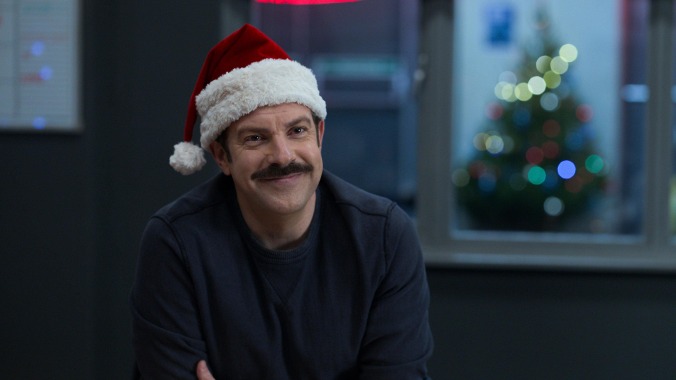
The result was, somewhat inevitably, a bit of a “very special episode,” but one that clearly fit the Lasso ethos. After its first season, the show had settled into seeing the Greyhounds as something of a found family, and so letting the “story” fade away to let them celebrate the holiday made a lot of sense (well, at least until they basically ignored the consequences of the episode before the Christmas episode when they came back to it, but that’s getting in the weeds here).
These “departure” episodes became something of a calling card for the show, resulting in Beard’s Night Out (the other episode they had to add after the fact) and the trip to Amsterdam, and “Don't Jump Around Much Anymore” fits into the same pattern. It’s New Year’s Eve, and the larger story of the Lady Greyhounds’ fight for relevancy isn’t really at play: Zelda is throwing them a party on a boat, but Rebecca and Keeley are attending a vodka launch with an old friend instead, while Ted and Michelle spend New Year’s at Mae’s as Henry gets time and a half as a dishwasher.
Last week, I noted my frustration that the show was taking a story that should have been about the Lady Greyhounds and overburdening it with stories about our returning characters, but that same balance this week makes more sense. We care about these characters and want to see them living their life outside the context of the team, albeit within the boundaries that the central story isn’t suffering as a result. By its conclusion, “Don't Jump Around Much Anymore” makes the argument that the show and its characters needed this moment of self-reflection, even if things remain a bit too skewed to the returning characters at the end of the day.