
Review: Survivor, "Permanent Uncertainty" | Season 51, Episode 1
If you don't read that to the tune of Jamiroquai...(How would players spell Jamiroquai at tribal, do we think?)
Welcome back to Episodic Medium's coverage of Survivor. As always, this first review is free for all, but subsequent reviews will be exclusively for paid subscribers. Our current yearly subscriber deal is the best one for Survivor fans—both seasons all for 20% off the usual price. You can see our full fall schedule here.
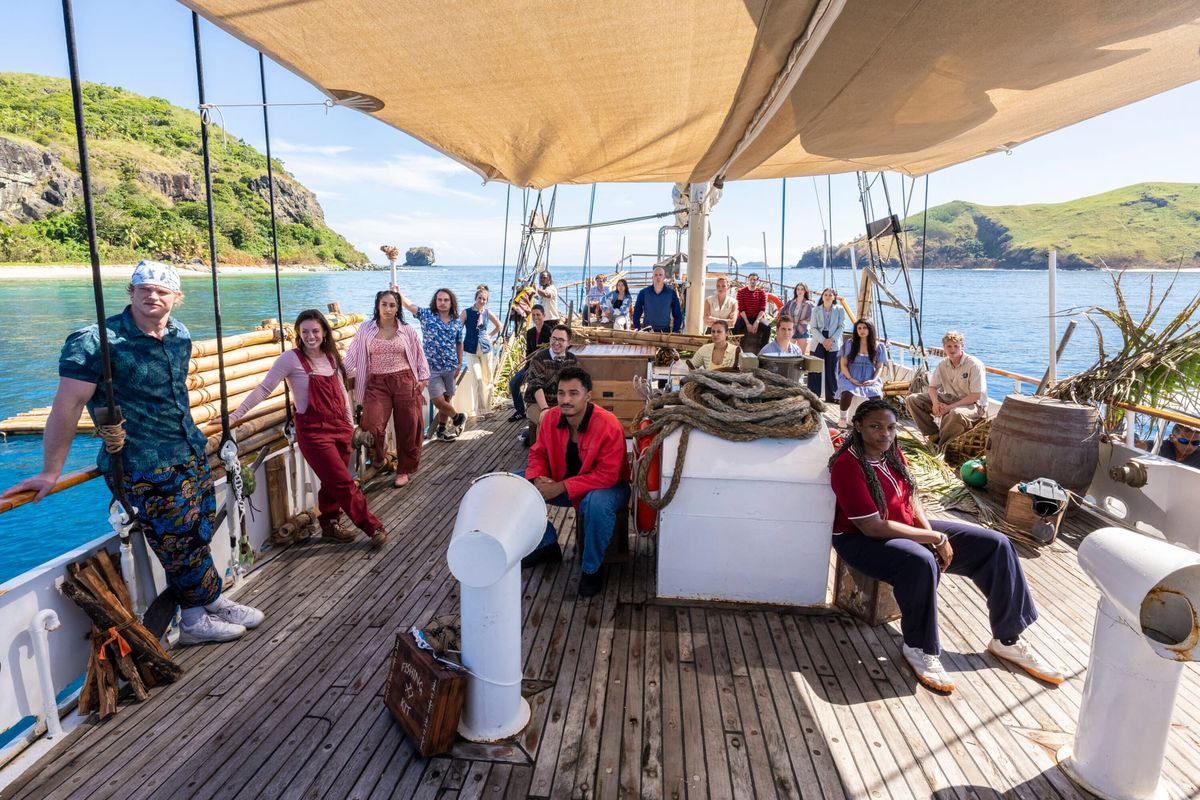
On the one hand, the opening scene of the 51st season of Survivor is meant to be a return to classic Survivor. It’s an old-fashioned marooning, with players scrambling to get everything they can off a boat in two minutes. And just in case you didn’t get it, many of our first talking heads are about players calling out the throwback, and the edit gives us a montage of past maroonings.
But on the other hand, this isn’t a marooning about the idea of outwitting, outplaying, and outlasting. This is a meta-marooning, the beginning of a version of Survivor that takes Season 50’s interest in the history of the game and transitions it into the “uncertainty” of the “open era.” Jeff Probst isn’t a host introducing them to the game of Survivor: he’s the star of his own immersive theater production, roaming among them dropping lore and basking in their attention to his every word.
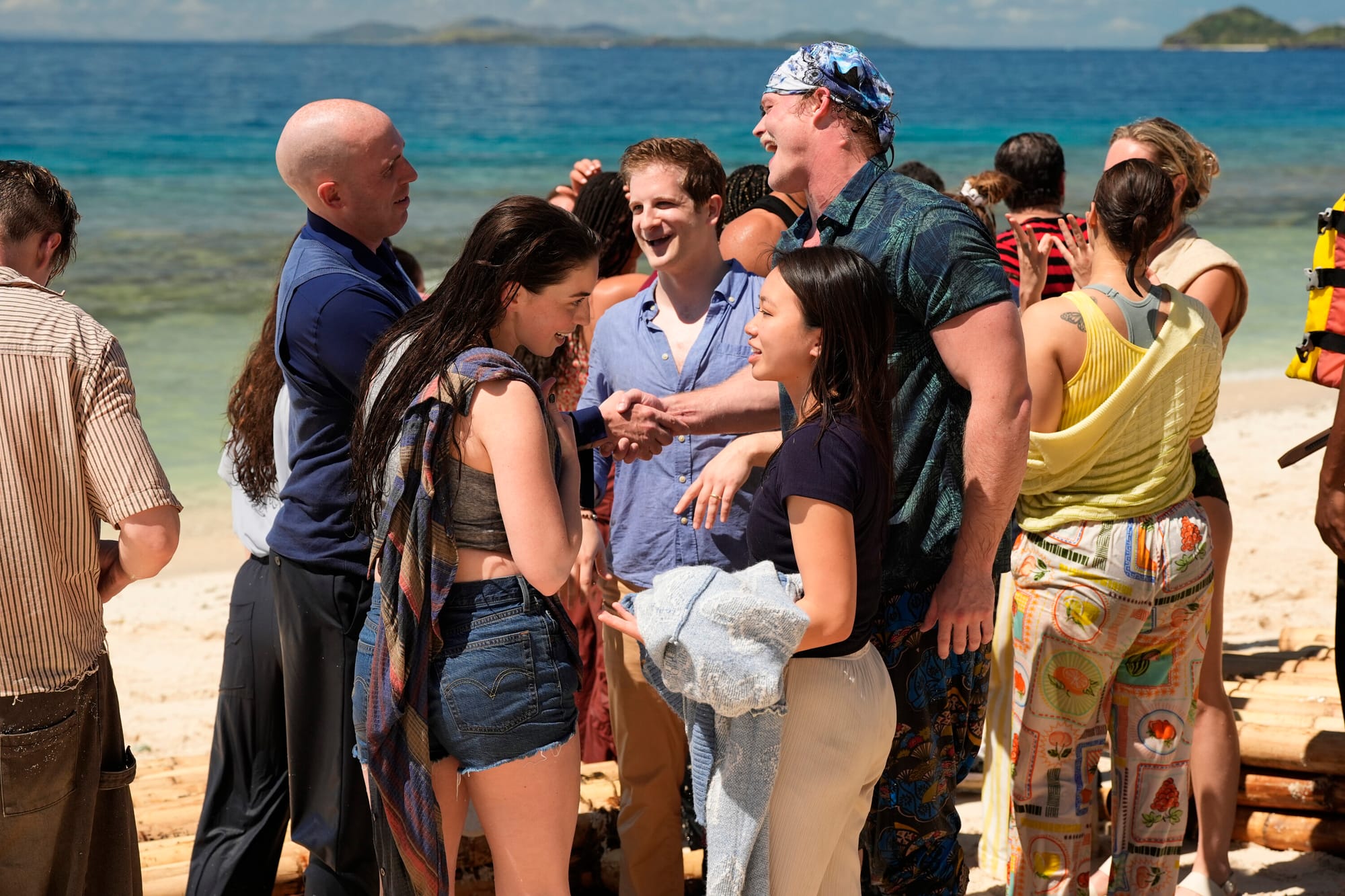
It seemed particularly silly, especially the handheld camerawork, but I understood his theatricality better once it was clear that the castaways were being marooned without tribes. Probst normally gets to be the overseer of the entire beginning of the game, but this time around part of the uncertainty is that Probst disappears once the marooning is complete. Instead of introducing themselves before the first challenge at Probst’s prompting, the castaways hold a mixer—showmances blossom, fast friendships are formed, and they even get together to send the 21st castaway off to the other side of the island on a journey. If you thought Probst would show up to bring them into tribes, you’d be wrong: a helicopter drops the two tribes their buffs, and they’re on boats to their new homes after a “negotiation” for supplies.
And look, let’s be clear: this is new! If you felt like the new era had fallen into a rut, and had moved the show away from its ability to surprise us, then there’s something welcome here. Mind you, there’s every reason to think that “permanent uncertainty” could just as easily result in the overreliance on advantages that has changed the game for the worst, but there’s at least a chance that it could mean a lack of advantages, and I’ll take that. The idea of remixing elements of Survivor—like the immediate introduction of Exile Island—with less repetition creates a much better chance of the show truly surprising us. We’re never going to know exactly what the season could do, and there’s something thrilling about that.
But as evidenced by the amount of time we get with the players before Jeff explains the Open Era to them, and as he emphasized in his opening spiel, Survivor comes down to the players. One of the challenges of the New Era was the feeling that the players themselves had less agency, their actions dictated predominantly by the producers and their machinations. And really, the same concern exists here: now that there’s no ability to anticipate the game, there’s every chance that a player’s game will be disrupted by factors you could never prepare for. And that’s fine, provided that the players are engaging with the game in productive ways, and that there is entertainment to be found in their management of the uncertainty. Whether it’s someone who stays calm under pressure, or someone who runs around like a chicken with their head cut off, this season lives or dies not based on its twists but rather on the players producers have chosen to navigate them.
The two stories that emerge are…the kind of early stories you expect, regardless of uncertainty. The truth is that in the early stages of Survivor, there’s always uncertainty—only the permanence is new. This leads to a lot of immediate judgments, which emerge within the interpersonal challenges of being trapped on an island with a lot of pent-up energy. It always strikes those of us at home as a bit absurd: what do you mean these people are so quick to make conclusions about the people around them? But for all the “uncertainty,” we’re used to seeing someone like Eric rub his tribe the wrong way through sheer enthusiasm (and so many music references), used to perfection by more cutthroat players like Rob to shield themselves from any suspicion. And although Devin’s conspiracy theory about Jenna may be baseless, the way the entire tribe buys into it shows how quickly they’ll latch onto any story that doesn’t include their own early exit.
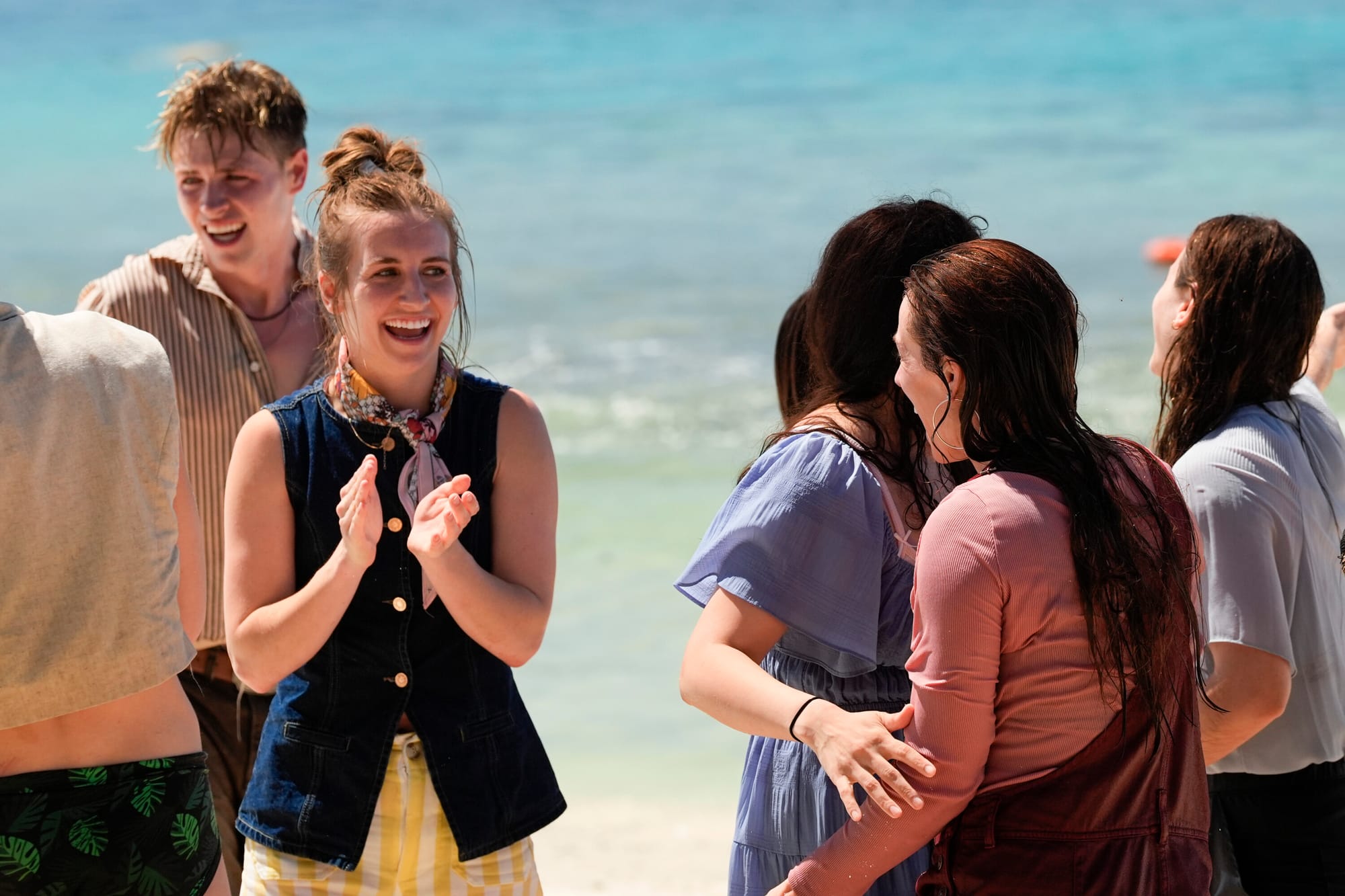
The actual “result” of the first episode of a season of Survivor is rarely all that interesting. It’s a compelling immunity challenge, with some new elements (or at least elements I don’t remember) and some physicality we don’t always get, but there’s no real story to speak of outside of Brady trying to channel his buddy Jonathan’s challenge beast position a little too heavily. It all comes down to which of the two narratives we were spoonfed early on—Eric’s ostracizing of the Savu tribe, Jenna being viewed as shady at Toka—are going to be activated, and what that brings to the show’s social experiment.
When Toka loses immunity, it immediately becomes a typical story: a weaker woman being an easy target for a first vote. We’ve seen this story before, and everyone seemed onboard before the challenge, but something turns when some of the other women start to raise questions. Firs you have Patt, a federal prosecutor, who chooses an evidence-based approach noting how successfully Jenna managed the puzzle as they tried to come back in the challenge. Most importantly, though, you have Jelly, a Sociology Professor who abhors the idea of women going home, and who is the first to start thinking about the “overpromise and underdeliver” vibe the men gave during the challenge. It’s a conversation that makes Jenna aware that she’s been an early target based on being closed-off (more on that in a second), activating an alternate plan…to shift the target to a different woman by leveraging the insecurity of the men they were criticizing.
Look, I don’t blame Jenna for this. Her explanation for all of this is understandable: as a recently divorced 30-year-old who had been with their partner since they were 18, she has no idea what her life looks like, and that’s a form of anxiety that she can’t hide in this scenario. And with her back against the wall, she knows that even the players who were badmouthing Brady have no intention of voting out their muscle, and so her only option is to try to shift the attention to a different woman for largely the same reasons. Aaliyah’s challenge performance was objectively worse, which makes this a battle between the interpersonal and the “game” as a set of principles but girded by the same basic misogyny that dictates these decisions most of the time.
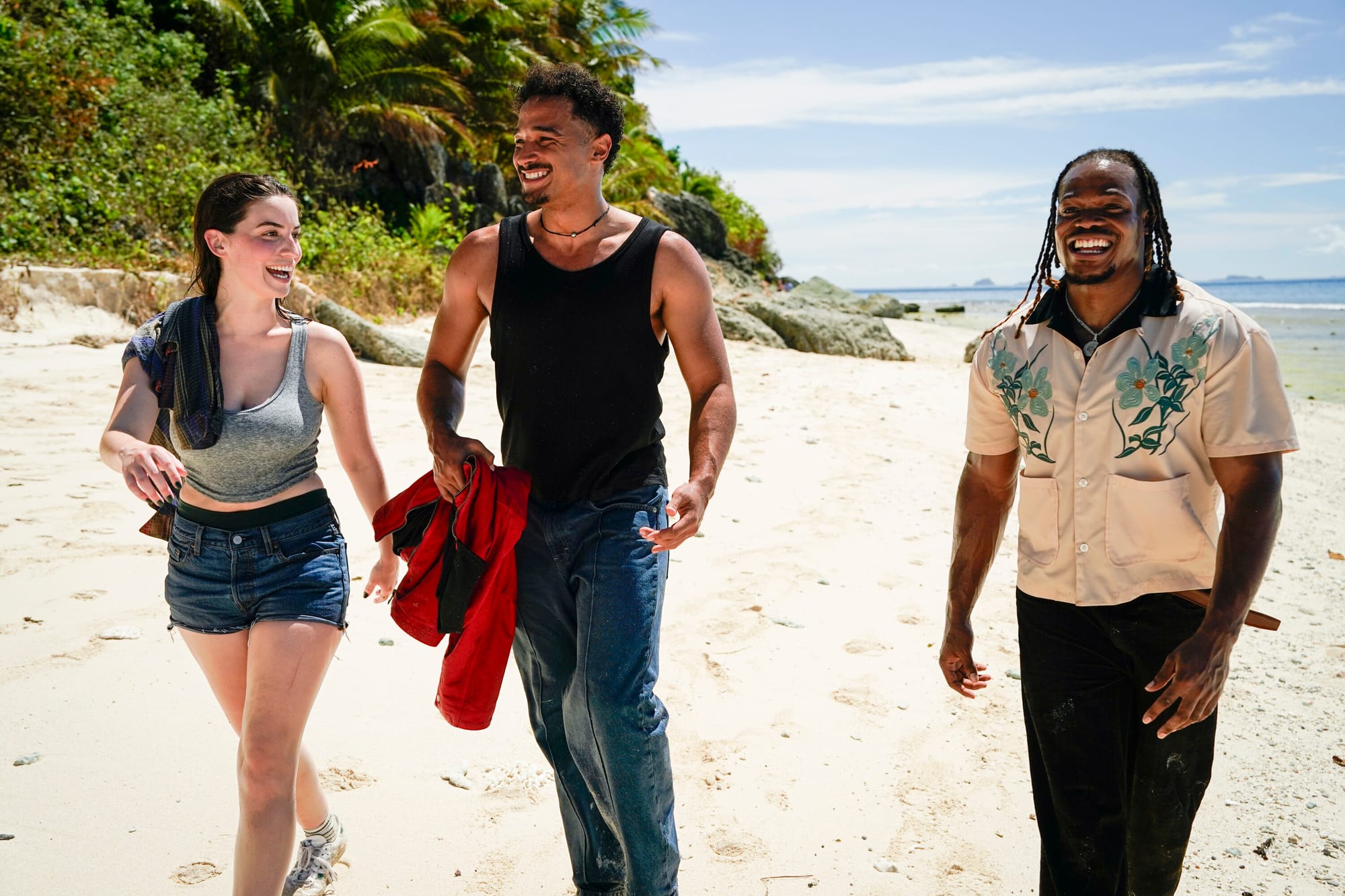
What follows at tribal council is more interesting than you’d normally expect, mainly because Devin—who took a clear leadership role and was driving the Jenna speculation—sticks to his guns despite a sense that the rest of the tribe was changing their minds. Devin benefitted from an immediate alliance before the tribes were even chosen, a Cookout-style aligning of the Black contestants alongside Aaliyah, Jelly, Ori, and Sharonda. They didn’t all end up on the same tribe (they had to know that was going to be unlikely, even in a One World scenario), but three is a significant number of aligned players. The problem is that they’re not really as aligned as they need to be: it’s ultimately Jelly’s actions that disrupt the Jenna plan, even if she ends up voting with Devin when the time comes. And while we can shift our attention from gender to race in terms of why the vote shifts to Aaliyah as effectively as it does, with the largely white tribe reorienting around Brady’s anger at being accused of being aggressive (which, sir), it’s also a rejection of a purely “vibes”-based elimination in the face of evidence that Jenna might be a better asset to the tribe when push comes to shove.
It’s messy enough to lead to a historic double shot-in-the-dark—both fail—and the sense that as much as Devin might claim that they’ll all be friends when they go back, his role as leader of the tribe has effectively been usurped. And while we can again think of that through the lens of identity—the queer black man losing his claim to authority—there’s also no question that Devin’s belief that pure charisma could build a case against Jenna was short-sighted. He might not face the same level of rejection than Eric’s Type A performance draws at Savu, but in the end he still couldn’t whip the vote when the time came, and there’s some reckoning to do around that.
Does any of this make this the right group to face the “Open Era,” necessarily? That’s harder to say, but you certainly can’t argue that they’re unwilling to play the game. There’s some big moves here, and while I don’t know that there are players emerging that I particularly like, I’m interested in enough of them to be intrigued by the path forward. And as we enter our own “open era” with Ben and I alternating reviews, I’m curious to hear from him next week on how he’s connecting with the cast, and how the “permanent uncertainty” resonates with him.
Stray observations
- Everyone presumed they were doing three tribes of 7 based on the cast of 21, but that was an early swerve, and honestly? We love a two-tribe season, even if we know they’ll go to tribes of three at…probably 18, right? And then a double elimination?
- As for Exile Island, farmer—there’s three farmers?—Lewis volunteers to isolate himself, fails at a mast-chopping challenge, and then sits there not sure how he’ll fit into the game from this point forward. Presumably he’ll join the losing tribe?
- Rob definitely plays the biggest game here, successfully pushing against Eric and finding a straight idol—no terms, final five—in the process. But I also hate everything about this genre of player, so I’m going to need a blindside sooner than later.
- The most interesting player within Toka, even if he makes very little impact in the tribal itself, is New York Yankees executive Mike. He acknowledges early on that his skillset suits tasks like the opening negotiation, but he doesn’t step up, and even before tribal there’s a sense he’s just trying to stay in touch with people. I feel pretty confident that he played a bigger role in how a lot of the tribe voted than we realize compared to Brady’s bluster.
- The episode leaves most of Savu without a lot to do, but Ana does get an extensive breakdown of her tribemates as anime/video game archetypes, which was…a thing. Not sure the vibes are right for the rest of her tribe, but we’ll see.
- Interesting that Jenna was defending her wedding photographer credentials to producers—does this mean they asked her about the skepticism, because she had already learned about it, or did they bring it up? Lots of questions.
- We’ve really lost our way as a society if that many people don’t default to “Aaliyah” from a spelling perspective, y’know?
- Is it really possible that we have two attorneys and we saw neither actively lying about their jobs in a performative way?!
- We really went with whalebones as our theme, huh?
- I saw at least one person who left CBS on after Survivor and thus saw how Dee and Devens are doing in the endgame of this summer’s season of Big Brother—I’ve been watching this season, and happy to chat in the comments.
- Welcome back to Episodic Medium’s coverage of Survivor. As noted, Ben and I will be alternating weeks—or embracing more uncertainty if circumstances make one of us busy unexpectedly—and hopefully that gives us lots of different perspectives alongside the comment sections. Looking forward to chatting about it with all of you as always.
Comments ()