
Review: Star City, "The Eyes" | Season 1, Episode 1
Is it just paranoid Russian For All Mankind? Well, yes and no.
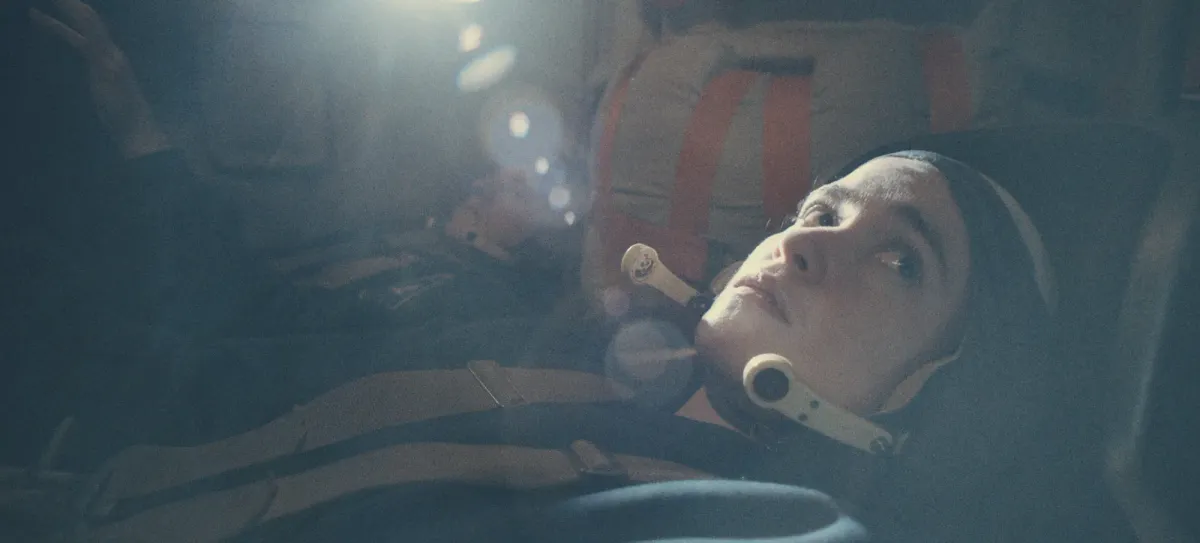
Welcome to the second-half of today's FAM double-header, as our coverage of spinoff Star City begins. As always, this first review is free, but paid subscribers can keep up with the whole season and join the conversation for tomorrow's coverage of episode two. Our full summer schedule will be up early next week.
It's not rare for a spin-off to be defined by its relationship to its parent show. But it's been striking to me, reading the buzz for Star City, Apple TV's new alt-history space thriller, just how much its potential fans focus on whether it will successfully recapture For All Mankind's glory days.
Having seen Star City's pilot, my best answer is: it's sort of trying to be early season FAM. But that's not the point the show's trying to make. The secret sauce of For All Mankind's first few seasons was the show's insistence on giving equal effort to its high-stakes space exploration and to the human-scale emotional conflicts that draw the astronauts and engineers together. Star City has those elements, too. But it's bound them together with an omnipresent sense of paranoia. Every character on Star City is living under high surveillance; every mistaken word or overheard phrase that could possibly be a slight against the Soviet regime could cost someone their life. The titular Star City is more than a dark mirror of the Johnson Space Center. It operates by hidden, fearful logic that casts everything and everyone in a suspicious light, even as it still has to shoot people to the Moon once in a while.
Star City uses this new twist—this sense that every character has been unwittingly thrust into a spy thriller while still trying to do their jobs—to give the franchise's formula a heightened jolt of energy, a task at which it's decently successful. But, fundamentally, it's also just another set of plotlines that the series has to attend to. The show is well-cast, well-shot, and often well-written. Still, its ultimate success will depend on whether it can find a working balance between space exploration, interpersonal drama, and the espionage that binds the two together.
At least in the pilot, the weakest of these three primary plot engines, by a long shot, is the relationship drama. For All Mankind was never afraid to be a little soapy with its early-season plots; for every catastrophic death, you had an ill-advised love affair or two. When those plots played with as much potency as the show's high-tension space rescues, it was because they were grounded in well-realized characters and highly specific dynamics. Those dynamics developed over time, of course—Gordo's infidelity didn't feel quite so painful until the show gave its viewers the opportunity to really get to know Gordo as the first season went on.
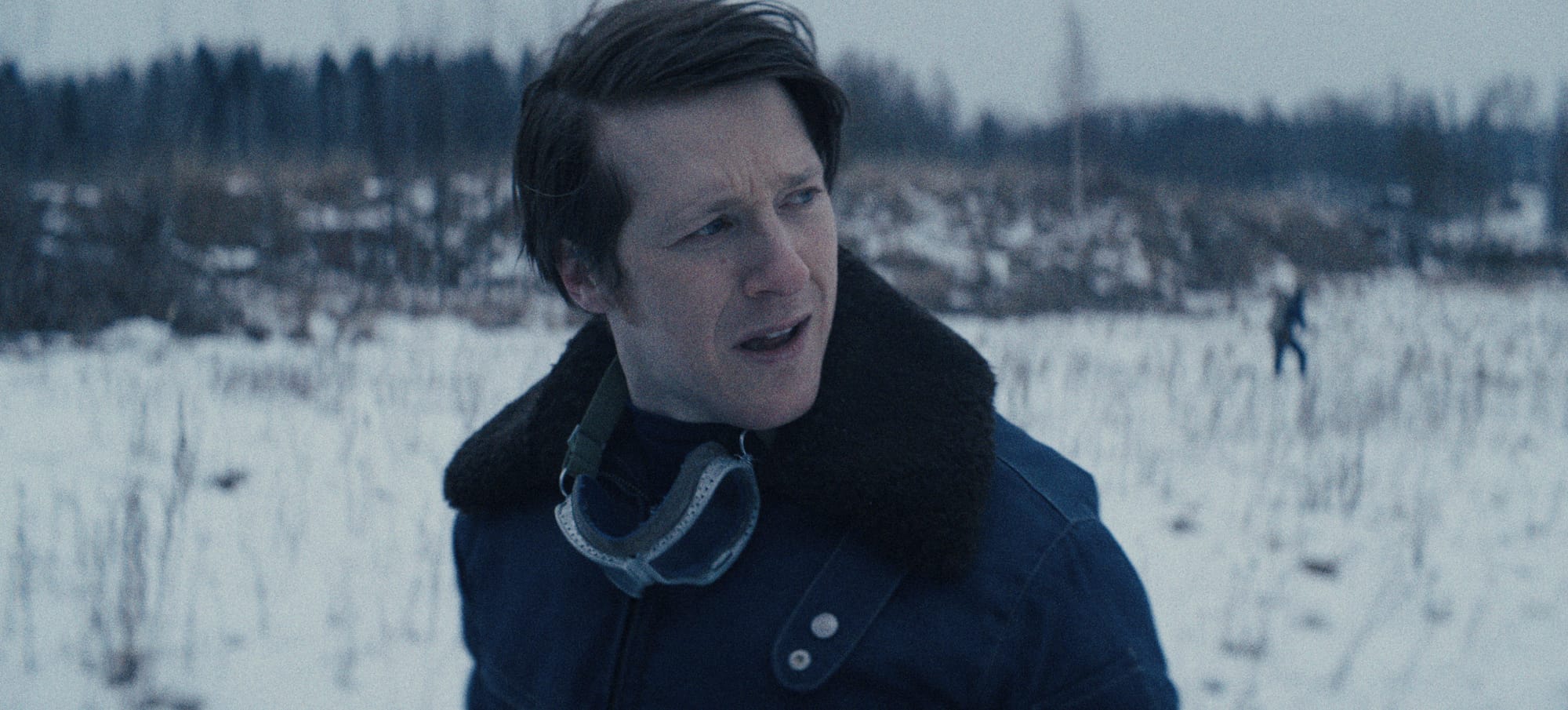
I hope the same will be true of Star City's human-scale drama, because right now it feels pretty damn stock. Valya, a cosmonaut who's scheduled to go to the Moon in the program's next launch, is married to Tanya, and the two of them are very close friends with Sasha, another cosmonaut. Valya loves his wife and has a great rapport with his best friend, and he has no idea that Tanya and Sasha are having an affair with one another. "The Eyes" is overstuffed as it is, and so it's little surprise that these three characters are rather thin: Valya is self-serious, Sasha is confident, and Tanya is unsatisfied. But it will take a lot more character work than the pilot offers to get me to care about this love triangle.
The show's foray into spy drama is more immediately successful. We learn about the Tanya/Sasha/Valya situation, after all, through Irina, a young intelligence agent who's been assigned to listen in on the private lives of Star City's cosmonauts. She puts on a mask of nonchalance at her desk, but Agnes O'Casey's performance gives her a sense of anxiety beneath her practiced stare, particularly when Irina has to listen in on Sasha and Tanya having very loud sex in Valya's apartment.
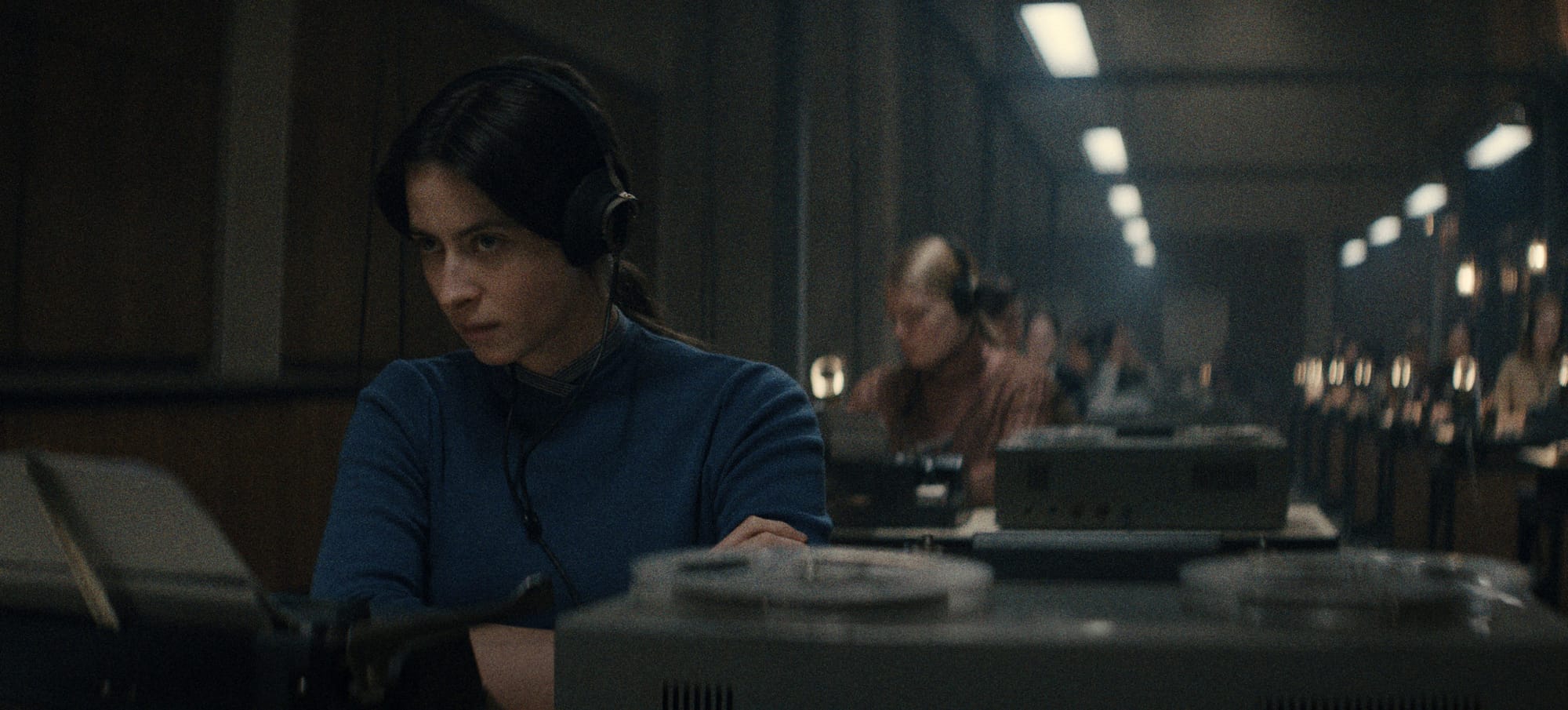
Irina's our proxy as she learns about the constantly-backstabbing world of Soviet sabotage. The Soviets are planning to send a woman to the moon in the near future, and that woman is meant to be Yana, a hotshot pilot with years of experience and the trust of her fellow cosmonauts. But after Irina's colleague Vika overhears Yana talking about visiting a brother who happens to share a name with a dissident journalist, Yana gets disappeared, her seat taken by socially awkward newbie Anastasia. Irina feels that something's fishy about the situation, though, and, after some investigation, discovers that Yana was actually visiting the grave of a brother who happened, by sheer coincidence, to share a name with the dissident.
Excited both to set right an injustice and to possibly get on a promotion track, she takes the matter to Lyudmilla, her steely-eyed supervisor. Lyudmilla, smiling slightly, takes Irina deep into Star City's warren, where Yana's being kept in a cage. She lets Irina unlock Yana's cell, then hands Irina a gun. "We do not arrest the innocent, comrade," she says. "Our future depends on it." When Irina won't shoot Yana, Lyudmilla takes the gun back and fires the killing shot herself, spattering the wall, and Irina's sweater, with the cosmonaut's blood.
It's a highly effective sequence (hence why I described it in detail!), and one that the show isn't content to treat as mere popcorn entertainment. This is Irina's motivation, the show says, the moment she'll think back on for the rest of her career. As she tucks her daughter into bed at the episode's end, Irina glimpses a spot of Yana's blood on her cuff; the episode ends with a long hold on her face as Irina moves from resolve to horror and back again in the twitch of a muscle.
That said: I could call every single beat of the above from the instant Lyudmilla called Irina into the back office. That may well have been what Star City wanted me to do as a viewer—the dramatic irony of the viewer knowing how authoritarian societies treat mistakes in their judicial system while Irina herself is seemingly unaware of it is quite effective—but it does raise the question: what is going to be new in Star City's treatment of paranoid authoritarian states? How will Irina's journey through the systems of Soviet repression change and challenge both her and those watching her at home?
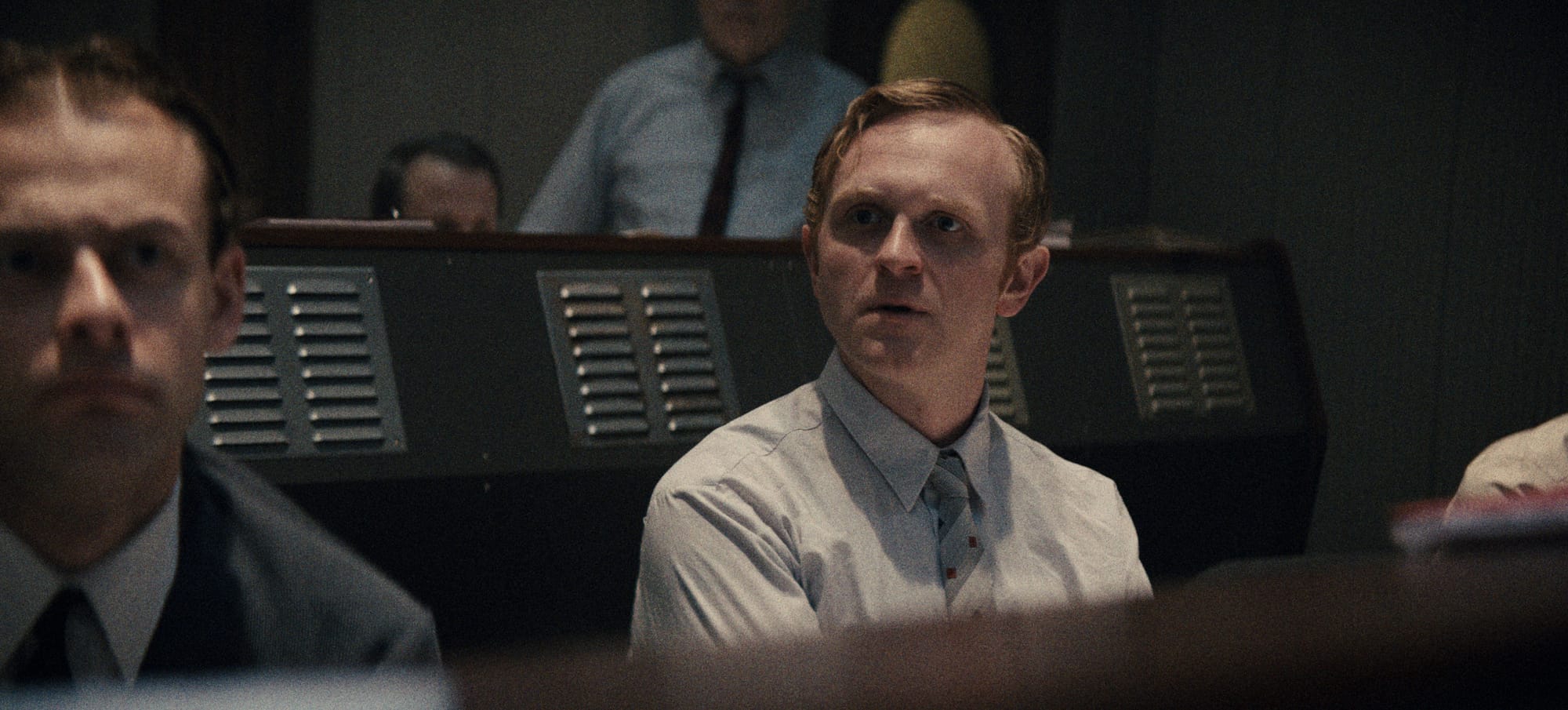
Speaking of which, yes, it's that Irina. She's one of a couple holdovers from For All Mankind alongside a younger version of Sergei Nikulov. Thankfully, the show doesn't suffer from the lack of tension that dogs many prequels; as the USSR's operations were almost entirely opaque to the Americans we followed in For All Mankind's first season, there's little here that's being retread. That said, Irina is clearly the more intriguing of the two legacy characters. She's a bit of an idealist and more of an innocent to the USSR's darker aspects than many of her colleagues, both of which make an interesting contrast with the devious Irina we meet in FAM's fourth season. Sergei, meanwhile, comes off a little too much like Scotty in Star Trek: Strange New Worlds. He's an energetic newbie engineer with great ideas and not a lot else going on.
Say this for Sergei, though: his portion of Star City is already the show's strongest. The hard logistical work of getting fragile human bodies to and from space's cold vacuum intact has always been the glue that binds For All Mankind together, and, if anything, it's even more thrilling to watch here, where the tension of mutual suspicion finally gets to release a bit as engineers work problems together. What's more, the USSR's sense of secrecy lends the material aspects of space flight a sense of wonder that For All Mankind hasn't been able to capture in a while. When Anastasia Belikova, who's about to be the first woman on the moon, looks up at a rocket on a launch pad, the camera tracks her gaze, showing us the sheer monolithic scale of this creaking metal structure. There's mingled awe and terror in the camera's gaze, a sense of spaceflight as the accomplishment of something far greater than any individual. It's breathtaking.
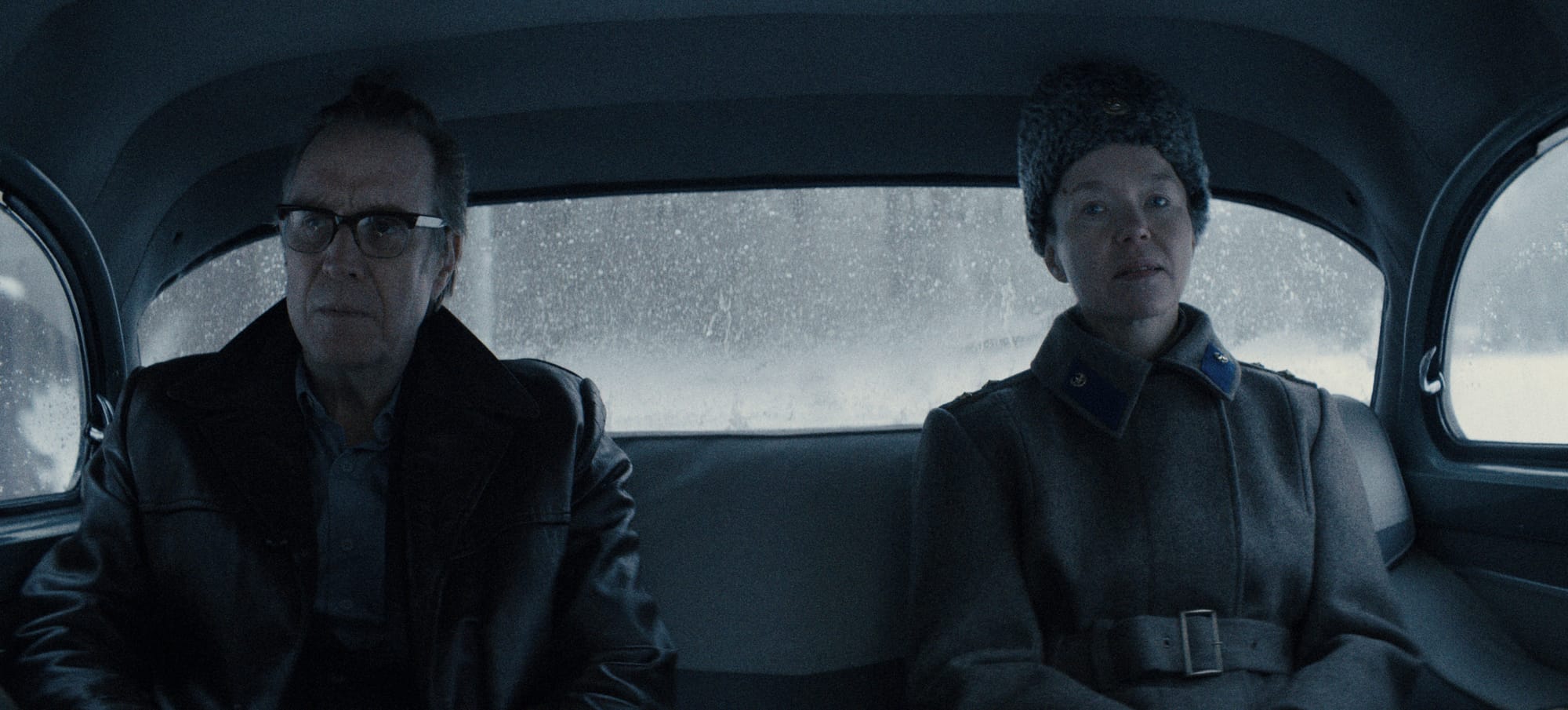
Stunning, too, is what happens when Anastasia gets to the moon. She's spent her whole flight listening to Valya's fury at Yana's disappearance while trying to memorize the state-sanctioned speech she'll deliver from the lunar surface. But when she actually steps out of the lander, all considerations of politics vanish from her mind. There is the stark white plain of regolith before her, the glare of sunlight, the utter silence inside her helmet. She stares at the shadow she casts on the rocks below, one only barely recognizable as human and yet one that's entirely her own. In a few moments, she'll go off-script to salute Yana's service to the USSR, putting herself in real danger of falling into the maw of the paranoid state. But for now, there is only her and the vast, silent moon.
Stray observations
- I've seen some discourse about the fact that every actor on Star City is speaking English. It doesn't bother me too much, frankly; if you're going to cast a bunch of Anglophone actors to play Russians, your time is probably better spent honing their performances in their native language than getting them to learn an entirely new language. The fact they were all speaking in vaguely British accents only annoyed me until I bothered to check Wikipedia and confirm that, yes, every lead actor on the show is in fact from the UK or Australia.
- In my piece above, I didn't talk about the show's cold open, in which Alexei Leonov's wife is rudely rushed from her home, sobbing, certain she's being taken as a political prisoner, only to find that her husband has successfully landed on the Moon. Honestly, it felt strangely disconnected from how the rest of the episode shows Soviet bureaucracy working? Like, yes, the USSR's machinations can be cruel and uncaring, but usually Star City shows said machinations accomplishing some sort of political or personal goal.
- I assumed that the show referring to Sergei Korolev only as "Chief Designer" was an affectation, but, hey, turns out that's how he was known in real life, too!

Comments ()