
Review: Severance, "Chikhai Bardo" | Season 2, Episode 7
The show journeys its way into a time-bending existential exploration of love and loss (and, yes, theorizing)
Last summer, a group of journalists started a TV critics Slack, and it’s become a space to discuss screeners before we’re able to talk about them with the general public. Not shockingly, Severance became a big enough topic of discussion that it earned its own channel, appropriately titled “#inniesandouties.”
Now, because of my professional choice to never watch ahead of where the audience is for the purpose of reviewing a show week-to-week, I’ve been a bit behind some of the rest of the group. They’re good about putting spoilers into threads, though, and thus I didn’t actually know anything that happened in “Chikhai Bardo” before sitting down with my screener earlier this week. However, I had seen lots of talk of “207” in an almost breathless tone, whether in the intentions to request interviews with actors and producers or in the desire to discuss its contents. When I hit play on the screener, I didn’t know what specifically to expect beyond the vague logline, but I had every expectation this was going to be a monumental episode of the show given that “204” had been the other episode drawing similar discourse.
I offer this preamble because in truth, “Chikhai Bardo” was less monumental than I expected. Now, I want to be clear that this is a visually evocative and engaging episode of television, ably brought to life by the show’s cinematographer, Jessica Lee Gagne. It is also inarguable that it has lots of implications for our understanding of the show and its lore. However, without suggesting that I think the show’s balance of style and substance is a problem, the episode is mostly content to explore the contours of the new questions it introduces, with the “answers” providing more fuel for online theorizing than something that accelerates the story itself. We are ultimately the only ones who are experiencing the narrative convergences the episode presents, and the limitations of that to the larger momentum of the season keep this from maximizing its potential.
Let’s take a second to parse out exactly what we’re seeing. There are three narrative threads operating in this episode. The first is in the present, where Mark is unconscious on his couch while Devon and Reghabi watch over him. We can presume that this is the primary origin point for the second thread, which are the flashbacks we see throughout the episode to Mark and Gemma’s relationship leading up to her accident. Beginning with their meet-cute donating blood at the college where they both worked, that story fills in new details—infertility, a miscarriage—that shaped the years leading up to what was believed to be her tragic death. However, given that we transition into the third narrative directly from one of those flashbacks, we can also assume that they are also on Gemma’s mind in the scenes set on Lumon’s Testing Floor.
This third narrative is obviously the episode’s most significant, even if the others were a bit more substantial. I’d actually go so far as to say that the present-day Mark story is a mess, with Reghabi at maximum inscrutability. The conflict between Devon and Reghabi feels underdeveloped, and I struggle to track Devon’s logic in calling Cobel just as I can’t parse Reghabi’s immediate departure at even the threat of doing so. Their scenes are the only true forward momentum the episode has, and so the fact they don’t land is sticking with me a bit as I acknowledge the rest of the episode is clearly where our attention is supposed to be. It would be one thing if Devon had been pushing the Birthing Retreat idea to Mark before now, but it comes out of nowhere, and showcases some of the challenges of continuity with such a huge break between seasons.
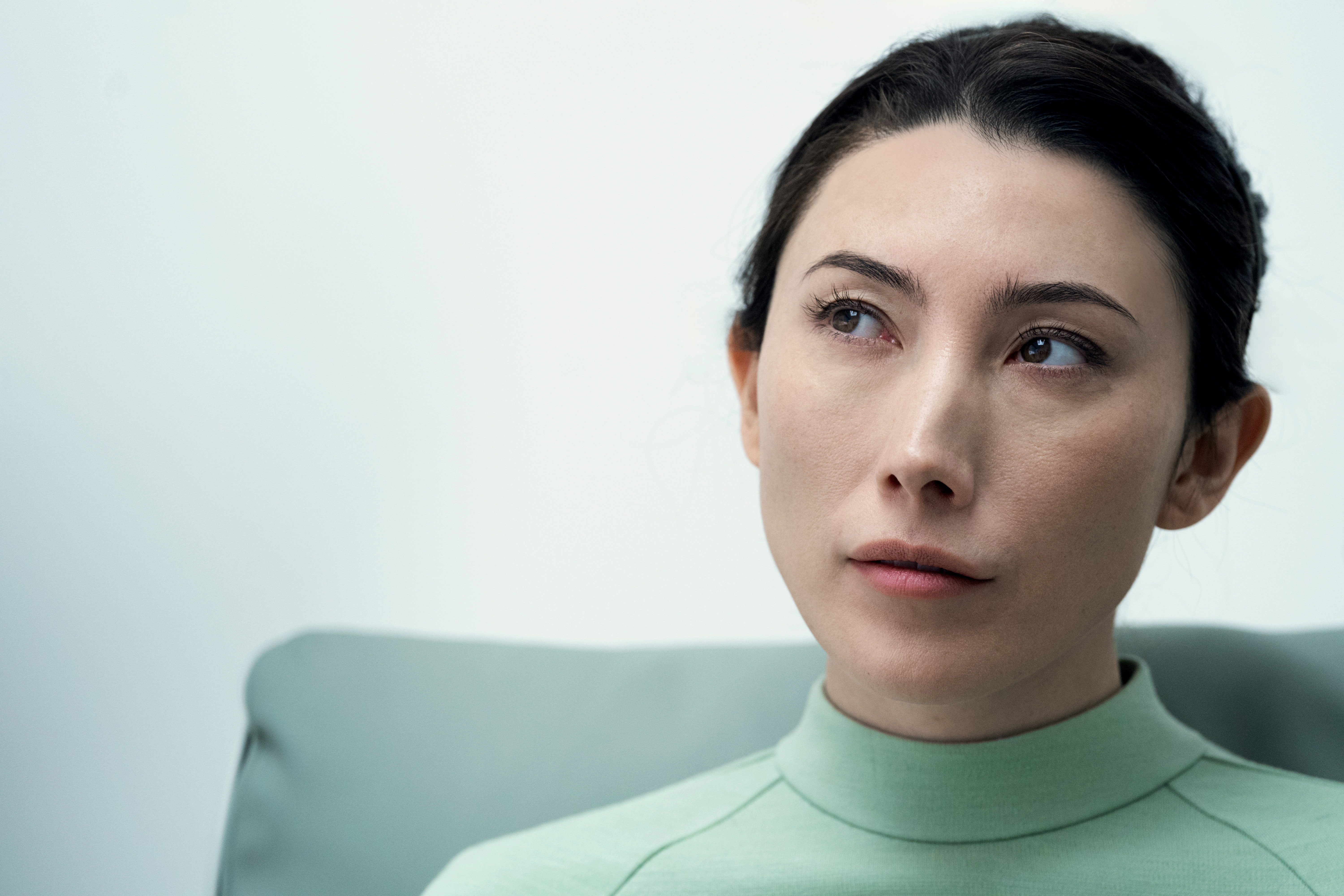
Shifting gears back to the meat of the episode, let’s deal with the most shocking revelation of the third narrative right off the bat: Gemma is perfectly aware of who she is. Reghabi has insisted that “Gemma is still there,” but I honestly never believed that, because we had seen with a clear lack of recognition in Ms. Casey. But what we learn here is that Ms. Casey is but one of many different characters she plays as part of whatever experiment she’s a part of, the severed floor but one room of dozens where she whooshes her way into a new identity. Channeling Sydney Bristow, her closet is a never-ending collection of wigs and outfits, which she has been donning long enough to recognize—when she sees the long bob with bangs and the burgundy dress, she knows she’s about to go to the dentist in the Wellington room. A nurse (Sandra Bernhard) takes Gemma’s vitals, leads her from room-to-room, and then Gemma eventually retires to her daily reading.
What’s unclear early on is how much Gemma knows about what’s happening, compared to the audience. Gemma knows what her life looks like on a day-to-day basis, but does she know what the point of it is any more than Mark’s Innie a floor above? The episode sits in this very weird place of omniscience that makes it hard to get a grasp on this and other facts. Just look at the scenes surrounding Gemma’s miscarriage in sequence. We enter the flashback sequence from Mark’s perspective, zooming into his head to the early days of their relationship, before a pan brings a transition to a honeymoon phase. We then time-lapse through their daily existence, landing on the lunch where Devon discovers Gemma is pregnant. From there, we hold on Gemma’s eyes long enough for light to turn to dark and then back to light as she stands in the bathroom following the loss of her baby. That scene then ends on Mark, who flashes back to a season one scene with Ms. Casey, and then that scene zooms into the wires under the computer terminals to a different room Mark’s doppelganger from the ORTBO is observing Mark. We then time-lapse through him and the other doppelgangers clicking away at their computers, before landing on Drummond and the experiment’s overseer Dr. Mauer discussing the “severance barriers” and the latter’s affection for Gemma before then ending up back in the experiment presumably in roughly the present day.
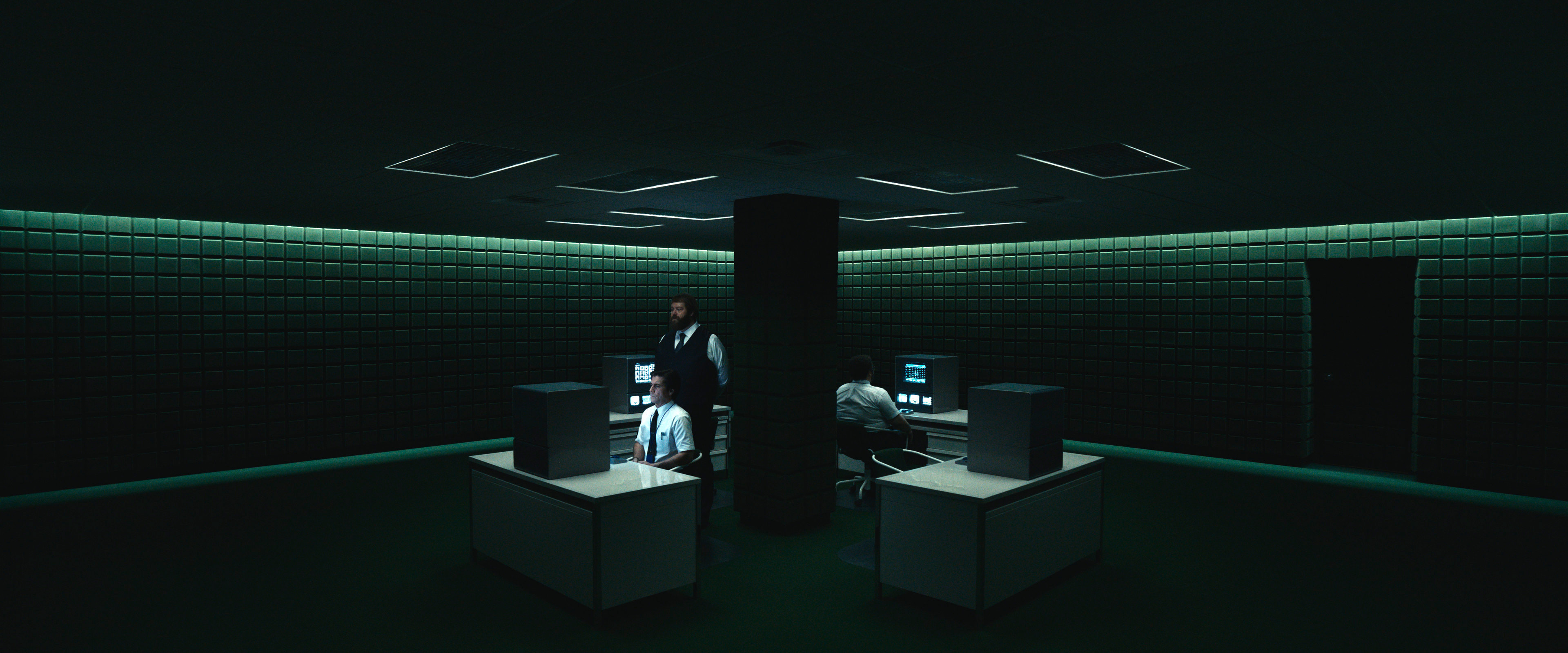
This accounting felt necessary, because it’s purposefully disorienting. If you’re not tracking the time lapses carefully, you might presume that Gemma’s subsequent escape attempt is happening in parallel with those scenes in season one, when the discussion of Cold Harbor being at 96% completion later in the episode places it in the present timeline. And while you’re still trying to unpack the significance of there being an additional layer of surveillance and button-pressing attached to macrodata refinement, the episode disrupts us again, cutting from Gemma entering a room to a flashback of Mark and Gemma at a fertility clinic…where Dr. Mauer (who was the one collecting the tools and whistling Gordon Lightfoot last week, and who appears in all of the rooms in various guises) happens to be walking by. It’s the first sign that the flashbacks to Mark and Gemma’s relationship are in fact an explanation for her role in the experiment, supported by the eventual reveal that she received the instructional cards we saw in Optics & Design last season in the mail before her “death.”
That’s the episode’s big answer, I’d argue. My best interpretation is that Gemma’s fertility treatments were a front for Lumon, and when they failed she was brought into an extended and secret experiment on the limits of severance under the guise of her death. Mauer’s interest appears to be whether stimuli like dental pain, turbulence, and the forced writing of thank you cards can be felt by one’s Outie, which seem to be about exploring the limits of the “barriers” of severance that Drummond refers to. While we’re no closer to an understanding of what Macrodata refining actually is, it seems logical that Mark is the “final boss” of Gemma’s experiment, with Cold Harbor testing whether or not the bonds between two people who were once in love can bypass the severance process. In fact, it seems safe to presume that the whole staging of Gemma’s death was a conscious choice to coerce Mark into severance, Lumon cultivating his grief to create the conditions that would allow them to explore the boundaries of their work in more detail.
What remains entirely unclear from all of this, though, is how much agency Gemma had in becoming part of that experiment. When she received the O&D cards in the mail, they were disguised as a random cognitive test, and there’s nothing in the scenes of the experiment that ever shows us a clear idea of what she thinks she’s doing. She knows who Mark is, and rejects the idea that he has remarried in her absence, and so I would argue she does at least understand where she is. But did she volunteer for the project knowing the potential consequences, perhaps trying to give Mark space from the trauma of their lost pregnancy? Or was she actually in a car accident (caused by Lumon?) and then told this was the only way her life could be saved? Those answers matter, but the episode skips over that moment, and Gemma’s reflection on her experience offers us little clarity.
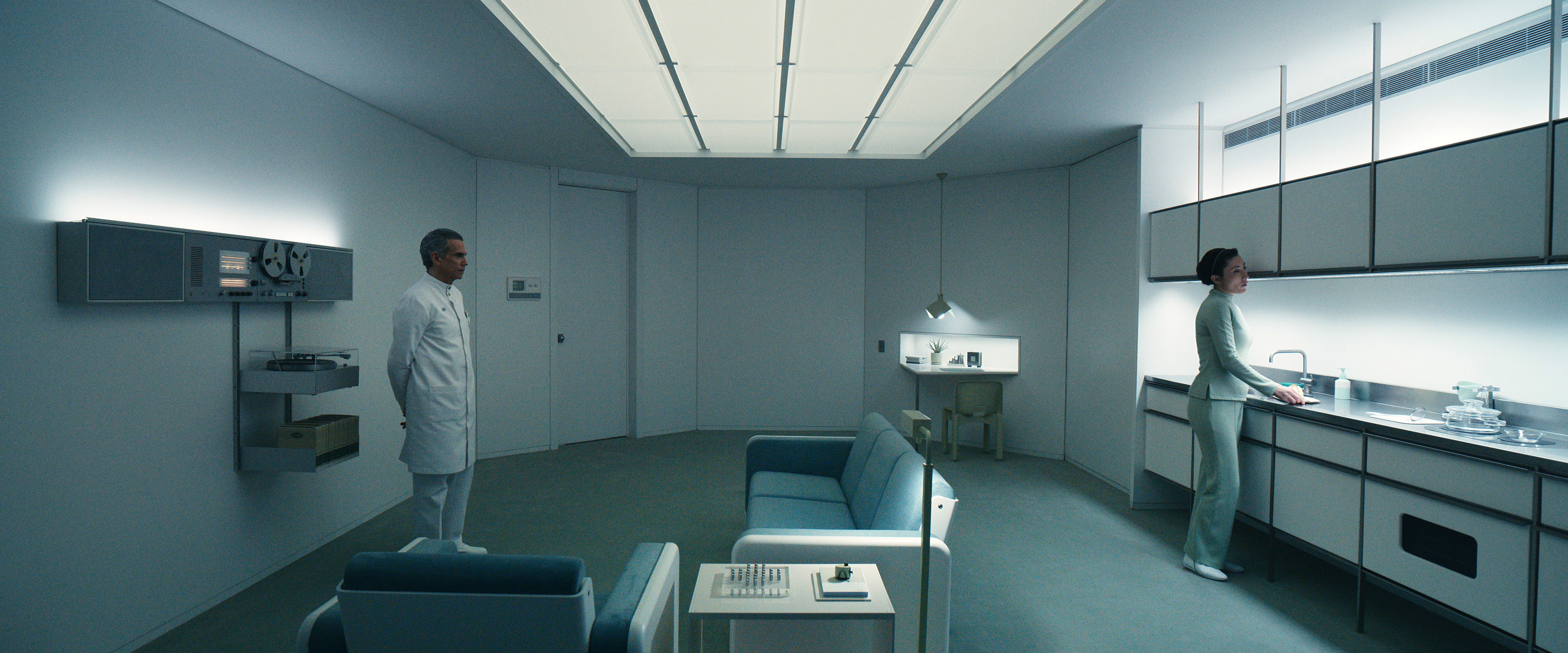
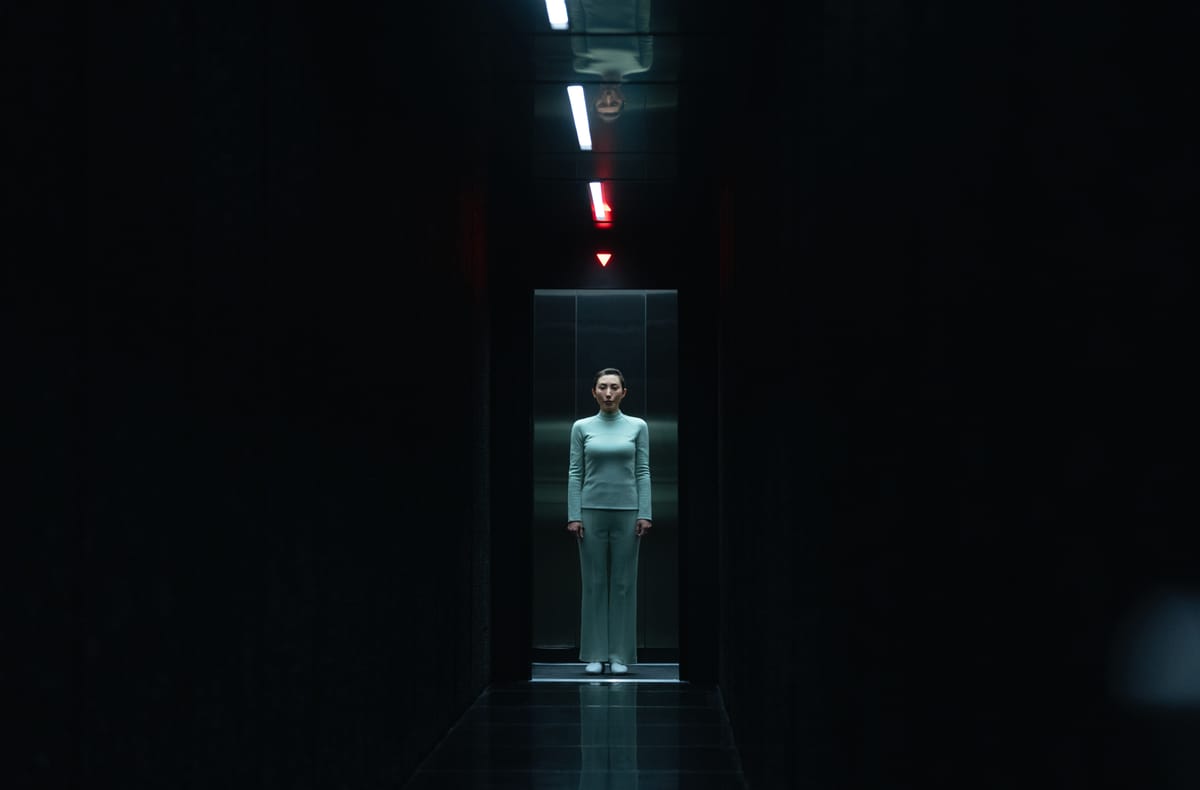
There’s enough tension within Gemma’s story for the episode to reach a dramatic climax, with Mauer revealing his personal use of the experiments in an attempt to convince Gemma to fall in love with him. The lie he tells—that Mark remarried and has a daughter—is a direct attack, and outside the bounds of the experiment as it’s been presented. Drummond is explicit that Mauer will need to lose her, but he resists, and he activates Gemma’s flight response in the process. It’s a thrilling moment, with some striking activation of the production design of the testing floor, but once she gets in the elevator we already know what’s up before Milchick opens the door. She’s trapped in a way she seemingly didn’t realize, which is dramatically effective but also puts us back where we started in terms of answers about the program. There’s lots of meat to chew on here, but the actual place the episode lands is exactly where we were: Gemma’s on the testing floor, Mark’s reintegration remains in flux, and the story has to move forward from there.
As a showcase for the show’s aesthetics and the fantastic Dichen Lachman, “Chikhai Bordo” is a triumph, and as the above indicates I’m certainly not immune to the theory bait the episode provides. We do have enough clarity to know that Mark’s reintegration is going to screw up whatever Cold Harbor’s goals were, setting the terms for the march to the finale; however, to answer Devon’s question of where we went, the answer is in circles. Those circles are vibrant and compelling, and a deeper understanding of Mark and Gemma’s relationship is a net positive to the season and the series, but I left the episode wondering if there’s enough substance in the present story to make all of this resonate. That kind of existentialism has been a big part of our discussion in the comments all season, so perhaps it’s only fitting that the show would underline and bold it at this crucial juncture, but I’ll be very interested to see how the broader response compares to what the critics’ Slack discourse looked like over the past few weeks.
Stray observations
- “You will see the world again, and the world will see you”—presumably the intention is for Lumon to use Gemma as some type of test case for an advancement in the severance procedure, based on this line from Mauer?
- Still no Cobel, but Reghabi’s suggestion that they “raised” her returns us to that hospital bracelet and her own origins with the company. Reghabi also has no idea that Cobel has left the company, so again we can question the validity of her sources.
- I wish my students wrote paper titles like All Quiet on the Western Blunt, but they always fight me when I try to force them to put puns in their titles. Philistines!
- I know it was on sale, but it was still a bad choice buying a crib that early in a pregnancy, Mark.
- Given the overlap between the named buckets in the Macrodata Refinement computers and the rooms on the testing floor, the two are clearly related, but the “how” remains…got nothing, really.
- “Can you please talk like a normal person?”—did Gemma ghost write Milchick’s performance review?
- My biggest timeline question is whether Gemma originally traveled to the testing floor, or whether the first phase of the test was in fact her role as Ms. Casey, and then she began the testing process.
- Regarding Milchick’s lie about Gemma’s outie getting in the wrong elevator at a public art exhibition—does he know he’s propping up a lie to fuel the experiment, or is that above his pay grade? He clearly knows it’s an emergency, and that she’s coming from testing, but is he as aware of Gemma’s situation as Cobel seemingly was? I’m also really curious about how Cobel’s own clear interest in Mark and Gemma compares to Mauer’s intentions, and whether they had cross-purposes on the goals of the experiment.
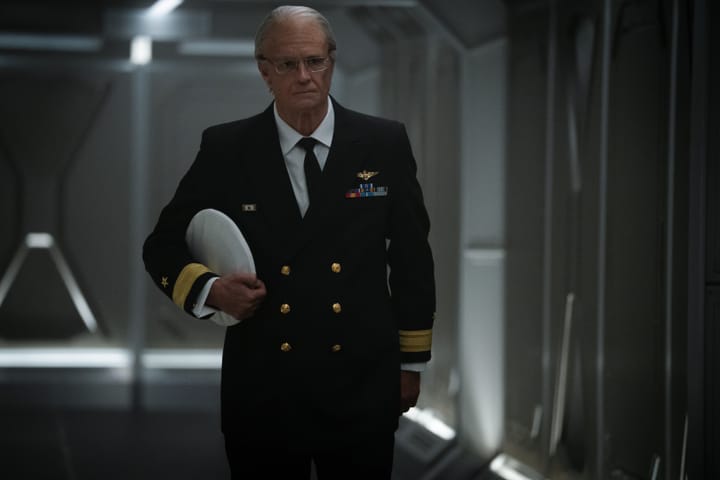
- I hadn’t checked the credits, but I saw when I logged onto the Apple press site that Dr. Mauer was played by the Beast himself, Robby Benson? I’d have never guessed.
- The usual disclosure that I’m never trying to be exhaustive in these reviews, and thus welcome other observations on details I might have missed. I will say I saw way more in a second viewing, so this is definitely one I expect folks will rewatch and pore over, and I’d recommend doing it yourself vs. letting Reddit aggregate others’ experiences.

Comments ()