
Review: Scrubs, "My Return" & "My 2nd First Day" | Season 10, Episodes 1 & 2
You can't revive a 15-year-old show without a little bit of rebooting
Welcome (inexplicably) to Episodic Medium's coverage of Scrubs, which returns tonight with its first two episodes on ABC. As always, this first review is free for all, but subsequent reviews will be exclusively for paid subscribers. In honor of our fourth anniversary, yearly subscriptions are currently only $44 if you click below.
I was watching a video recently of Sarah Chalke on Jesse Tyler Ferguson’s podcast, specifically discussing the joy she experienced when the decision was made to film Scrubs 2026 in Vancouver, where the Canadian actress had relocated after leaving Los Angeles and where she shot Netflix drama Firefly Lane. She talks about how what she really wanted was a show like Scrubs but which could shoot in a city where network comedies are rarely shot, and then miraculously her wish came true when tax credits won out over the likely wishes of the rest of the L.A.-based cast. She would literally get to make Scrubs in Canada.
I want to unpack that reality a bit as these reviews progress, but my interest in this clip in the immediate moment was a brief moment where Chalke corrects herself: she briefly refers to Scrubs 2026 as a reboot, before adjusting to revival. This is in line with ABC’s official description, for the record, which describes it as a “revival comedy series.” It’s the more accurate word, yes, but even as someone who has written about this distinction on a scholarly level, I feel we sometimes risk overemphasizing continuity in our categorization of these projects.
Yes, Scrubs 2026 is by its nature a spiritual recreation of the original Scrubs, insofar as it focuses on the same core three characters, their relationships, and their experience as medical professionals. It would be wrong to call it a reboot, given that it presents itself as in continuity with the series’ initial run and largely draws its storylines from viewers’ existing connection to those characters, crucial markers for a revival. At the same time, though, the work of “reviving” a medical show sixteen years later duplicates much of the work that a reboot would undertake, given that the world around J.D., Turk, and Elliot has changed so significantly. The show also needs to repopulate that world with a new set of interns, a task the show took on twice already in season 8 and season 9, but this time with a much wider generational gap between the two.
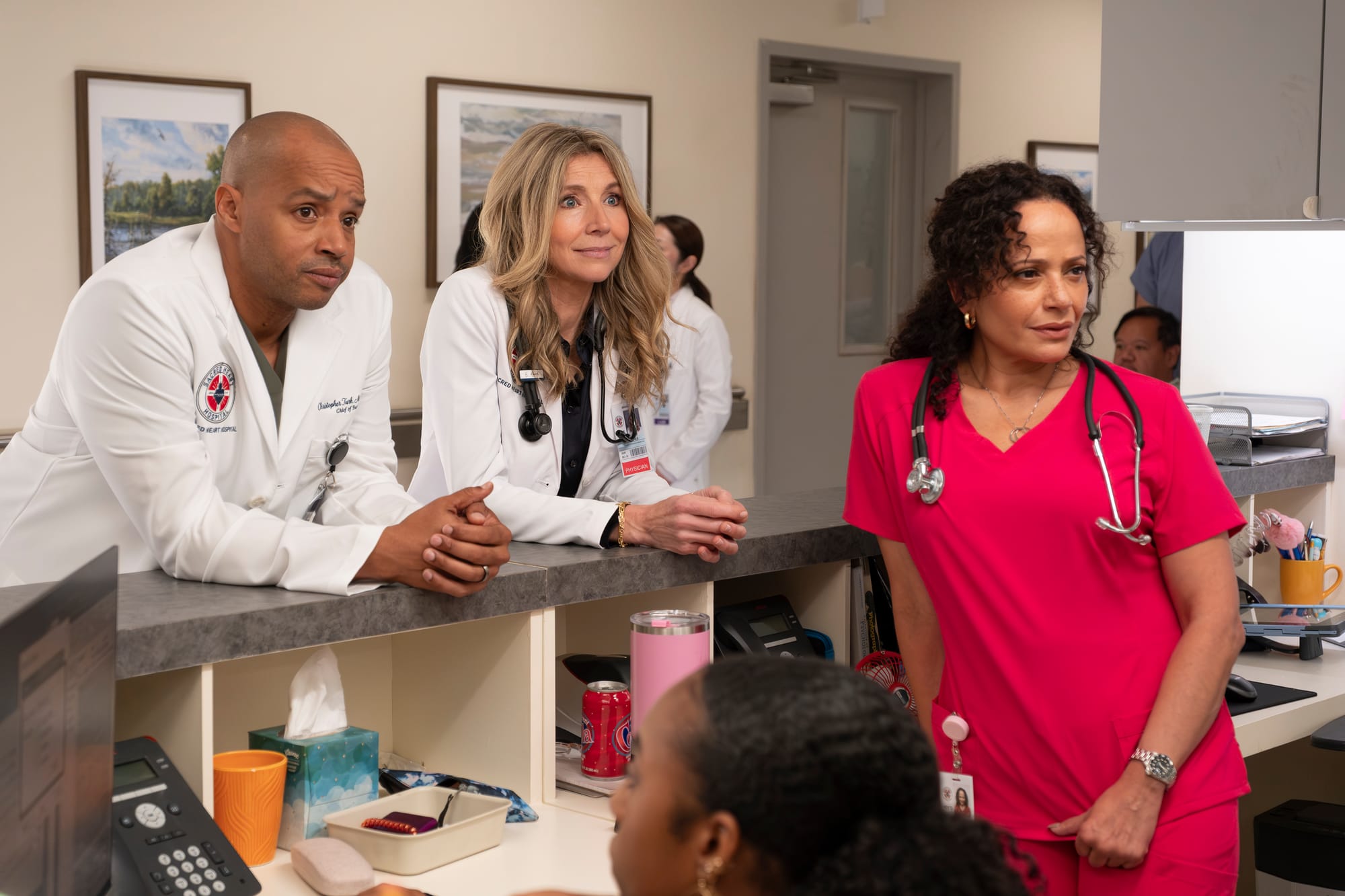
As long as we’re thinking in computer metaphors, making a sitcom revival is more akin to transferring your old computer to a new one. All of the files are still present, but some files might be lost to time, while others will need to be converted to new formats to run without some bugs. Where the metaphor starts to break down is that whereas the goal of an I.T. tech would be to remove any and all friction within the transfer process, a television show needs friction. Conflict is the lifeblood of even a whimsical but grounded take on the medical field, and Scrubs didn’t leave with unresolved tension among its core characters. Ignoring Season 9 for the purposes of this conversation (not out of malice but just practically speaking), the eighth season literally ends with J.D. leaving Sacred Heart and fantasizing his perfect future: a marriage with Elliot, children of their own, and J.D. and Turk’s ultimate dream of their children marrying each other. It might not be real, but it established that Scrubs was coming to a close without unfinished business: it’s returning because people—fans, the cast—want more, not because the story demands it.
This is why “My Return” isn’t just a story about J.D. giving up his concierge practice to return to Sacred Heart as its Chief of Medicine. Now, this is the core narrative engine of the revival, and it’s a logical one. It allows the show to focus on the “new on the job” energy that fuels the start of any medical show, since J.D.—to his surprise—isn’t being asked to consider returning to his old role as his mentee or colleague to Dr. Cox. He’s asking him to replace him, taking on an administrative role that sees him balancing his mentorship of the young interns with the dollars and cents of running a hospital in a capitalist hellscape. Throw in a bitter doctor—Joel Kim Booster—who wanted the job for himself and shares Dr. Cox’s love of a good barb, and you have a basic narrative conflict to sustain a limited run sitcom revival.
However, “My Return” doesn’t stop there, as it’s hard for J.D. to be a fish out of water if the pond is run by his wife and best friend. Destabilizing J.D.’s relationships with Elliot and Turk is something that developers Tim Hobert and Aseem Batra focus on heavily in the first of these two episodes, and it’s a real case study for the challenges facing a revival without a clear raison d’etre narratively. Scrubs spent its entire run working its way toward J.D. and Elliot being together, and was built on the foundation of Turk and J.D.’s friendship. If you’re going to argue that either of these bonds was weakened with time, you are going to raise questions that need to be answered, and which may or may not necessarily be conducive to the limited nature of this run, or the episodes’ short runtimes, or the need to balance all of this with entirely new characters that I’ll get to eventually.
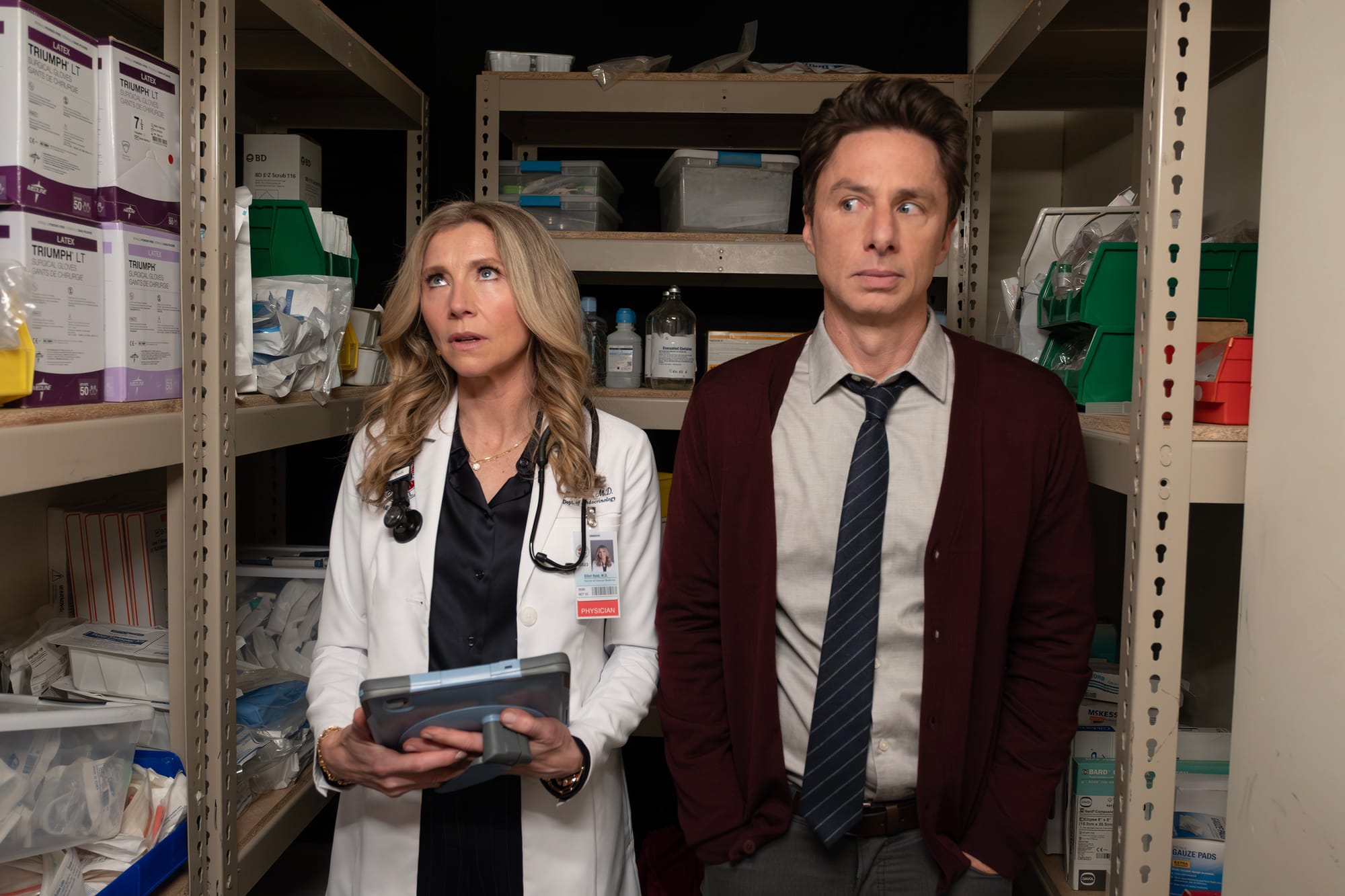
I say all of this not because I’m mad or offended that J.D. and Elliot’s marriage didn’t work out (I found an old blog post where I insist they shouldn’t end up together), but rather that I don’t think there’s anything in these two episodes that answers those questions in a satisfactory way. The writerly argument here is sound enough: they were a true “Will They, Won’t They” that got dragged out for a long time, and the idea that their life wouldn’t end up looking like J.D.’s fantasy is a dose of realism in line with a show that always kept one foot firmly on the ground at its best. But it’s hard to reconcile with the comparable bliss of Turk and Carla, who have four girls, a very fancy house, and apparently no marital problems because the choice to film in Vancouver likely had a huge impact on how available Judy Reyes could be. When so much of the rest of this revival is focused on continuity—The Todd is still there! Hooch is still crazy!—to disrupt a crucial part of the show’s original ending creates a burden I’m not convinced this format can ever fully resolve.
By comparison, the issues in Turk and J.D.’s relationship feel more natural. The idea that they’ve drifted apart enough that Turk hasn’t opened up to J.D. about his burnout plays out really naturally, and has a stronger connection to the interns that will ultimately be vital to whatever themes the show wants to address. But it again raises questions about the other side of the story: it’s not wrong to say that Turk and J.D.’s friendship is strong enough to overcome any obstacle, but asserting that after casually revealing J.D. and Elliot’s marriage fell apart seems wrong. I left “The Return” feeling like the show could have found room to tell a story about J.D. and Elliot’s relationship evolving (and struggling) within the context of their marriage without losing the new tension they wanted to create.
By the end of “My 2nd First Day,” though, I saw the vision a bit more. It’s still not really well-articulated, but the Turk and Elliot story in the second of two episodes clarifies the writers’ intention. Although the plot is driven by J.D.’s new role as Chief of Medicine, forced to choose between the surgery robot Turk has requested and Elliot’s ask for new medical dummies, its resolution is about Elliot and Turk’s relationship. With Carla likely to remain off-screen for much of the season, this really is a show built around three central characters, and the dynamics between each pairing are important to the narrative engine. If J.D. and Elliot remained married, there’s no real story for how Elliot and Turk interact with one another; after the divorce, they’re at risk of drifting away from the friendship they shared before that marriage, exacerbated by their fight for resources.
It’s a story that also reinforces the specific challenge of reviving a medical show in terms of balancing the returning characters with the necessary additions. This was a lesson Scrubs itself proved in Season 8, when they put a fair amount of energy into setting up a new set of interns and then ended up ditching all but one of them (Eliza Coupe’s Denise, though they would have likely kept Aziz Ansari if they could have) when they went back to the drawing board for Season 9. Whereas Season 8 never found a way to elevate the interns while supporting the farewell for the established characters, Season 9 never found a way to juggle the desire to recenter the show on the interns while still providing the continuity promised by continuing to refer to the show as Scrubs rather than Bill Lawrence’s preferred Scrubs Med (which ABC refused).
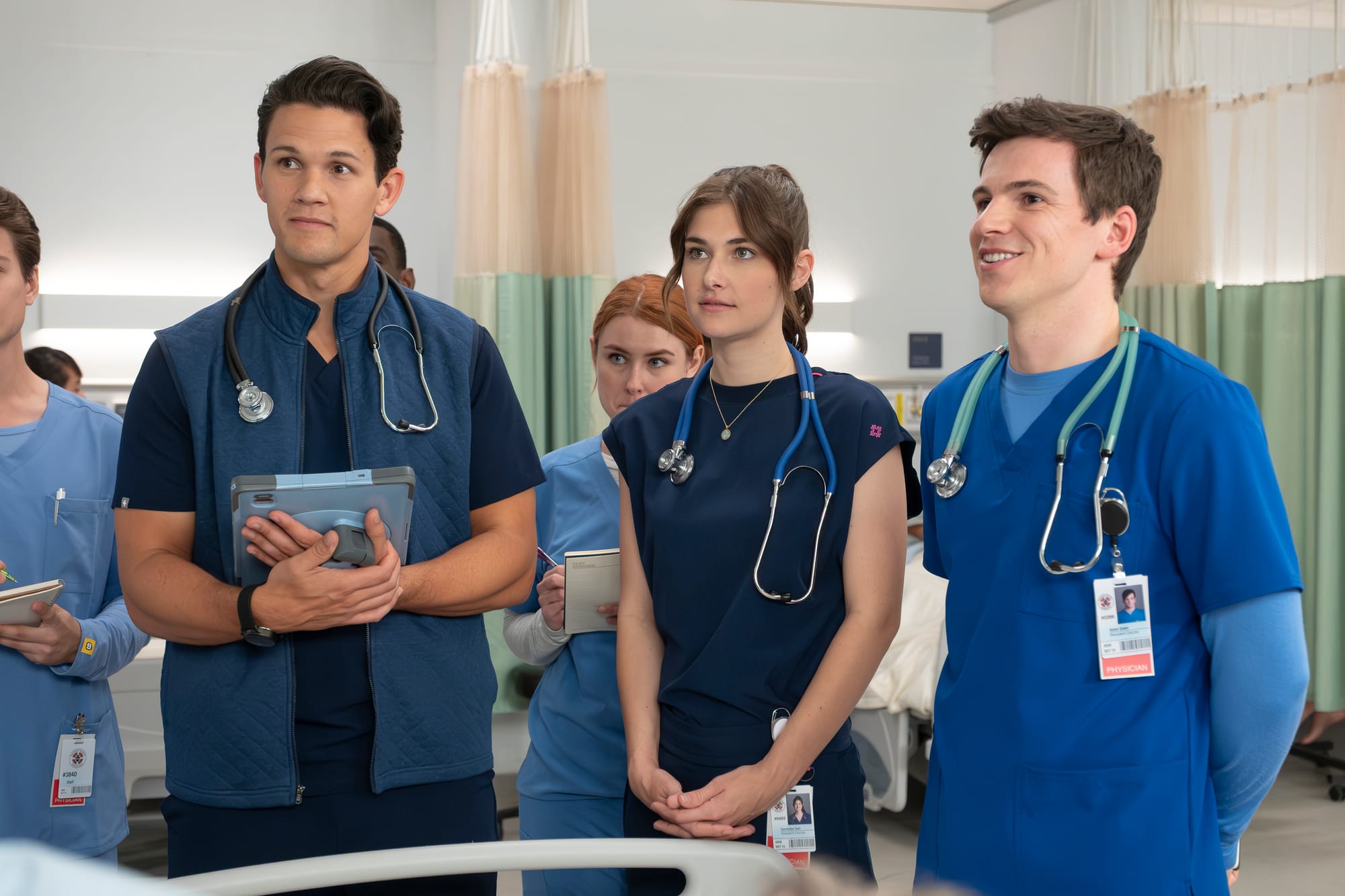
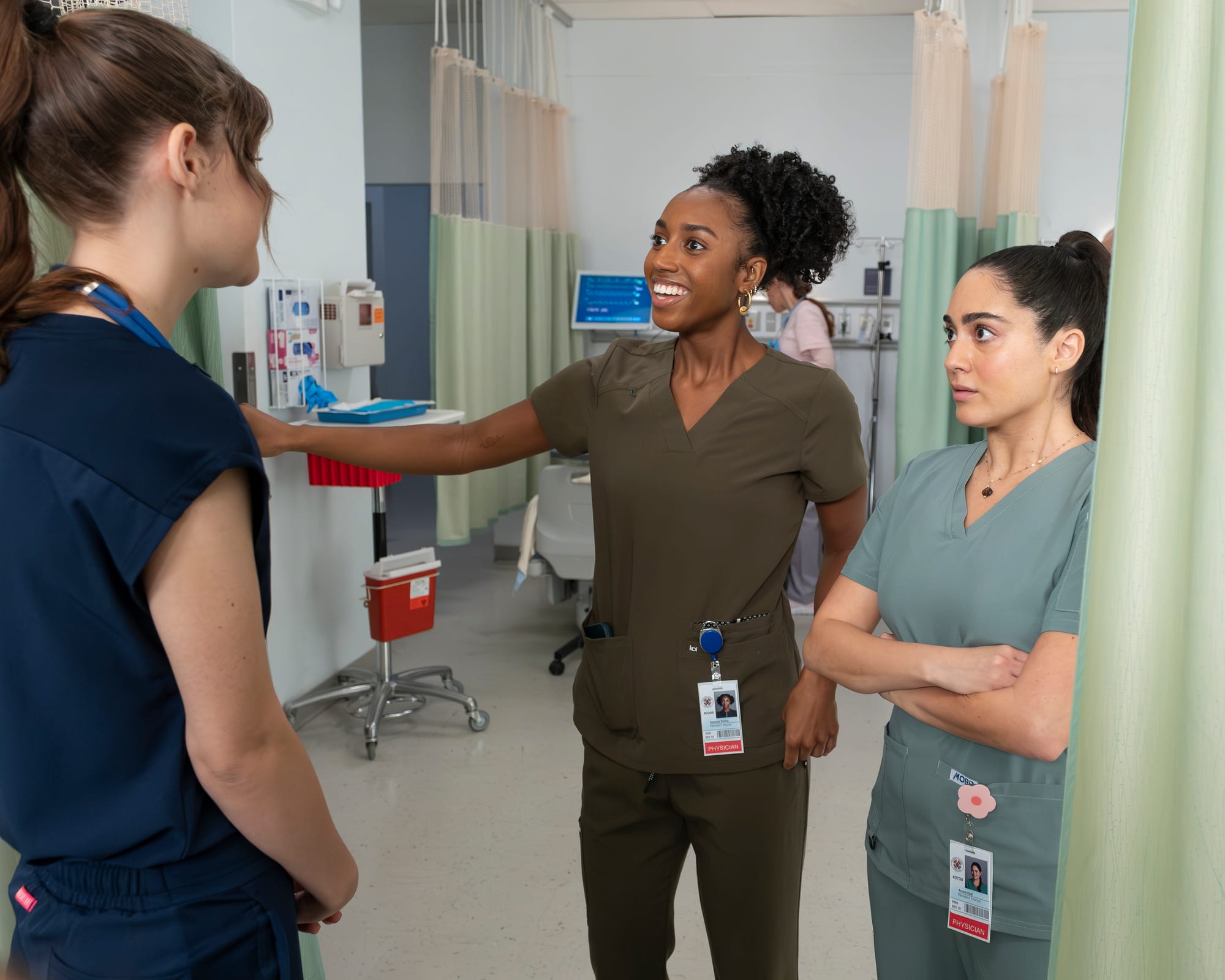
In “The Return,” I was struck by how little we learned about the five new interns, simply because there’s no oxygen left for them when the business of reviving the show needs to be accomplished. They’re used to seed information about Turk’s burnout, and their Gen Z-ness is used to offer some vintage Dr. Cox moments and introduces us to Vanessa Bayer as the new H.R. Czar, but this is not a show about their first day. We’re joining their story in progress, and at least in the first episodes they’re props more than actual characters: one is distractingly attractive, one is the most obnoxiously Gen Z, one is British, and two are in surgery. The attempt to shoehorn in a moral set to “Clocks” to help inspire J.D. to return from his plush concierge job just adds to the sense they’re not even really people, and I can’t say I had any particular interest to spend more time with them when the credits first rolled.
Again, though, “My 2nd First Day” offers some clarity on this front. I don’t know that I necessarily care about any of the interns individually, and none strike me as breakout characters, but the show benefits from giving them a C-Story all their own. Less burdened than in the premiere, J.D. is able to help Asher learn a lesson about caring for patients, utilizing his Britishness for a commentary on drug costs in the American health care system. There’s even some light serialization in his relationship with Blake, as they exchange numbers, building needed camaraderie that echoes in the Deshawna/Serena tension regarding the latter’s influencer-ing. You can see how, in a version of this show where we didn’t care as much about the characters we’ve known for 25 years, the ending of everyone enjoying the sponsored eye masks during mandatory nap time would have been the moral. Instead, it’s an adjacent one to J.D. realizing that it’s more important for him to fight for Asher’s patient than attend his own welcome dinner.
Depending on your perspective, my intense focus on structure and premise here may seem strange: this is a sitcom, after all, and the biggest question the revival might face is whether it “has the juice” in terms of Scrubs’ signature humor. However, my contention here is that judging “My Return” and “My 2nd First Day” on that metric is premature. Batra and Hobert may be Scrubs veterans, but some of the other writers might have been in middle school when the show debuted, and even those who lived with the show are trying to replicate something that even the show itself struggled to moderate in its later NBC seasons. And so while I didn’t think any of the fantasies in these episodes was particularly strong, they never slipped so far into self-parody or pastiche for me to raise any alarm bells.
I also felt like there was enough new content to keep this from feeling like a nostalgia tour. The retirement of “Eagle” signals that they’re not just going to be playing the hits, and it was smart to let the cameos drift away a bit for the second episode after the first episode. Even there, though, I thought Vanessa Bayer and Joel Kim Booster made a really strong first impression, even if it’s unclear how much of a recurring presence they will be. And while they don’t seem to be in huge roles, the two charge nurses in “My 2nd First Day” are certainly in the Laverne tradition, roasting J.D. and keeping Turk accountable for his ashy elbows. I don’t know if there will ever be enough oxygen for a true breakout performance in a revival context, but everything feels a piece with what we came to expect the first time around.
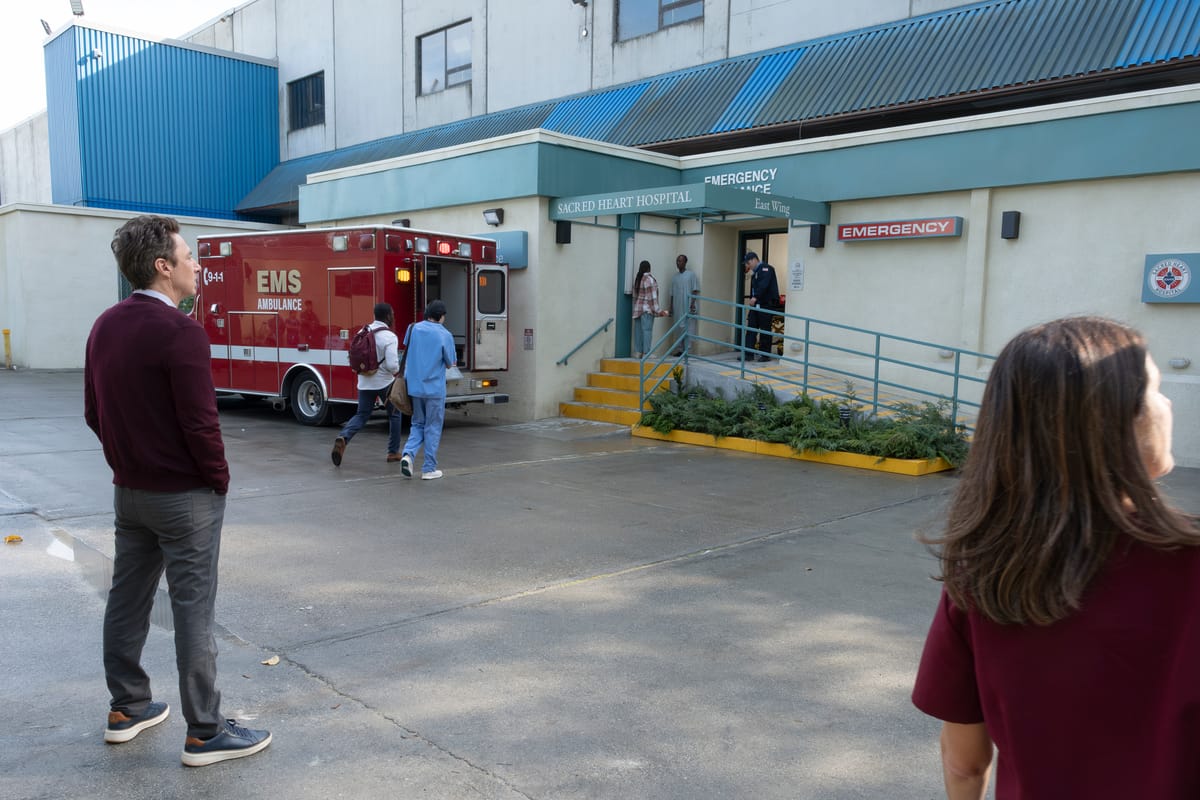
Brought back to life on Vancouver soundstages, Sacred Heart isn’t exactly the same as it was, but I suppose my ultimate takeaway is that the vibes are close enough that I’m willing to let them cook before judging whether this does or doesn’t capture what made the show work originally.
Stray observations
- Okay, so while I understand that the show needs tension between J.D. and Dr. Park, the latter would be way too young to be Chief of Medicine, right? I’m also curious to see how the show continues to explore the question of race with his character (it does come up in J.D.’s Bond fantasy)—Deshawna’s relationship to Turk is reinforcing the question of race within these fields, and so probably worth unpacking it here too, right?
- So the Vancouver of it all is mostly unnoticeable except in the pilot with the concierge houses, because it’s extremely weird for them to exist on location to me? That was such a rarity on Scrubs, and Turk and Carla’s house struck me as particularly off-kilter.
- With all the work that needed to be done here, we don’t really get what I’d call a “star patient,” in terms of someone whose case feels particularly resonant. Curious if they find a way to work that in, or if there’s just too many other stories to serve in a given case.
- Much as I enjoy John C. McGinley, I really do think that “Dr. Cox gets mad at Gen Z” had a shelf life, so exhausting it here was the right choice.
- Curious how it played out contractually (by all accounts they all seem friendly), but Faison ends up with the “and” credit here.
- The choice of “Clocks” is a diegetic in-joke, but it’s also the show returning to the era of the original run—two other Coldplay songs (“Everything’s Not Lost” and “Fix You”) appeared over the course of the show’s run. And look, I love “Clocks,” I’m not complaining.
- I watched a smattering of medical shows back when Scrubs was first airing, but it’s definitely interesting to watch this alongside The Pitt, in terms of how it approaches the interns in particular. The comparison is never going to work in the show’s favor, I don’t think, but it’s interesting to see a more sitcom-y take on the influencer intern alongside the more subtle work The Pitt did with Javadi this season.
- And thus we come to the central question: what do we call this? As you’ll see, I’ve chosen to refer to it as Season 10, which is in direct opposition to what ABC is choosing to do by separating it out as its own show on Disney+/Hulu with Scrubs now listed as Scrubs (2001). However, my take on this is simple: they reused the credit sequence, and it still says created by Bill Lawrence, so even if there’s a separate “Developed by” credit they want us to see this as Scrubs even if it can’t legally be Scrubs.
Comments ()