
Review: Pluribus, "Got Milk?" | Season 1, Episode 5
The collective's extreme measures prove to Carol that she's on the right track

Note: If you missed the memo, Apple released this week's episode of Pluribus two days early in accordance with the American holiday.
"WE CAN’T READ MINDS," the collective told Carol via C-SPAN chyron in the first episode. Thank goodness. The fact that their knowledge is limited to what they can directly perceive (and that they err on the side of literal-mindedness) left space for Carol’s pretense during her brief scientist phase last week. And now it opens up the whole city as her investigative beat. She’s a detective! Prowling the (empty) streets! Following up on leads! And, it has to be noted, dealing with the not-insignificant annoyances of reporting her findings via mechanical carrier pigeon. Mannix never had to put up with this.
In the wake of Carol nearly killing Zosia, the collective withdraws entirely from her vicinity, leaving only a cheery recorded message that plays every time she picks up a phone. “We just need a little space,” they claim. While they certainly have a point about the distress caused to every member of the worldwide hive mind by her experiment, they also reveal a gloriously petty streak by forcing her to listen to the whole thirty-second explanation whenever she needs to get in touch.
Left alone—truly alone!—Carol seizes the opportunity to organize her investigation and leave video breadcrumbs in hopes of recruiting investigative partners among her fellow individuals. This program seems to give her a renewed sense of purpose; she curtails her drinking and goes back to sleeping in her bed instead of on the couch. (The bed, where Helen’s Agatha Christie novel and sleep mask still lie on the side table.) But being the only human being in Albuquerque comes with a catch: the coyotes now own the night. They get in the trash, which is annoying. They dig at Helen’s grave, which is terrifying. And Carol has no one to call for immediate help. She has to deal with the emergency herself, by running them off with her police car. Then once that threat has passed, she chooses to fix the situation herself, with the help of a trunkload of pavers from the local home store and a long day’s worth of sweat.

But as upsetting as the coyotes are, Carol has them to thank for the trail of clues she uncovers. After the hivemind’s drone fleet proves to be an ineffective (but visually and sonically hilarious) solution for trash pickup, Carol drives her trash to a public bin, which contains only a few identical milk bins. The dumpster nearby has hundreds more. They’re all from a local dairy, where Carol notices bags of a crystalline powder stacked in a storeroom. What’s dripping from the assembly-line nozzles doesn’t seem to be milk. But Carol is sure that whatever is being manufactured in that factory and packaged in those cartons, the characteristics of which she describes in her video (odorless, texture like olive oil, straw-colored, neutral pH), is the sole source of nutrients for the worker bees. If they’re manufacturing it in Albuquerque, they’re manufacturing it everywhere.
And that’s not the last secret hiding in the industrial infrastructure of the city. Noticing a barcode on the bag, Carol first heads down to Sprouts to scan it, to no avail. It’s the size and shape of dog food, and when she locates a similar bag on the shelves, it points her to another local manufacturer, where something shocking is lurking under plastic in a refrigerated warehouse. The detective makes a grisly discovery.
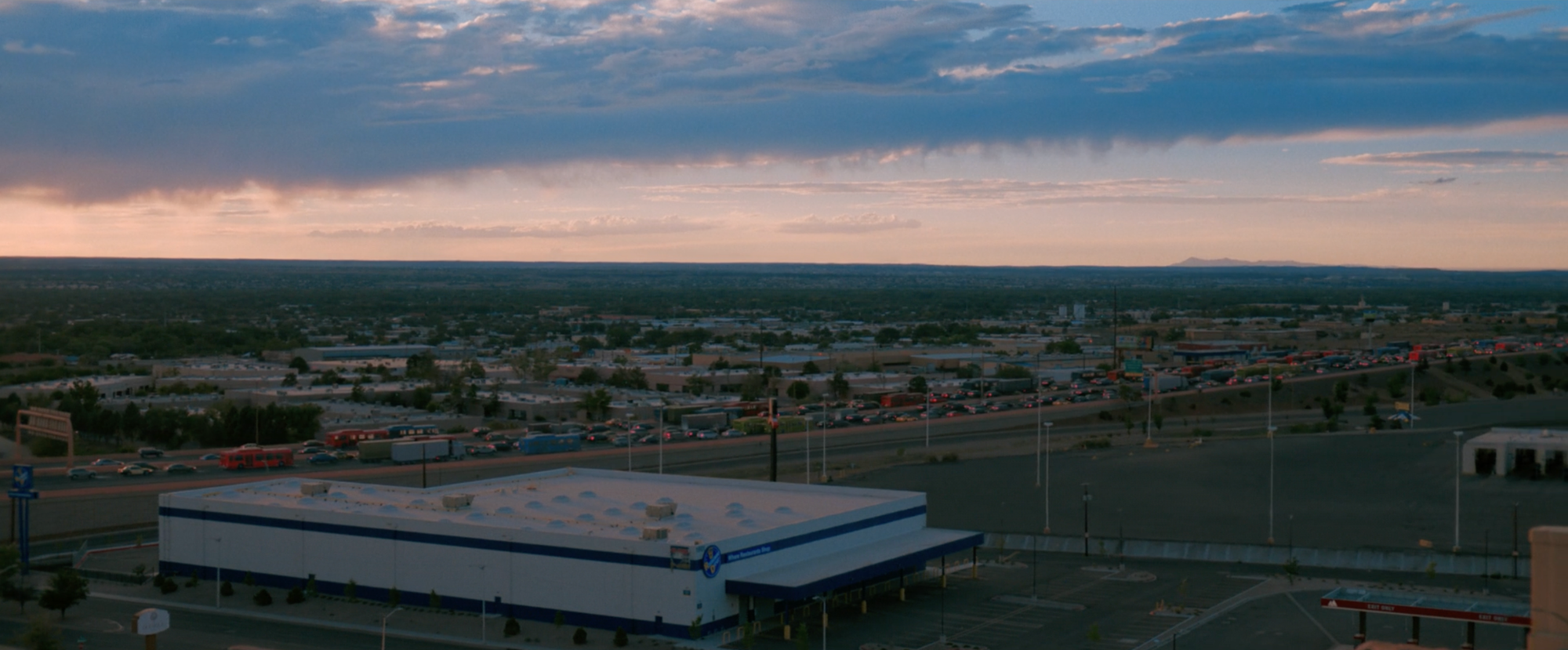
A couple of weeks ago, I expressed gratitude for a little more robinsonade. Little did I know that Gilligan had an even purer, more complete solitude in store for Carol. In a bravura shot from the roof of a hotel, we see vehicles streaming out of the city like history’s most polite hurricane evacuees, using both sides of the freeway, stranding her in the desert. She sends out high-tech messages in a bottle, in the form of SD cards sealed in bubble mailers. Call it Gilligan’s Island. (I can’t be the first person to make this joke, but I will not be googling to see who beat me to it.)
In the comments, several of you have noticed Carol’s snippy entitlement, especially when it comes to the systems that keep the lights on and make her trash disappear. Isn’t it beautiful that withdrawing this service is what leads to her discovery? She may be dependent (aren’t we all) on a vast army of servants invisibly doing her bidding, but that doesn’t mean she lacks a work ethic. Indeed, it seems that her whole career of methodically churning out romantasies has fostered a doggedness that’s exactly what this strange new world demands. That extends to the happy face she puts on to meet her public, now marshaled in the service of communicating effectively with her fellow individuals. When she slips and wonders aloud if anyone is actually watching, she pauses, clears the cache, and starts over. We get the impression that patience doesn’t come naturally to her. But she’s learned how to turn it on, steering clear of frustration and despair.
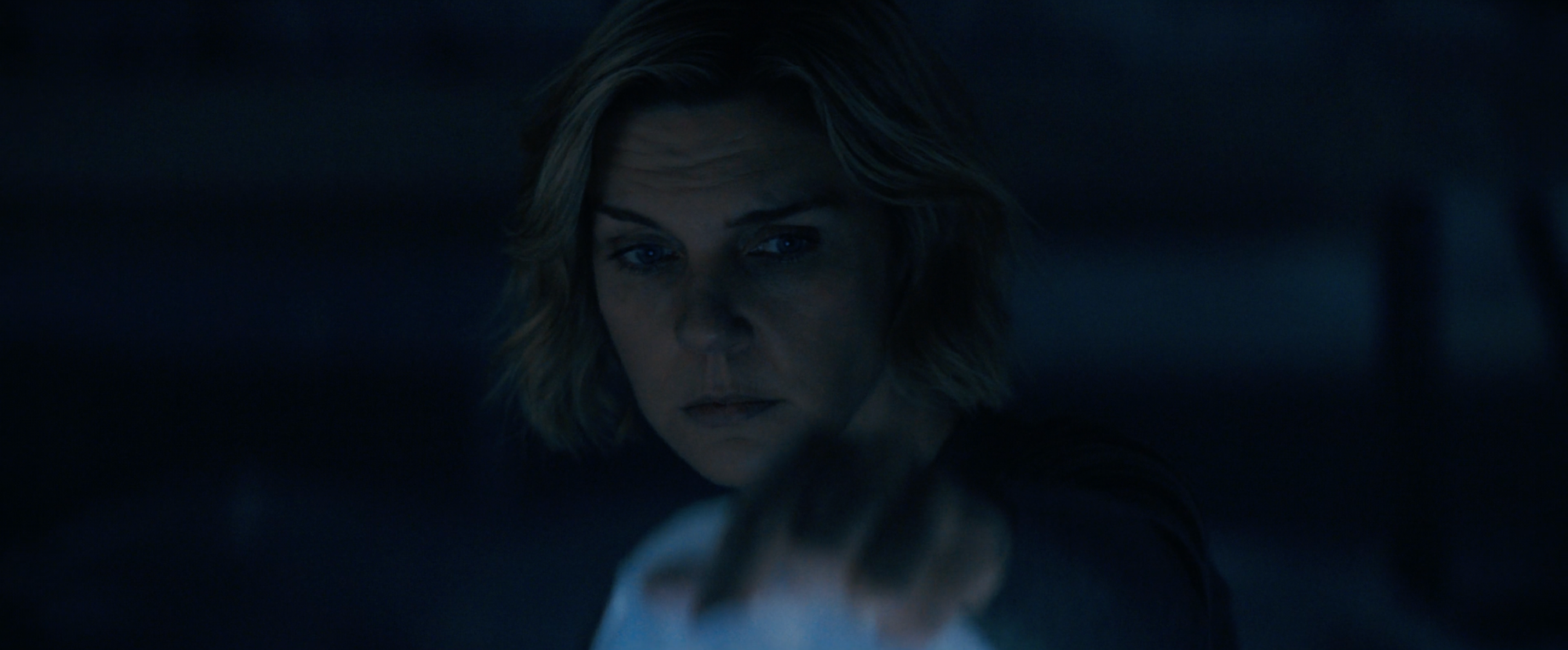
I can’t help wondering, though—at what cost? We saw how Helen served as a release valve for Carol’s curmudgeonliness and complaints. She absorbed them and reflected back enthusiasm, validation, and understanding. Without her, Carol is just pushing it all down, shoving it all to the rear, so she can get on with the work she’s now adopted as the meaning of her life. Is it only a matter of time before it all erupts, in a world-shattering explosion of grief and rage? Or could it be that someone joining her in the fight—the right person, with the right temperament— perhaps she can find a new equilibrium?
Stray observations
- The title and plot of the Christie novel Helen left behind, And Then There Were None, strikes me as ominous. Are we going to start losing the immune?
- When Carol hauls the empty bag down to Sprouts to scan the bar code, I had a moment of confusion. Why didn’t she just use her phone? And then slowly I realized. It’s not just the cell network that’s down. It’s the whole internet. What use does the collective have for it? They pulled the plug on the servers first thing. (And a good thing it is for us, since detective work is far more interesting with plenty of shoe leather and minimal magic screens.)
- I love the way we are periodically reminded how things work in this brave new world. When Carol gets chewed out by Lakshmi after picking up a ringing hospital phone, she tells a random worker bee not to give out her number—conjuring the precise unaired scene where Lakshmi demands to talk to Carol and the worker bee next to her dialing the number of Carol’s closest landline.
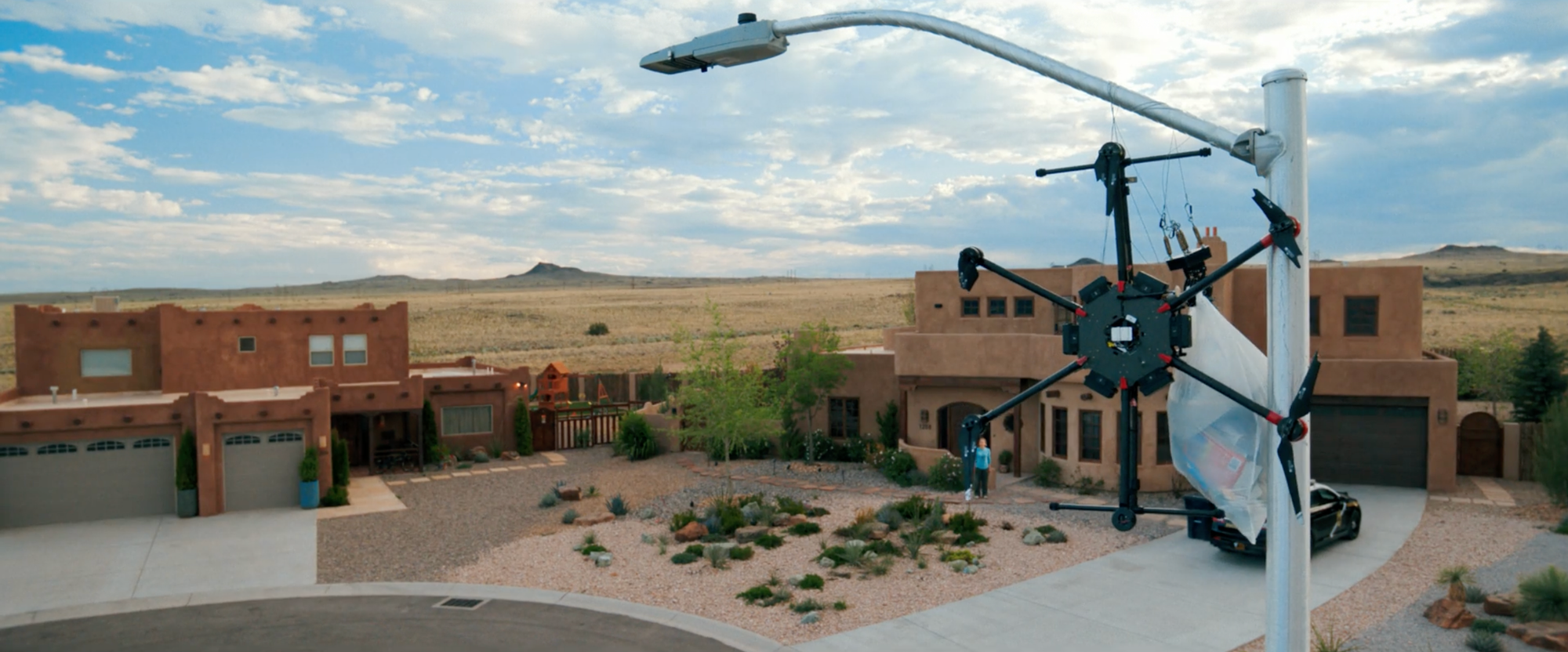
- There is truly nothing funnier than a slightly anthropomorphized machine. (Exhibit A: The oscilloscope-equipped box Matthew carries around so Jimmy James can keep tabs on the WNYX crew in “Complaint Box.”) The supersized drone that tries and fails to pick up Carol’s trash, ending up wrapped around a light stanchion, got the biggest belly laugh of this show so far. (And how about that button: a close-up of the trash falling on the ground from the busted bag anyway, with Carol watching mutely in the background. Chef’s kiss.)
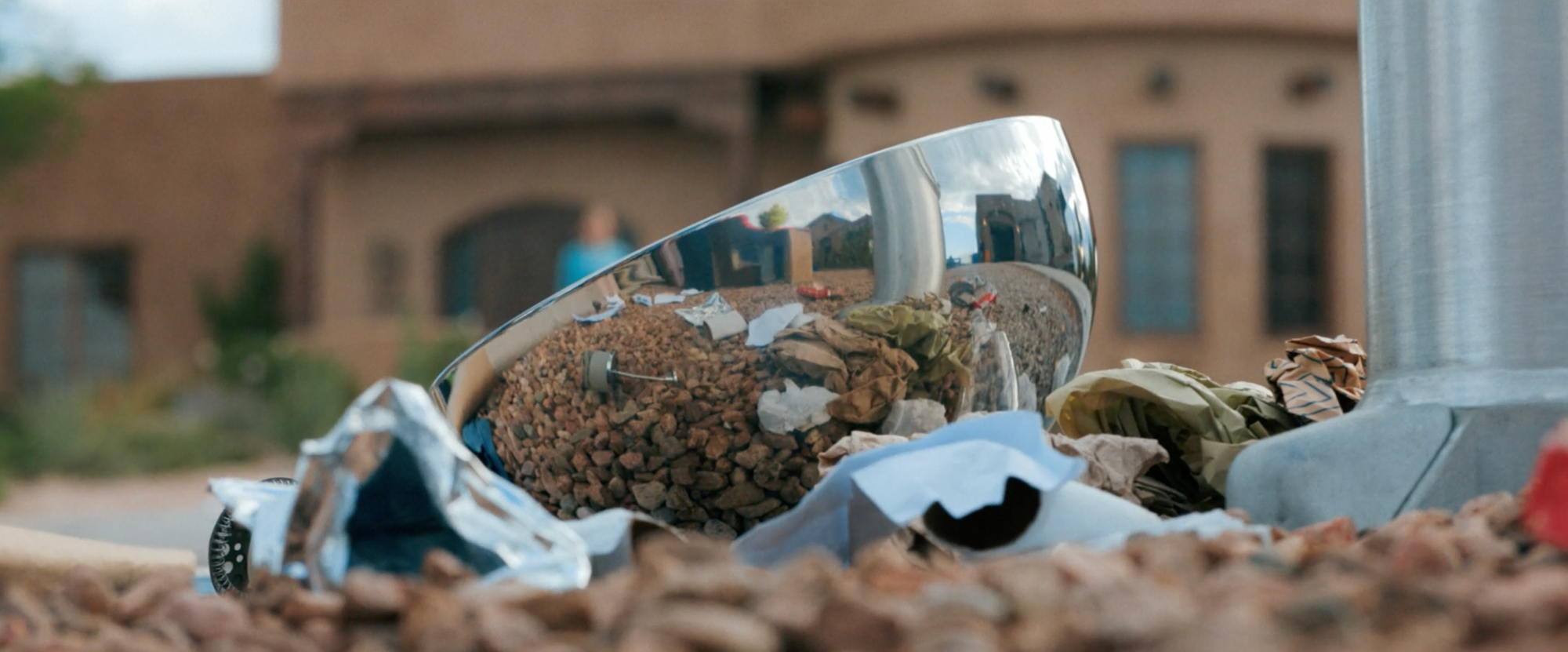
- One item in Carol’s trash proves particularly hard to dispose of: The serving platter and dome, from Zosia’s rejected room service offering in “Grenade.” Faced with that familiar municipal refuse container holder design made specifically to defeat large objects, it's no contest.
- The passive-aggressive determination of the collective to distance themselves from Carol extends to returning her voicemails: “Hello Carol, this is a recording,” begins the call where the hive mind gives her a weight limit and spacing instructions for her trash bags.
- Tonight’s montage is an especially poignant one: Carol hauling the pavers one by one to arrange them on Helen’s grave, as the sun travels across the sky, ending with her propping up a painting of an orchid to replace the real thing that proved too vulnerable to predators.
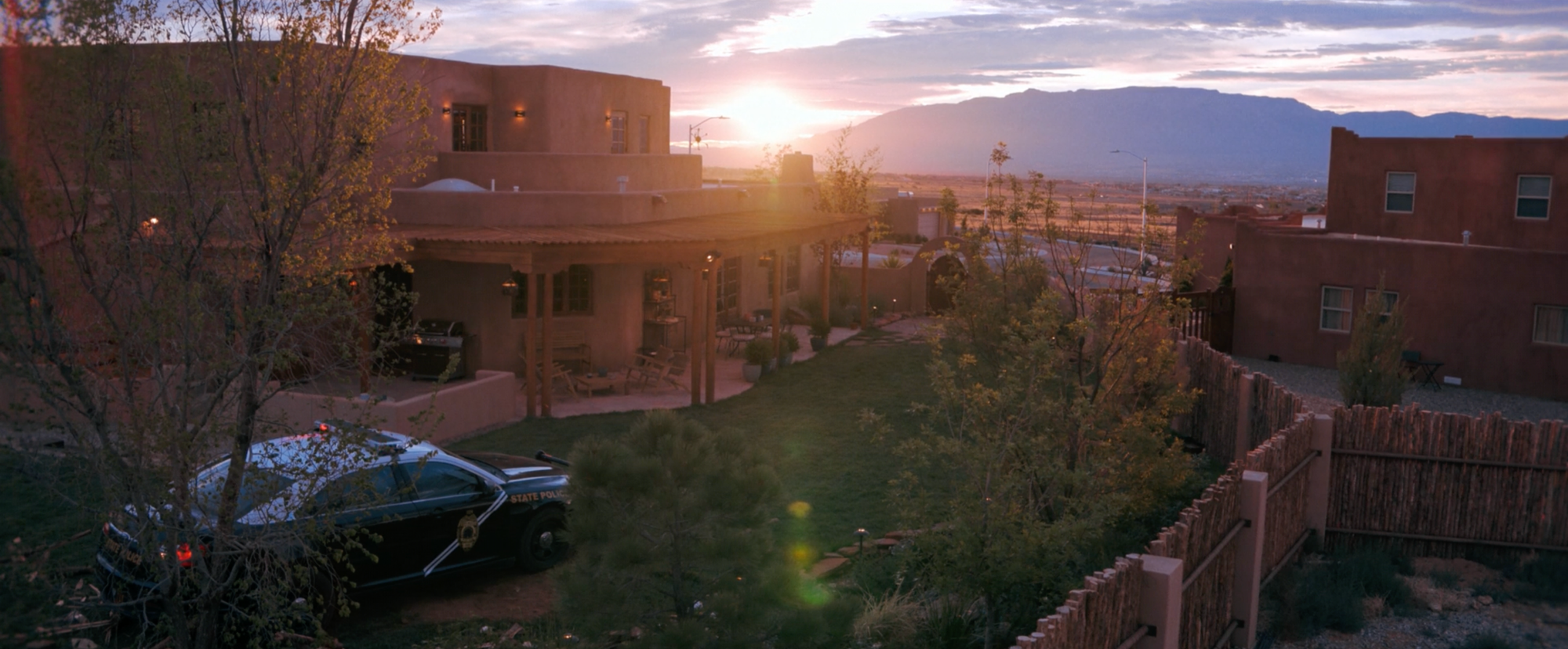
- The coyotes’ assault on the grave is shot like a horror movie. They advance in formation as the drone leaves with the second video mailer, almost as if they too were agents of the hive mind. Carol first thinks of the shotgun in the police car, but can’t wrench it free from its holder; after it’s all over, she finds the big button that unlocks it.
- Testing the powder solution with the tools she has to hand, Carol announces that it does not contain chlorine. I actually hope this proves to be important.
- “Are you even getting these? Because how the fuck would I know?”

Comments ()