Review: Industry, “PayPal of Bukkake” | Season 4, Episode 1
"I used to think that the day would never come"
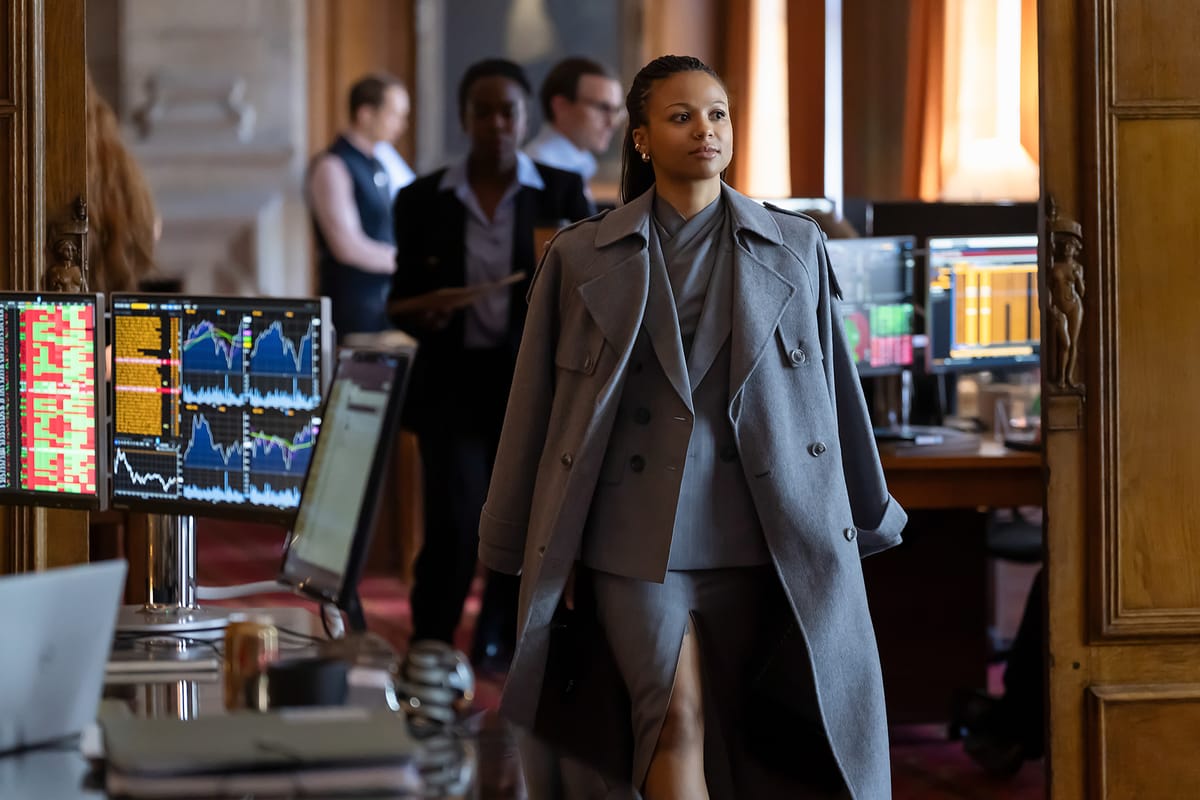
Welcome back to Episodic Medium's coverage of HBO's Industry, which returns for its fourth season. As always, this first review is free, but subsequent reviews are exclusively for paid subscribers. A reminder that yearly subscriptions—already our best deal—are an extra 10% off until later this week.
What even is Industry? I don’t mean that from a rhetorical standpoint; I mean it from a rather literal one. Like the financial market it so keenly explores, the HBO series is constantly in flux, consistently transforming itself from installment to installment. I saw clips floating around on my timeline the other day from the Lena Dunham-helmed pilot, and it felt like I’d fallen into another world.
There’s a pick ‘em of changes. It’s easy to notice the surface level differences, like how the cast have all gracefully aged or the total shift in the visual language. But for me, the way Industry’s changed the most is in terms of its ambitions. Early seasons drew comparisons to Succession (the finance/business side) and Euphoria (young people have sex) that always rang a little hollow to me, if for no other reason than it was an easy shorthand. But those felt incommensurate with my reading of the show. In fact, my read was always closer to my friend and editor Frazier Tharpe’s take, who put it thusly for GQ last season: “Stop Comparing Industry to Succession, When It Really Wants to be Mad Men.” To continue, “Mad Men is an office drama, and Industry is following that mold. Every plot twist and character motivation spins out of that trading floor.”
I quote Frazier’s savvy observation as a way of circling back to my original question. With the season three finale jettisoning Pierpoint from the proceedings, what is Industry without its trading floor? Removing that safe haven means co-creators Mickey Down & Konrad Kay have to create a brand-new space for the drama to flow. Which is why so much of “PayPal of Bukkake”—a real episode title for a series in its fourth season on the Home Box Office channel that’s also featured in a post on an official brand’s Instagram account—is all about reinvention.
To wit, the first scenes of the premiere aren’t even focused on our leads and swap the expansive openness of last season’s premiere for a claustrophobic outing featuring two brand new characters, one of whom just so happens to be played by the same actor who played Sally Draper in a manner that seems to cheekily nod to its historical influences. It’s a mission statement right from the get, declaring that things will be different moving forward.
Industry is similar to Mad Men in the structure of its premieres, too. What I specifically enjoy about the premiere is how Down and Kay catch the audience up on what’s unfolded since we last saw them. It gives the narrative a nice propulsion, bobbing and weaving from one character to another. Usually, that’s been enough to sustain a premiere for the show, partly because previous seasons have the first two episodes tighter in alignment. Season two’s big introduction of Jesse Bloom spans two episodes and essentially functions as a two-parter. Season three is the same in how it goes about introducing Henry (Kit Harington) and Lumi. But “PayPal” can’t entirely* function in the same way, not entirely, because the show is shifting. By removing Pierpoint from the equation and ostensibly subbing in Tender in its place, Down and Kay are building the plane while flying it, establishing what Tender 2.0 Industry 2.0 is in real-time.
*We see Henry at the end of the episode as a teaser for his solo installment that’s already been teased in the pre-release press cycle. Whether or not it's as much of a direct part one, part two installment as previous seasons is TBD, but the way it’s been talked about doesn’t give me the indication it’ll be as tightly tied together as, say, last season rolling right in from the premiere into episode two.

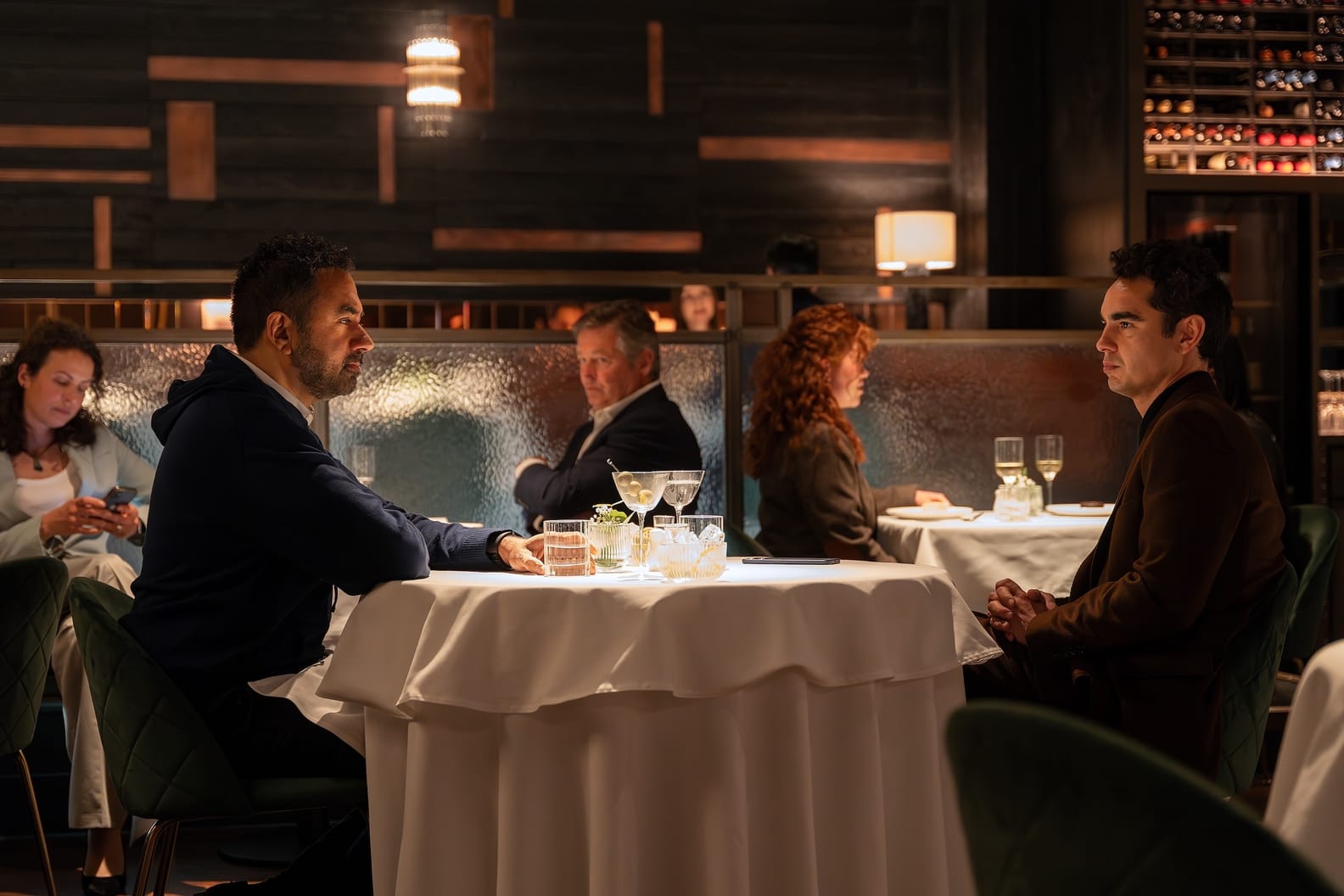
As the episode continues and the pair roll out their new vision for the show, there’s Herculean effort to establish this new status quo. The episode is really split between checking in with old friends while building up Jonah (Kal Penn, brilliantly cast) and Whitney (Max Minghella), so we invest (heh) in Tender and the drama. Savvy further is having Whitney intersect with both Yas and Harper, adding additional levels of importance to their introductions. If our leads are interested in them, the audience will acclimate quicker, too.
It helps that Industry’s casting department continues to hit home runs. Landing someone as charming and as charismatic as Kal Penn to play Jonah—and then giving him all the best lines with an absurdity threshold that Rishi rivals in his Pierpoint hayday—makes the buy-in and eventual downfall all the easier. Furthermore, it’s a nice narrative mirroring. As one side falls in Tender, another is born in Harper and Eric joining forces. It also helps establish the new workplace dynamics moving forward, while still leaving Yas and Henry to fall into place at a later date.
"PayPal” deftly re-establishes that the show isn’t really changing that much. At least not right now. Last season, I wrote that I was concerned the show might change too much while also saying I believed there was room for the show to expand even further, continuing to redefine what it’s capable of being. That tension is made manifest during Jonah and Whitney’s conversion: “not a re-break, a re-imaginging of what we might be capable of,” Whitney declares.
And so it is. Industry arrives in its fourth season with the knowledge that the show can be, as Down recently told Variety, “whatever the fuck we want it to be.” Right now, that just so happens to be a show that looks, well, kind of similar to where we saw things last go round. Whether that remains the same is to be determined, but moving the show slightly more askew as its fourth season starts is undoubtedly one way to ensure that a series known for being bold, fresh, and exciting stays exactly that. In short, Industry is dead—long live Industry.
Stray Observations:
- Quote of the week: “Never deny a man his passions” or “You partnered with Colonel Creampie.”
- New for this season — because that’s where a lot of the laugh lines are always buried — background quote of the week: “...whenever he ends up at the bunker, he shouts ‘fake news’ and the ball disappears.”
- Industry Fashion Watch™: Four. Piece. Bespoke. Suit! Okay, Harper, way to show you’ve got some major money now. Also, legit lol that Tender started “over importing dupe BAPE hoodies from Puyang.”
- Industry Music Corner: I love that Shep Pettibone’s remix of New Order’s “True Faith” that opens the episode features the lyric “A sudden sense of liberty.” Nice little thesis for this new season!
- It’s refreshing to see HBO going all out to market the show this season. My feeds were filled with influencer content from the cast in addition to the flurry of editorial features and the review embargo. Feels like the network knows they have a heater this season, and therefore, it's all hands on deck.
- Speaking of which, I still find it hard to believe we’re even here to begin with. As it was reported this week, the first season had awful ratings and almost didn’t make it to a third season after season two’s brutal cliffhanger. To be here, now, is crazy—and a testament to the fact that HBO was patient enough to let this show develop an audience instead of canceling it. I’m sure it being a co-production between HBO and BBC helped to offset some of the financial investment, but even still —::Drake look around meme::
- I have a feeling that individual mileage may vary on the effectiveness or lack thereof when it comes to Harper’s strap. I wouldn’t blame someone for thinking it’s a bit gratuitous. However, like all sex in Industry, I find it to be very revealing in terms of the show continues to explore sex as it relates to power. In this instance, specifically, it speaks to Harper’s need and desire for control. I’d wager she found that much more satisfying than anything Whitney did for her.
- I attended the premiere in New York on Thursday, and I was surprised that more folks in the audience didn’t react to the Trump of it all. Industry’s mentioned American presidents a few times—remember the line from season three about the president being too old, which was clearly a Biden dig—but to have him so directly referenced is just one of the many ways it continues to feel timely.
- Speaking of timely, Otto’s “r-word” line also feels pulled from the headlines, keeping the show on the bleeding edge of social and societal behaviors.
- Harper still defaults to saying 911. Can’t sand off all those edges.
- Forget “shaken, not stirred.” My martini order is now “bone dry. Cold as space.”
- Too early to tell how the new cast will shape up, but immediate standouts are Minghella, Penn, and Toheeb Jimoh, whose Kwabena Bannerman makes his presence felt by being one to call Harper on her bullshit immediately.
- Fun fact about Jimoh, per the show press conference on Friday: he said that his first day on set was the sex scene in this episode, and the first note he got was simply, “harder.”
- Interesting spot to pick up on where Rishi’s at, given the dramatic and shocking conclusion to his arc last season. I like the idea of him being a dirt detective for Harper since he can’t find a job anywhere else. I know he’s an asshole, but it's crushing to hear he spent time in the psych ward for what sounds like a possible suicide attempt.
- Knowing Mickey and Konrad, I’m sure The Social Network’s influence loomed large in the sequence where Whitney ousts Jonah.
- Finally, on Henry: my only note is simply LOL. Of course, he looks miserable.
- Glad to be back in the saddle for this season with you all. How are you all feeling about the retooling here?


Comments ()