Review: House of the Dragon, "The Treasons at Tumbleton" | Season 3, Episode 8
Even without having read the books, there's a ceiling on the story's potential
Hey free subscribers—if you've been following along with House of the Dragon and want to join the conversation, here's a preview of our review.
“The realm is watching.”
When television became more serialized, there was intense pressure on creatives to commit to a “plan.” Audiences want to know that the story will get resolution, and so showrunners need to offer assurances that there is an endpoint in sight.
As a result, when House of the Dragon debuted, Ryan Condal was forced to go on the record and say that the show was intended to have four seasons. He reiterated this in subsequent interviews, and earlier this year HBO confirmed that the fourth season—planned for 2028—would be the show’s last. Two years from now, we will see the end of this particular story set within the Game of Thrones universe.
There are benefits to this, certainly, but I was struck watching this finale how little impact any of it had, knowing that there was no hope of significant story development. The Battle of Tumbleton has been set up as the season’s climax, but I entered it with absolute certainty that no one important would be lost in the conquest. There are casualties here, but they feel incidental to the central story, which mostly sits stationary within the external threats around it. It’s exactly the finale you’d expect from the penultimate season of a narrative so dependent on its central characters that any stories outside of them feel wholly procedural, even in cases where one could normally find pathos.
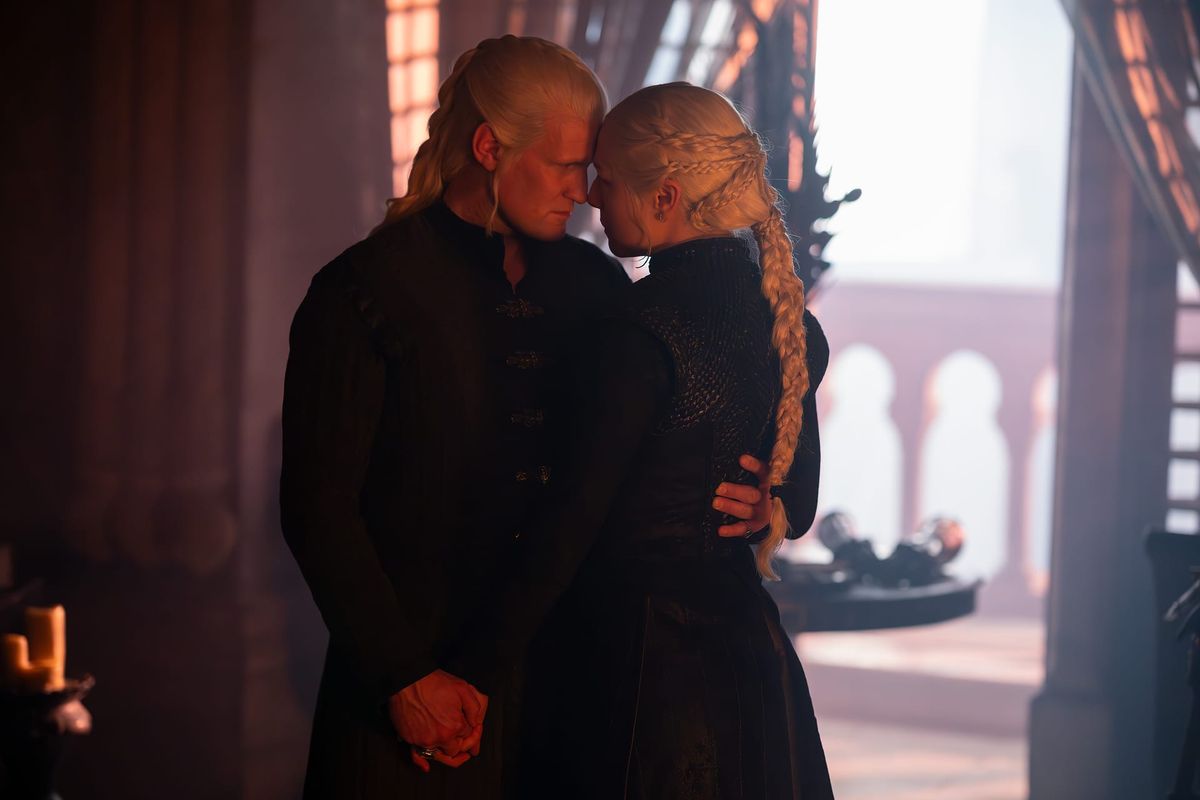
The Battle of Tumbleton achieves a single important task to the larger narrative: making abundantly clear to Westeros that the Targaryens are willing to burn their enemies to maintain power. It was the situation Rhaenyra was warned about, but she was too furious at the news of Aegon’s “resurrection” to temper Daemon’s impulses to avoid it. The show doesn’t want us to see them as full villains, and so we see enough to know that this wasn’t Daemon’s plan exactly: he changed his strategy to keep from burning the children alive, and tried to get the ones at the door to flee before he let Caraxes Dracarys the gates. And in the end, it’s Ulf’s scorched earth attack on both sides of the conflict that creates the death and destruction that will haunt them, rather than Daemon's actions.