
Review: House of the Dragon, "Salt and Sea, Fire and Blood" | Season 3, Episode 1
An eventful premiere reinforces the series' success within limitations
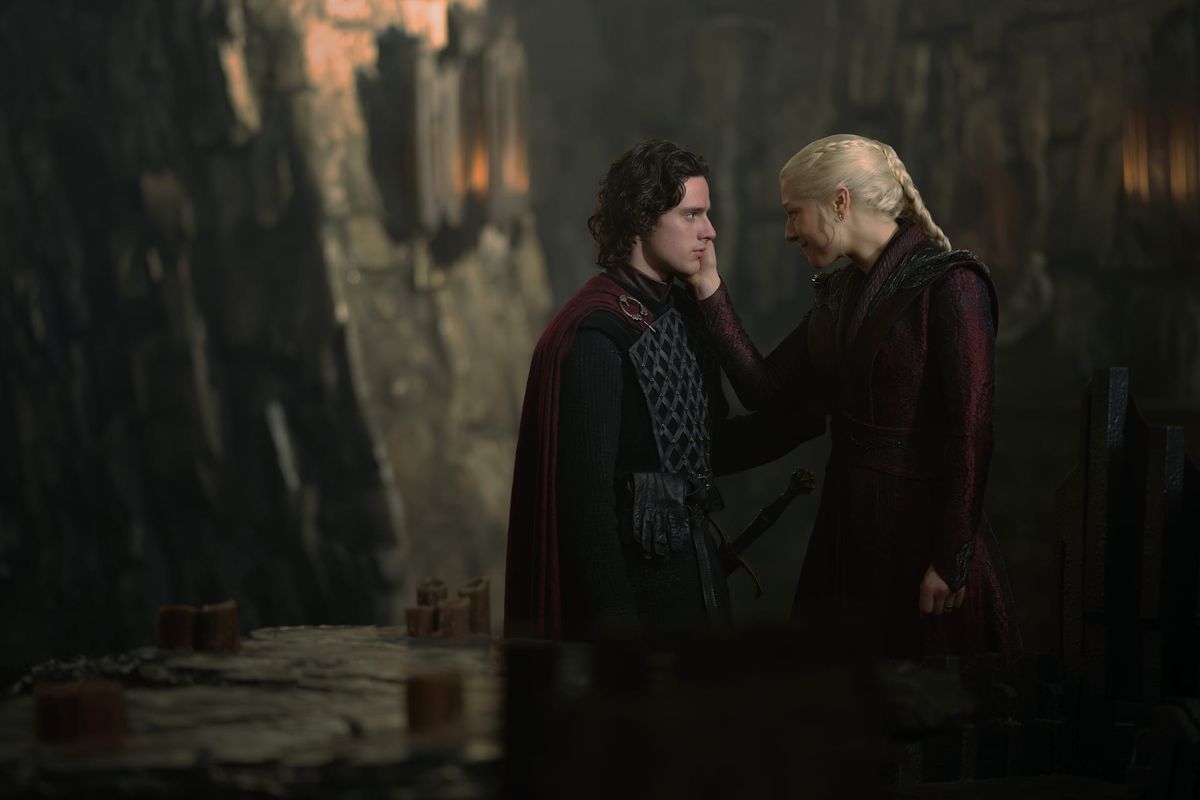
Welcome back to Episodic Medium’s coverage of HBO’s House of the Dragon. As always, this first review is free to all subscribers, but subsequent reviews will be exclusively for our paid members. Our fourth anniversary sale runs through the end of the month, and gives you 15% off our yearly rate. You can find our full summer schedule here.
In the interest of full disclosure, HBO failed to respond to my several emails requesting House of the Dragon screeners. I admittedly left it kind of late, believing that my screeners of the first two episodes would remain in my account long enough to find time to watch them, but it means that I’m watching this live with the common folk.
Believe it or not, I’m mostly content with this (although HBO, if you’re listening, please respond to my emails). One of the tensions of reviewing television on a weekly basis is trying to account for varying perspectives, and the fact is that most reviews tend to focus on the most hardcore of hardcore viewers. Game of Thrones and its spinoffs became a domain for the superfan, either writing for that audience or embodying that identity in order to explain the show to the less obsessed. It’s an expectation tied to franchise television, and one that I participated in as the “Experts” reviewer for Game of Thrones at The A.V. Club.
However, the massive success of that show and—despite the narrative of the show’s fall from grace—its spinoffs is a reminder that the actual median viewer of House of the Dragon is a normal person who watches the show in a normal way. They’re the viewer that “Previously on” sequences are made for, and who are excited for the show to return without having necessarily thought a lot about it in the two years it was off the air. They might need an explainer to remember every name, and might go back to read reviews like these to refresh their memory, but they’re never trying to get themselves to a point of absolute mastery. They’re just television viewers watching a television show, albeit one that happens to have a higher-than-normal share of lore and the baggage that comes with it compared to the lighter A Knight of the Seven Kingdoms that found success earlier this year.
My choice not to read Fire and Blood, the source material for House of the Dragon, was an attempt to relieve myself of the burden of superfandom, and working without screeners is a natural (if unintended) followup. I don’t know how self-aware Ryan Condal and HBO are about this show and its cultural footprint, but this is not Game of Thrones, and treating it like it is doesn’t make sense. If I had to estimate, this is a show that half the viewers have likely forgotten huge swaths of between seasons, but I don’t think this is necessarily diminishing the show’s audience. We want to return to this world, even if it means spending the premiere occasionally throwing “Alicent brother name” into Google while you’re taking notes.
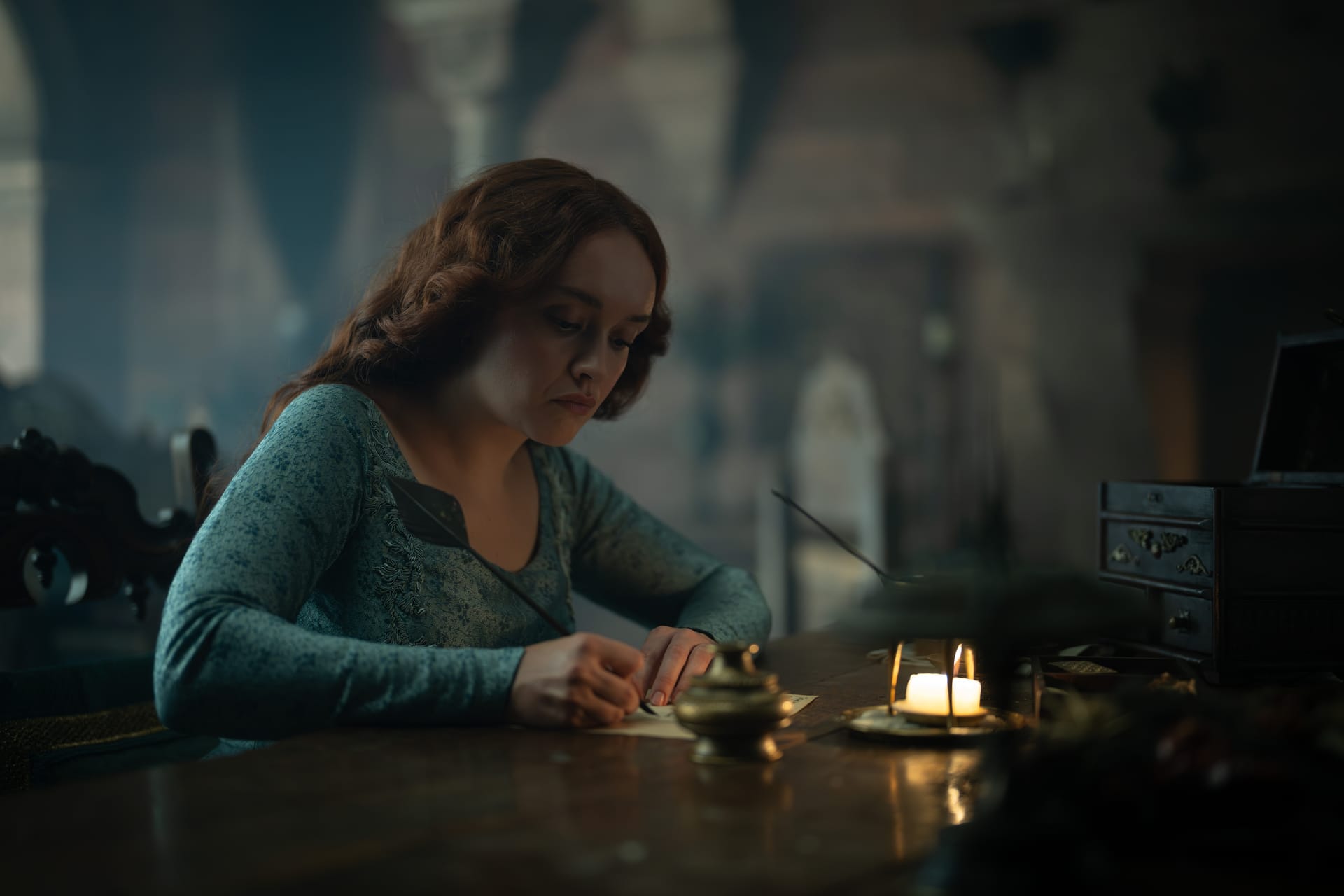
“Salt and Sea, Fire and Blood” was always going to be something of an anti-climax, insofar as the larger war between the Greens and the Blacks. We knew this at the end of last season when Alicent made her promise to Rhaenyra—thrilling as it may have been to see the characters together, and genuine as Alicent may have been in her willingness to end her son’s life to spare the rest of her family, we had information she didn’t. We knew Larys was helping Aegon escape the castle, and we also knew that the Triarchy were on their way to attack the blockade. Jace might be wrong that Alicent was actively leading his mother into a trap, but that doesn’t mean a trap doesn’t exist outside of her knowledge.
Perhaps my biggest criticism of this premiere is the way it sidelines Rhaenyra and Alicent, although that’s the point. In the former’s case, Jace literally locks her in her room to keep her from flying to aid Corlys and the ships at the blockade; in the latter case, Alicent can’t play a more active role without raising suspicion, although she risks sending word to Ormund Hightower under Aemond’s name to slow his host. This show is ultimately anchored on these two women, but this battle can’t be, and I understand that; it also risks falling into the trap the show has set for itself since its inception, where the historical focus of the source material lends it a procedural feel.
Without having read Fire & Blood, I can see where Condal is fleshing out the story. There’s two battles depicted here, and two different approaches. Daemon’s skirmish with the Lannisters in the Riverlands is a burning battlefield, a couple of brief moments of heroic battle from Rhaenyra’s newly-supportive uncle-lover, and then the arrival of the Starks with the head of Lord Lannister. While we get some brief insight into Daemon’s negotiation of local customs—wanting to burn the dead, agreeing to honor the Riverlands’ custom of burial—and the news of Jace’s parlay with the Northmen proving fruitful, you can see how this would be a footnote in the larger history. A battle happened, but the back-and-forth of it didn’t matter, and the headline version is all the show really has interest in.
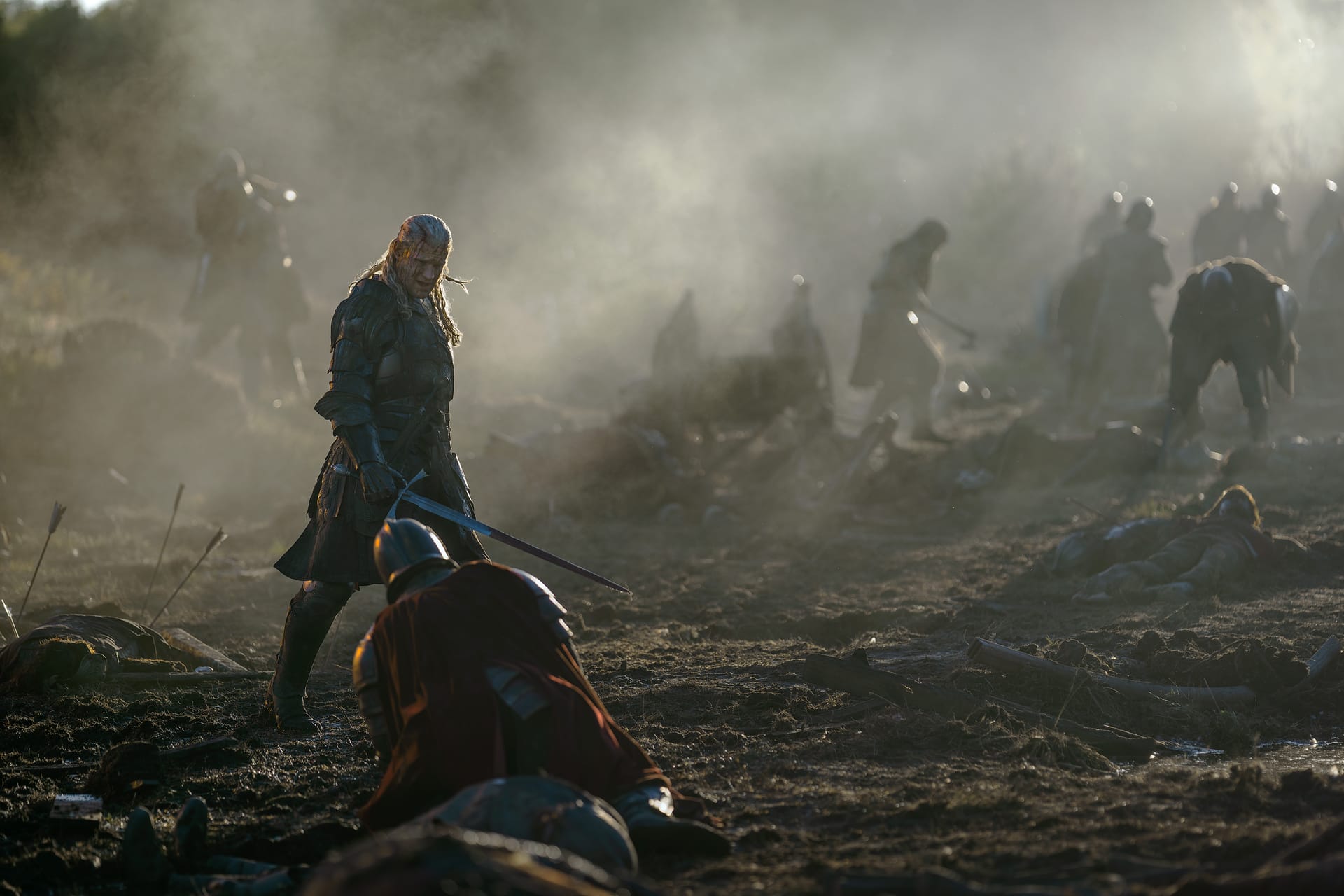
And to be honest, the same could basically be true for the massive sea battle that concludes the episode, but Condal and director Loni Peristere approach it very differently. You could still imagine this functioning as a headline: Blockade destroyed, High Tide razed, Jace and his dragon Vermax downed. But what House of the Dragon has done consistently well is find ways to flesh out moments like this one, viewing them as a convergence of characters and storylines. Are any of these characters as compelling as Rhaenyra and Alicent, and for that matter Daemon? No, and there’s a certain hollowness when you take a step back and realize that the facts matter more than the nuances. However, this doesn’t change the fact that the combination of high production values and efficient storytelling allow scenes like this one to tap into what made Game of Thrones itself so effective, albeit without as much personal connection to those involved.
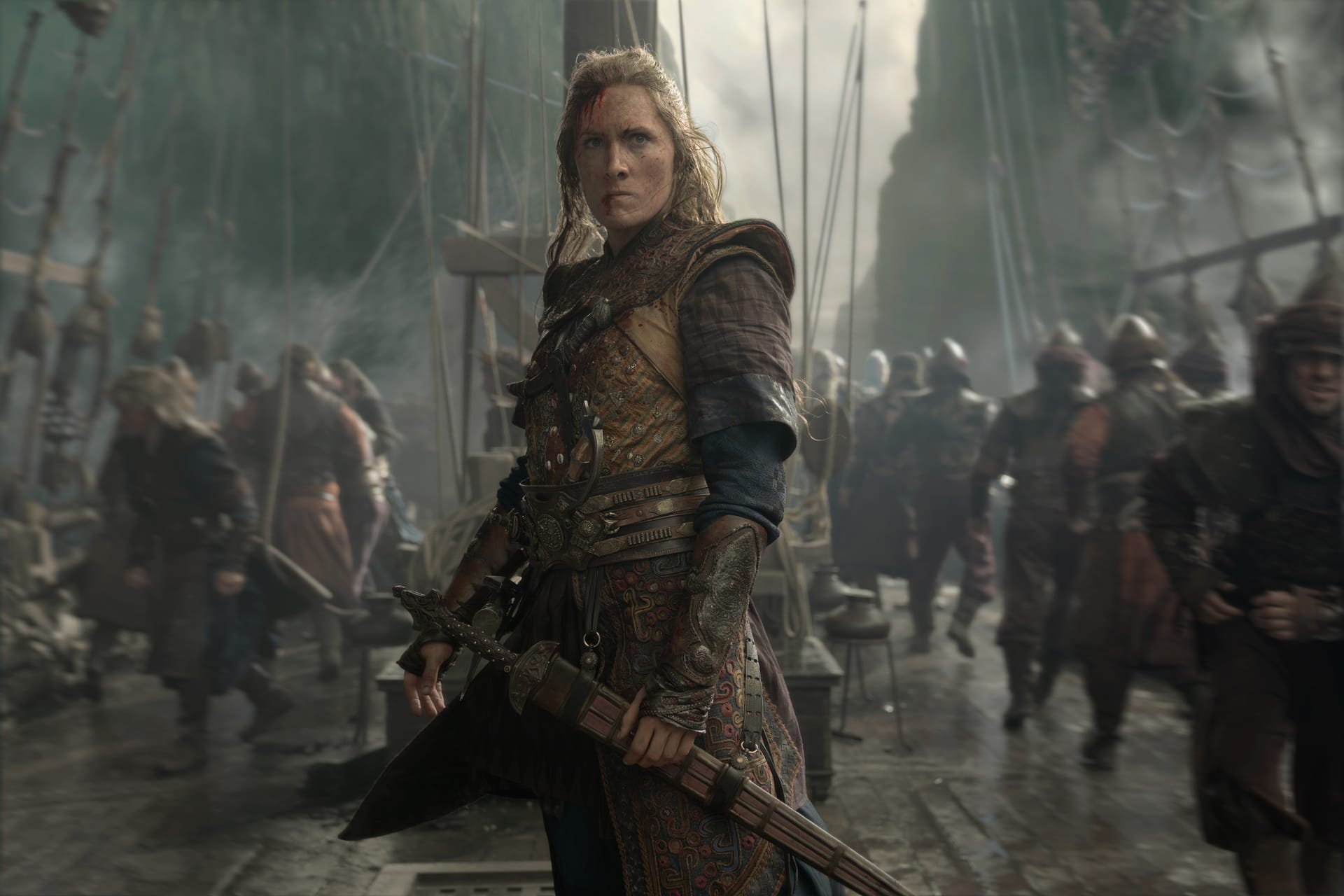
Take, for example, the character of Lohar. We spent time last season with Tyland Lannister seeking the assistance of the Triarchy, and the character of Lohar made an impression. Was it enough of an impression for me to remember anything about her without the “Previously On?” No, but the memory jogged quickly, and she’s a character in a way that registers well. She’s a loose cannon who’s only really here for revenge on Corlys, and that’s reflected in her tactics. She sends her ships to High Tide because she knows it will distract him, and she follows him through the Dragonstone Pass because she can’t help herself. She even throws Tyland and his men overboard once she realizes that they’re not helping her, escaping the pass and laying siege to the Sea Snake’s ship. She’s the catalyst for a battle that feels grounded and visceral, with enough twists and turns to build momentum.
However, she is also—at the end of the day—narrative color designed to create this moment and nothing else. The time we spent with Tyland, and everything with Lohar, dies when Alyn kills her in the wreckage of their ships, all some extra window dressing to deliver a fun action scene. There’s nothing really to be said thematically with Lohar, whose brief time on the show never felt load-bearing to a larger idea. It’s good television, but it reinforces how the historical record approach to the narrative results in character investment built around short-term returns. While some Game of Thrones stories may have seemed less important than others, there were never stories like Lohar’s that pop up and get resolved with haste. (The closest was probably Dorne, but at least that was paying off Oberyn’s thematically-relevant short stint in the previous season).
I don’t think this is necessarily a fatal flaw, but it takes some adjustment. It’s easier to get invested in the other side of the battle, with Jace and Baela continuing their generation’s struggle to take the reins in the war their parents started. Even if I don’t feel like these are the show’s most developed characters, their direct relationship with Rhaenyra—and Daemon, and Corlys—means the consequences of their story resonate more deeply. The show didn’t do a whole lot to flesh out Rhaena’s attempted taming of Sheepstealer, but they established everything they needed for the chaos to win out. A combination of Jace’s inexperience and Sheepstealer’s friendly fire are enough to lead to the former’s death, and although we should be used to it by now, there remains a real power in the show’s body count. Game of Thrones killed many characters, but their arcs usually felt like a crescendo—the same cannot be said for Jace, who I honestly thought would survive once he managed to unhook himself from his drowning dragon. He dies just as abruptly as his brother, deepening the tragedy of Rhaenyra’s quest for the throne.
Did I ever care about Jace beyond his relationship with his mother? This is a question I ask myself as House of the Dragon marches forward, taking characters off the board at a fast pace. This is a character-driven TV show, still, so it depends on us caring about whoever is carrying a particular corner of the story. Do I have any feelings whatsoever about the bastard dragon riders, who spend the episode sitting around waiting for Vhagar to show up until Alys the Witch pops in to tell them to go to Dragonstone instead? No. Did the brief look at Ormund and the Hightower camp suggest the story needs to spend more time there? Also no, regardless of how highly billed James Norton is. Even if I can look at Lohar’s final moments and say the show did a nice job giving her some life so the action scene carried more weight, it doesn’t mean that I don’t balk at where the show chooses to spend some of its time.
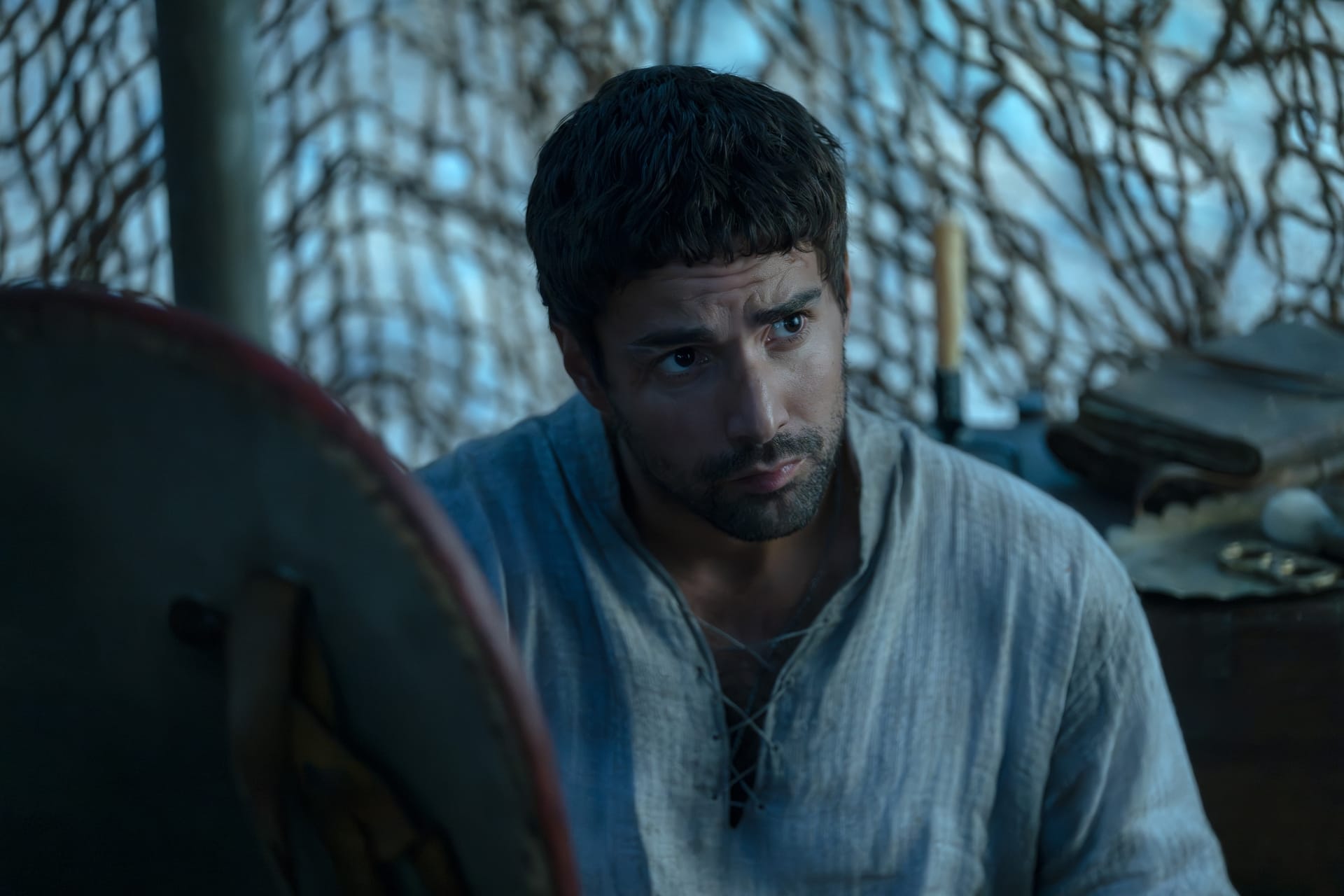
The one exception to this is everyone’s favorite dirtbag, Ser Criston Cole. On a functional level, there’s nothing more essential about our drop-in with the Hand of the King and Alicent’s brother Gwayne than some of these others instances. It’s a brief scene—Gwayne observes a village girl rushing away from an encounter with a soldier, and goes to Cole to encourage him to punish him. He’s also hoping that Cole will do something about the fact they’re exposed with no support from Aemond and Vhagar, but Cole has no interest in that. He’s just painting his shield, waxing poetic about how he has no interest in pretending that they’re not all descending into hell. They may be knights, but they’ll be beasts in the end, so why bother pretending otherwise?
It’s a heavy dose of nihilism, and while it has no real plot function, it resonates more than other corners of the episode because Cole is one of the few characters that has carried on from the beginning of the series. He doesn’t just feel like a line in a history book waiting to serve his purpose narratively; he’s part of the show’s fabric, his worldview more meaningful than who he kills or doesn’t kill. He’s a piece of shit, but he’s a load-bearing piece of shit, and I don’t know that I’ll ever stop wishing there were more characters like him, even if that wouldn’t make sense for the show this is.
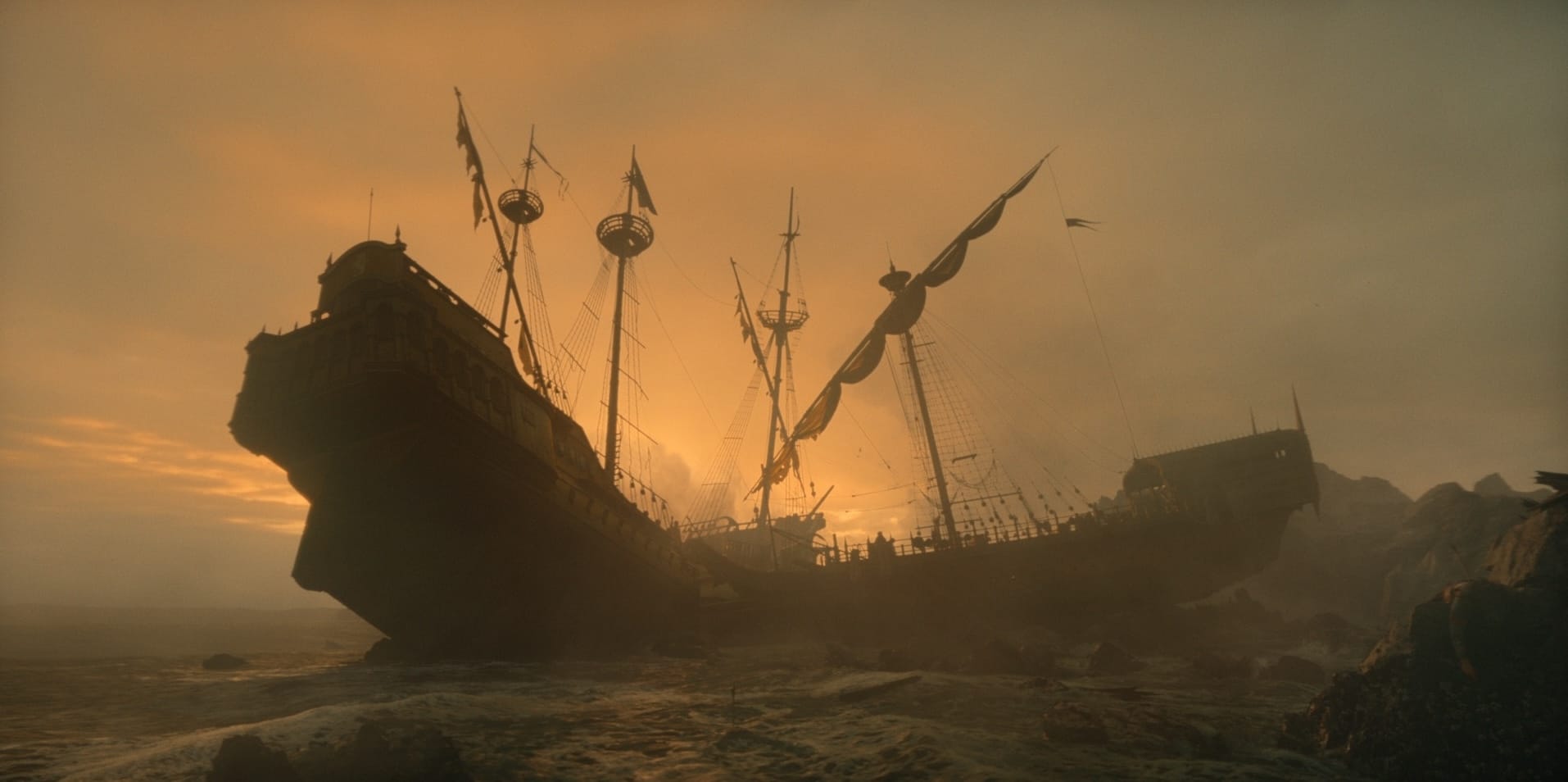
On that account, “Salt and Sea, Fire and Blood” is nothing if not an episode of House of the Dragon. The action hits hard, the tragedy is plentiful, and there’s a constant tension of scale in the storytelling that we just have to accept as part of the show’s deal. It isn’t the show operating at its best, but it’s the show demonstrating how efficient it can be within its limitations, and establishes the balancing act of table-setting and momentum generation a premiere needs in our era of two-year hiatuses.
Stray observations
- So while much of the credit sequence remains the same, there are adjustments to the visuals, and the remix of the theme song has gone really hard on the drums. To signal the war beginning, I guess? I liked it.
- The grapnels were a really effective narrative device here in terms of selling us on the dragonrider side of things: you get the first close call with Baela being able to sever it, but then you get the failure the second time just as you’re thinking Sheepstealer is the bigger threat. Helps sell the story without relying too heavily on dodgy CGI close-ups of the riders.
- Speaking of CGI, it was overall pretty effective, although obviously some strategic fog in the wider shots of the naval battle. The amount of actual set-based stuff during the shipwreck portion really helped sell it, though.
- Alyn is still not a particularly dynamic character, but letting him—as my boyfriend noted—turn into John Wick during the fight definitely makes him more interesting to me than his brother. Sorry…*checks notes* Addam.
- I get that Larys is meant to be golden-tongued, but the confidence with which he revealed Aegon’s identity still seemed way too reckless to me. But this is a case where the show isn’t pretending that Larys and Aegon’s escape has much substance in it—makes sense to get them on a ship to Dragonstone off-screen.
- I appreciate that The Vampire Lestat kind of stole some of House of the Dragon’s incest thunder, but I was still suitably creeped out by Aemond kissing his mother, especially when you realize there’s the added layer of her having to accept it because she doesn’t want to get found out. I’d love to know how she would have reacted if she felt like she wasn’t a slip away from being murdered.
- I know we don’t have a clean timeline of events, and thus they can fudge things, but Rheana sure got back home from the Vale quickly, huh?
- And welcome back to our coverage of House of the Dragon. As noted, I’m hopeful I’ll have screeners moving forward, but hopefully the slight delay doesn’t disrupt the great conversations we’ve had in past seasons. This spring marked the 15th anniversary of Game of Thrones’ premiere, and the beginning of a significant part of my life as a TV critic, so it’s always special to have the Episodic Community come together to talk about the franchise.

Comments ()