
Review: For All Mankind, "First Light" | Season 5, Episode 1
Old man, look at his life / He's somehow not dead
Welcome back to our coverage of Apple TV's For All Mankind, which returns for its fifth season. As always, this first review is free for all, but subsequent reviews will be for paid subscribers. To join the conversation and keep reading, click below.
“You only need to figure out what you’re going to do next.”
What is For All Mankind about?
Early on, this was an easy question to answer: it was an alt-history drama about what the Space Race would have looked like if Russia had made it to the Moon first. But once the show settled on Mars in its fourth season, I’m not sure the writers necessarily had a simple answer to this question. The show is still interested in the geopolitical dynamics of space exploration and settlement, but there’s no longer a clear goal pushing the story forward.
This isn’t illogical given where the story landed. Part of the point of the fourth season was how what was happening on Mars was just a replication of the struggles on Earth. The battle over Goldilocks ultimately demonstrated that once space became defined by the resources available, capitalist greed and the subsequent mistreatment of workers took over. The problem with this is that in the absence of a new frontier, the show felt mired in middling storytelling as the original characters’ narratives continued to remain the focus as new characters fought for attention (and purpose).
This is not the first time we’ve seen this struggle, as the show had spent its entire third season resisting a changing of the guard in its storytelling. A show that spans a full forty years would normally naturally see a changeover, but I suppose it is equally “realistic” to the world we know that an older generation would refuse to give up power. The fact that it’s been 43 years and Ed Baldwin is still ostensibly the main character of For All Mankind is absurd, and I’m pretty sure every review I wrote in season four complained about it in one way or another. It kept feeling like the show was on the brink of turning things over to characters like Kelly and Aleida, but the old guard of Ed and Margo could never really go away. This still had to be about the characters who started this race back in 1969, even if the show is no longer about the race in question.
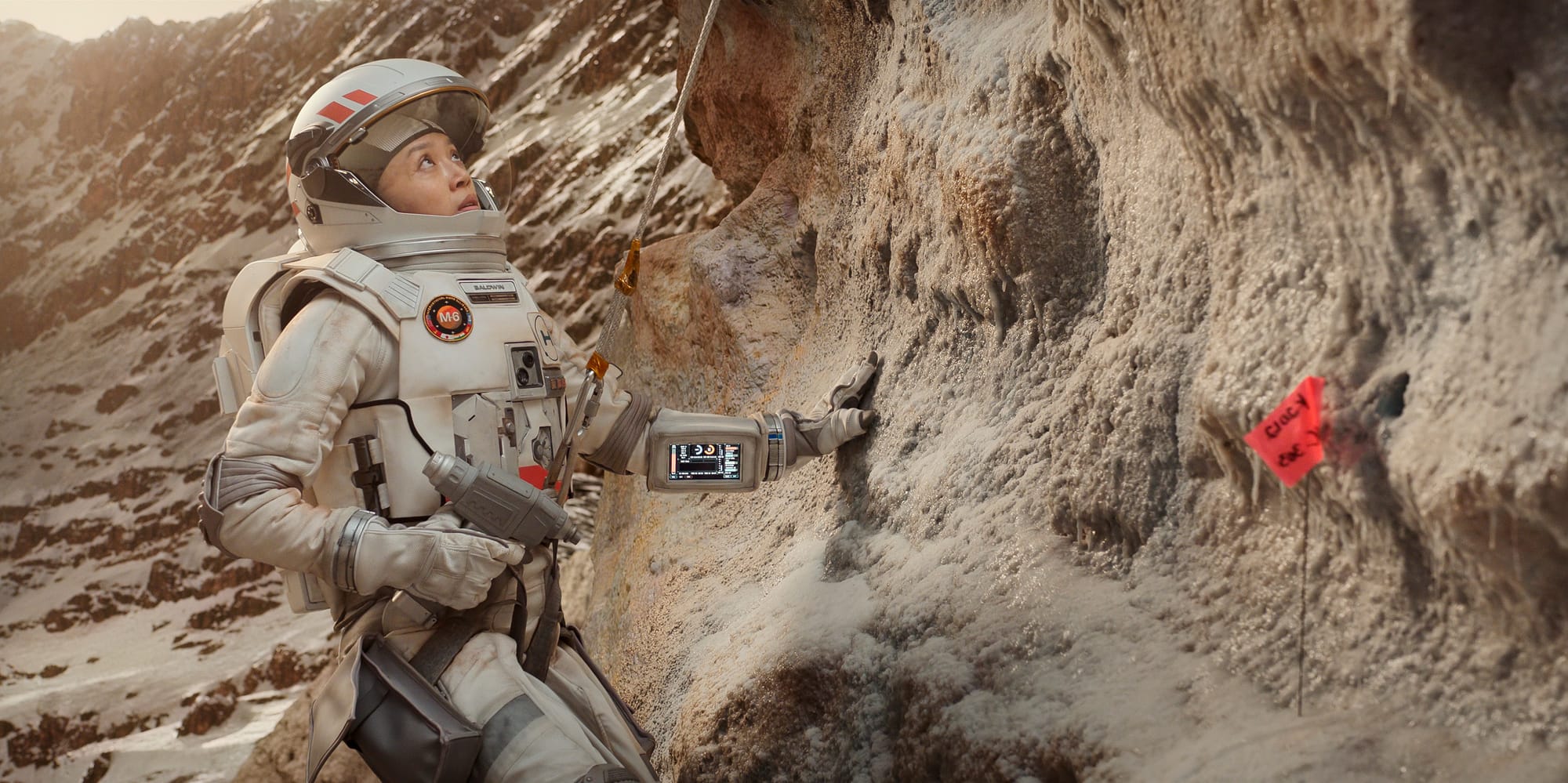
“First Light” signals that this is finally changing. No, Ed Baldwin hasn’t died off-screen between seasons, and that’s totally fair: I agree that whatever his last act is, we need to see it. The same goes for Margo, who probably could have disappeared into the federal prison system after last year but still has some value as a mentor for Aleida in her role as Helios’ CEO. But whereas last year’s introduction of the Helios workers on Mars was almost too grounded in the labor hierarchies we know all too well, the jump to 2012 has brought the first new perspective that feels built on the social and cultural realities of the alternate world the show has created.
Finally, we have Space Teens.
Obviously, Alex Baldwin and Lily Dale aren’t the first teenagers to bring multi-generational storytelling into the picture, but the Stevens brothers always had too much baggage. They were vestiges of their parents’ past, and Danny was too wrapped up in Ed and Karen’s marriage to ever feel like a clean slate. Putting aside my feelings about Danny—who is, as we know, the worst—I do think For All Mankind needed this kind of character-driven serialization at that time to stabilize itself amidst its time jumps, even if that has become strained with Ed in particular. Ultimately, it’s never felt as though the new characters introduced—this goes for Kelly as well, I suppose—were reflective of the new world order, at least not in a way that would give the story a new perspective.
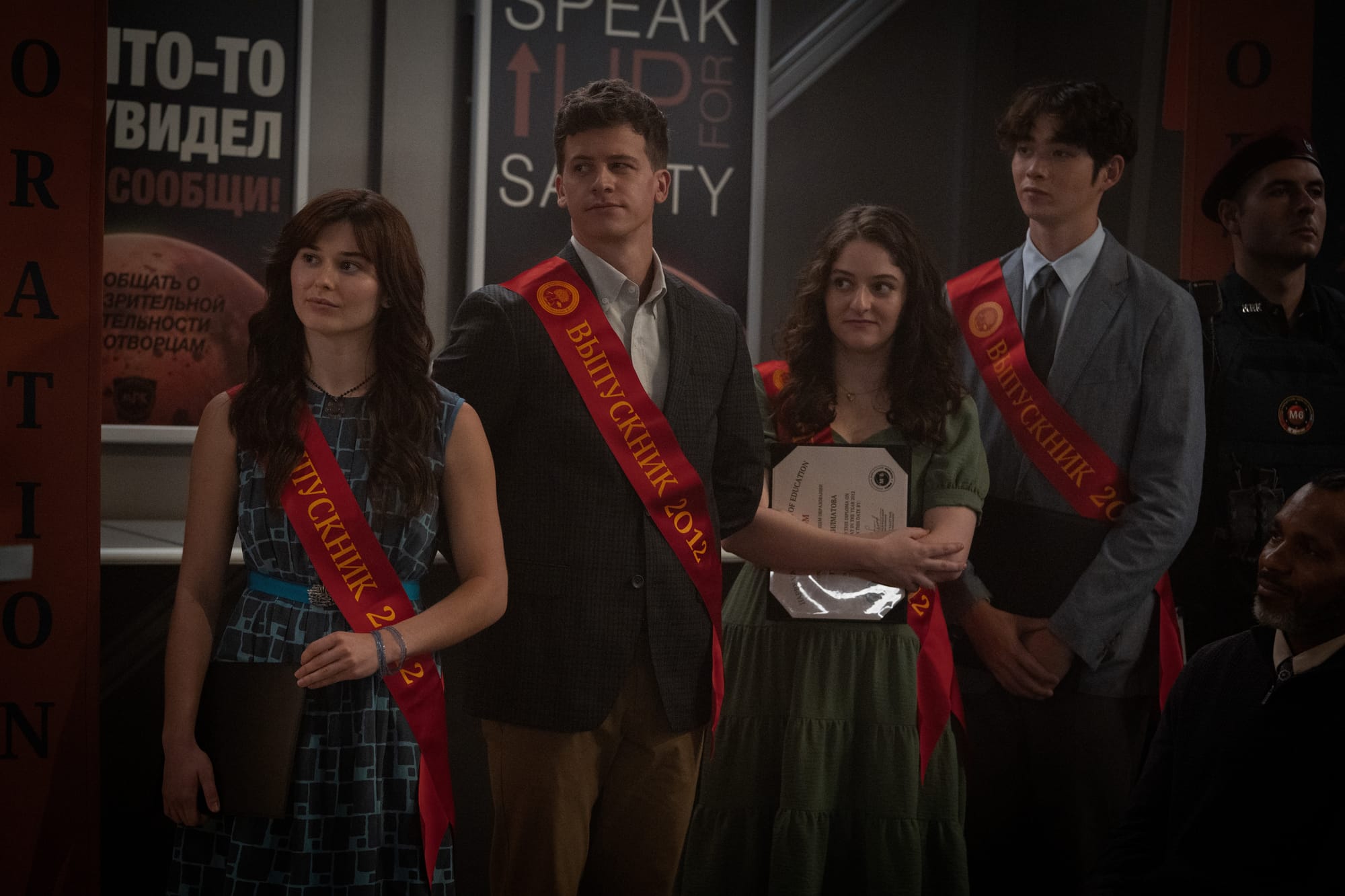
This is different for Alex and Lily, who are truly children of Mars. Technically neither were born there, both starting their lives on Earth, but they came of age at Happy Valley—the former after his mother moved him there in season four, and the latter after changes following Mars’ capture of Goldilocks led to the families of Martian workers being allowed to join them. As they graduate from the Happy Valley Institute of Education, they have their whole lives ahead of them, but what does that even mean to someone who is preparing for the rest of their lives in this new world?
The answer on paper seems to be “mostly what it means now.” Of the four graduates, one is joining the Marine Corps, another is heading to Film School in Cairo, and Lily plans to follow her older sister to Tulane University in New Orleans to study journalism. This is pretty much what you’d expect for a set of high school graduates, although Lily is adamant about one thing: she is not trying to escape Mars. She’s committing to the version of her future that she would have had if she had grown up “normal” on Earth, but only until she completes her degree. It is then her intention to return to Mars, her home, where she has been secretly leading the push for Mars’ independence through post-curfew graffiti-ing.
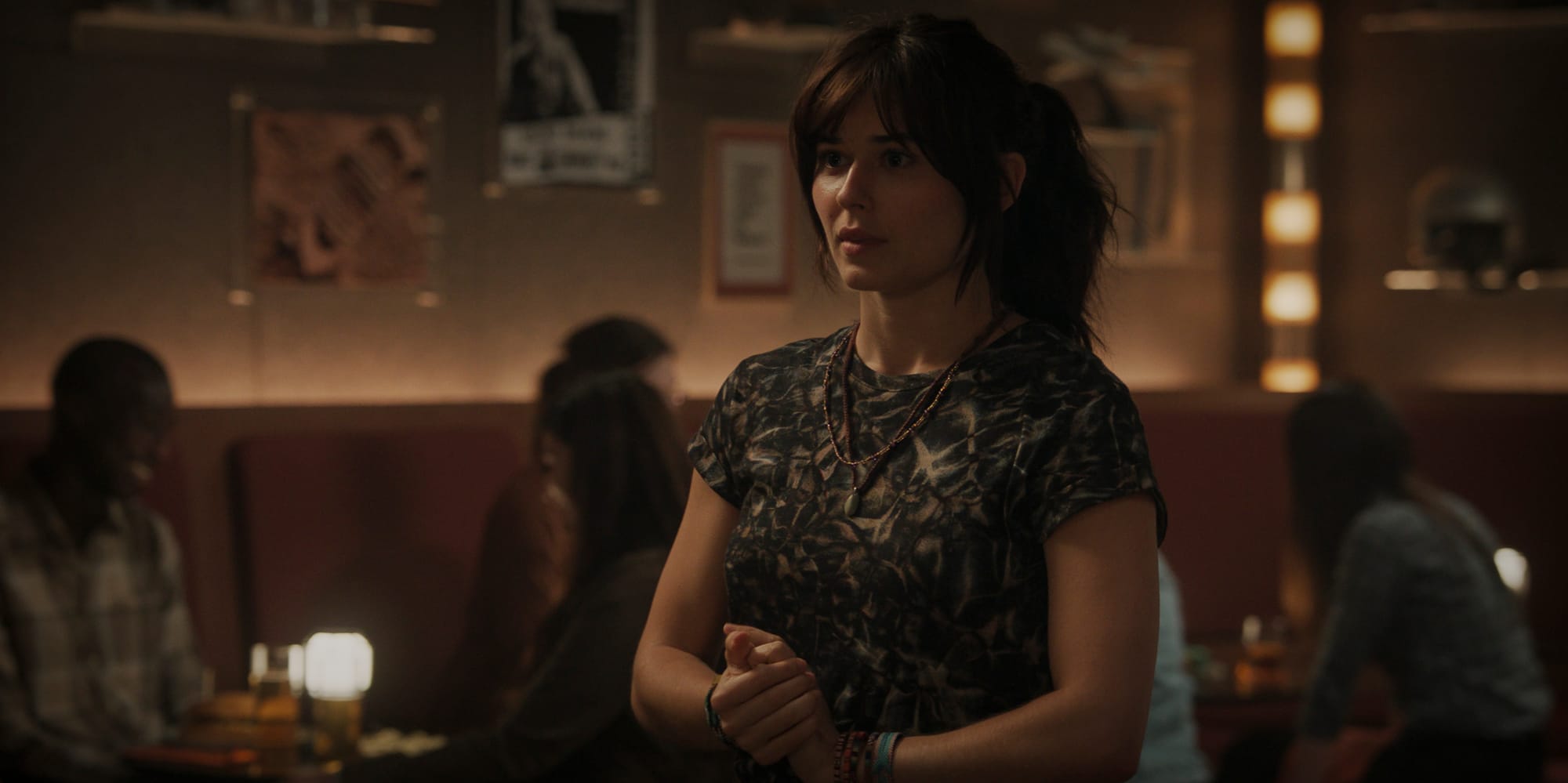
The show’s introduction of Lily is a bit strange, given the identity of the hooded figure is treated as a big reveal despite the fact we have no idea who she is. There’s also something narratively deflating in seeing how stalled the push for Mars’ independence was in the wake of the mutiny, with the M-6 (after they kicked out North Korea) largely shutting down meaningful progress. But as a reboot of the story, Lily’s perspective is far more interesting than her father’s ever was. She’s a kid trying to get a seat at the table with the adults, knowing that even the people who orchestrated the mutiny aren’t willing to go as far as she is to bring “Free Mars” into reality. Her summer internship at news outlet NCC’s Happy Valley office adds an additional window, and while it risks turning her into a too-convenient narrative device as opposed to a full character, Ruby Cruz was compelling enough here to carry some narrative load.
As the recast Alex Baldwin, Sean Kaufman is carrying a lot more. In the end, I would argue that Alex is the character For All Mankind has been building to. They needed Alex to come of age because he is inheriting this new world, and yet is scarred by his ties to its creation. His health would deteriorate if he went back to Earth, and so he’s forced to visit the beach in his Mom’s VR headset. Whereas his fellow graduates all have clear plans moving forward, he is the one who doesn’t know what he wants to be, or what he even can be. His grandfather wants him to join the resistance, while his mother is too busy wondering if she ruined his life by dragging him to Mars for nothing to necessarily help him follow her own scientific path. He has the whole world in front of him, but in uncertain terms so different from those of his classmates.
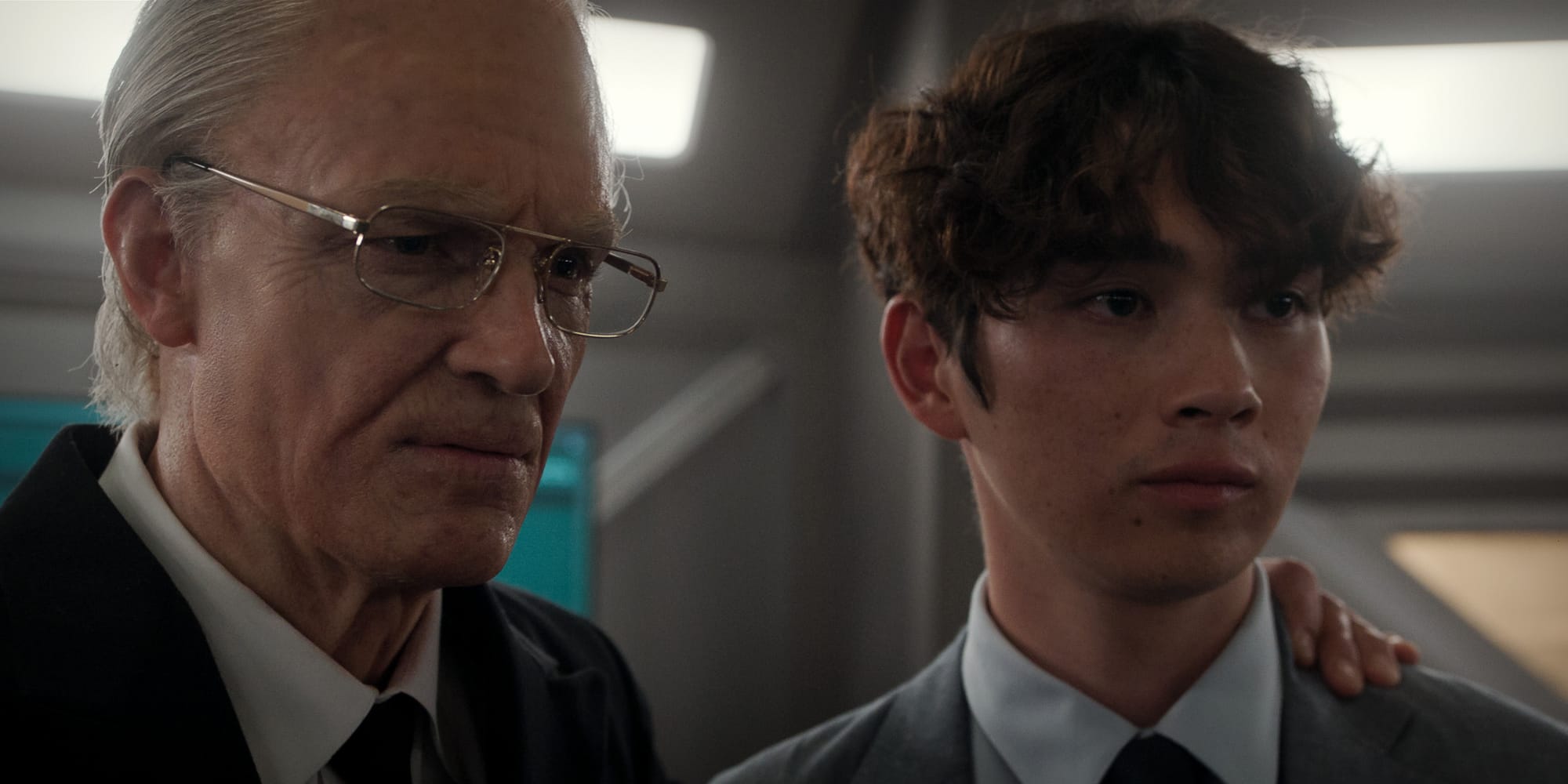
I don’t know if there’s a lot of substance in Alex’s story itself here, especially given his motorbike joy ride gets cut off by the discovery of the murder victim, but it has added weight based on its parallels to Ed’s final act. Look, even before we learn he has stage three cancer, we know this is the last season of the show we’ll be seeing Ed Baldwin, even if the show was picked up for season six this week. And while everyone involved in the mutiny is living under a certain degree of suspicion, it’s Ed who faces the brunt of the consequences, living with an ankle monitor that bans him from certain areas of the base. He’s mostly taking all of this in stride, toying with the command center’s alarm and teasing Lee about his lack of insight into how to handle marriage issues after three failed ones. But when he goes to the doctor for his cough, we come to understand he is living in fantasy: he believes that he’ll be able to venture out into space again, despite the fact it could kill him. His glimpse of the ocean in the VR headset is the closest he’ll get to Earth, connecting grandfather and grandson in ways that will no doubt shape the season.
The aforementioned murder is theoretically our other area of focus at Happy Valley, as Mirielle Enos reunited with her The Killing co-star as Celia Boyd, an “MPK” officer whose observational skills lead her to the realization that a presumed “Gordo” suicide was in fact a homicide. The link back to Lee’s story about his wife and her co-worker is the cliffhanger that takes us into next week’s episode, but my gut says that some of the other suicides may have also been murders, so I’m leaving a serial killer story on the table for now. I don’t know how much depth the show can achieve with this particular story, but I do like Enos, and the ramifications back on Earth in terms of the public perception of Mars are useful for maintaining that connection.
It’s a connection I wondered if the show might sever after moving the vast majority of the story to Mars last season, but Aleida remains. As CEO of Helios, her role has more purpose than just showing us what the vibe is back on Earth: she’s also battling with the financial reality of space exploration, as she must choose between funding Kelly’s thus-far-fruitless research on Mars or pushing resources to the new Corporate Space Race for intelligent life on Saturn and Jupiter. Hanging over all of it is Dev, who is envisioning a utopian city on Mars that has no actual funding, and which doesn’t seem to be a priority for anyone else but him. Although Mars does have a new Soviet governor (played by The Americans’ Costa Ronin), Aleida is really our remaining glimpse into the geopolitical, and there’s a lot of exposition here that won’t fully play out until we get deeper into things.
Here, though, it’s still about Aleida and Margo, who the former visits in prison often enough to be on a first name basis with the security guard. Do Helios’ shareholders know that Aleida is having her former mentor and convicted traitor go over their math in exchange for Tootsie Rolls? My guess is no, but I get that the show wants to let this relationship remain core to its storytelling. There’s not a lot new in Aleida struggling to “have it all” as a CEO and mother as she tries to connect with her own teen (who casually reveals her girlfriend broke up with her, the first Aleida seemed to be hearing about queerness), but it gives Margo a chance to reflect on her own past. She didn’t even have a life to balance with work, so Aleida should count her blessings. Is it particularly insightful? No, but it plays into our history with the characters, and even if the time elapsed is a bit absurd we do still want that value out of a long-running show in an era where few shows make it to season five.
I don’t believe For All Mankind can ever achieve the heights of its early seasons when its alt-history approach had us on the edge of our seats. The status quo of the show is just too grounded in very modern struggles of capital, and while there’s still a compelling story to be told there it doesn’t feel as open-ended as it could or should. That tension is part of the point, and it’s useful to the show if I’m watching this hoping that the search for life—whether Kelly in the crater or the probes heading deeper into the solar system—finds something that changes everything once more before the show concludes. It also means, though, that a new season doesn’t have the impact it once did. There’s substance to chew on here, and the generational shift is meaningful, but it’s still a lot of setup in a context where the idea of payoff seems at a greater distance, especially after a full two-year wait.
Stray observations
- Despite featuring in the transition scene at the end of last season, Dev is only seen on video here, which feels purposeful. He does gift Alex his motorbike, though, lest we think he isn’t involved.
- Whenever they use pop culture, I wonder how it fits into a larger trajectory. Like, “Run The World (Girls)” is still a feminist anthem for a Margo and Aleida montage, but how does Beyonce fit into this world’s conception of feminism? And Will Ferrell made Talladega Nights, but did he make all his other movies? Breaking Bad exists, but what about the rest of its lineage of Peak TV? And, per friend of the newsletter Liz Shannon Miller on Bluesky, what exact conditions inspired Walter White to break bad in this wildly different world?
- The biggest alt-history pop culture moment in the montage for most people: John Lennon still being alive means that The Grey Album is an actual collaboration with Jay-Z. The biggest for Canadian baseball fans: the Expos moved to Portland instead of Washington D.C. because Michael Jordan joined the ownership group with full control over baseball operations.
- It’s buried in the opening montage a bit, but Gore pardoned Miles as a result of the torture situation, which explains why he and others are able to walk freely and own-and-operate a restaurant.
- Feels a little disrespectful for Gordo to have become a term for seeing how far you can run without a spacesuit, but I get it.
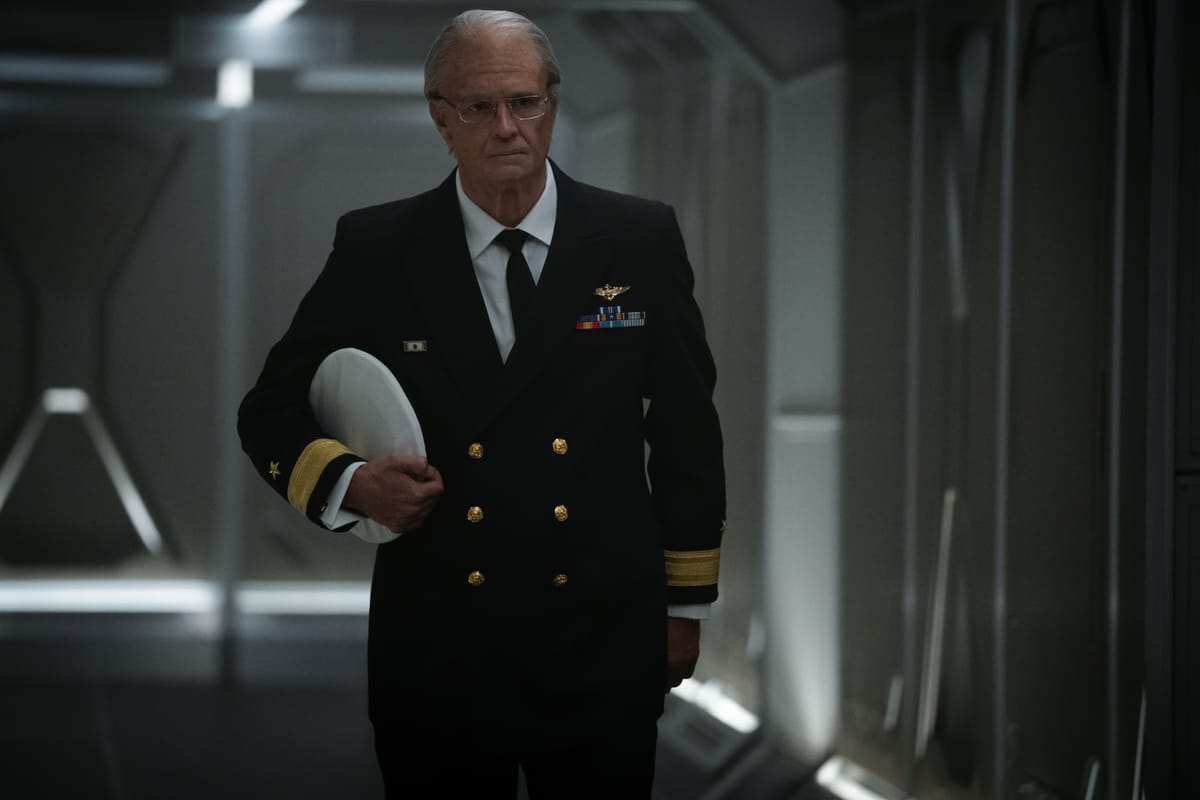
- As with last season, I recoiled at the sight of Joel Kinnaman’s old man makeup and by the end of the episode I had largely come to accept it. I can’t wait for the interviews with Mirielle Enos where she talks about what it was like reuniting with him looking like this.
- Other miscellaneous montage observations:
- All that alt-history and flash mobs still happen? SMH.
- I don’t remember if we knew that Wellstone was Gore’s running mate, but makes sense to choose someone whose tragic death likely kept them from emerging as a national figure.
- Interesting to choose “Katrina turned into a tropical depression” as opposed to “proper federal response limited the negative impacts.” Do we think that changes in the science/development might have contributed to the changing weather patterns in some way?
- The ISN countries boycotting the 2010 Winter Olympics wouldn’t have made much of an impact—China only earned 11 medals at those games.
- I had to pause on the Blockbuster newspaper story, which confirms the company was bought by a Martian tech billionaire. It also teases plans for original content, but exclusively for rent at their stories: “the television series is rumored to be set in the world of American politics” got a real chuckle out of me. Ted Sarandos has no place in this history.
- And welcome back! Two year gaps are considered pretty normal these days, but For All Mankind was one of the first shows I covered for the newsletter in its first year, and I really appreciate the ongoing dialogue we have with such a long-running show. Excited to discuss in the weeks ahead.
Comments ()