Review: Doctor Who, “The Story & the Engine” | Season 2, Episode 5
A trip to Lagos, Nigeria is like nothing the show has ever done before
Sometimes you don’t know a mental block is in place until it’s lifted. That’s exactly how I felt watching this week’s episode of Doctor Who. When the show first began adding leads of color to the TARDIS, it almost always framed race as either a neutral addition or a storytelling challenge to overcome. The show felt the need to explain why race doesn’t matter in time travel (“The Shakespeare Code”) or to actively tackle racism as a reality of the past, present, and future (“Human Nature,” “Thin Ice,” “Rosa,” “Dot and Bubble,” and “Lux”). What never seemed to occur to the writers, however, is that race can be something positively additive for the series too. That it can open up joyful new storytelling avenues the show wouldn’t be able to explore with an all-white cast.
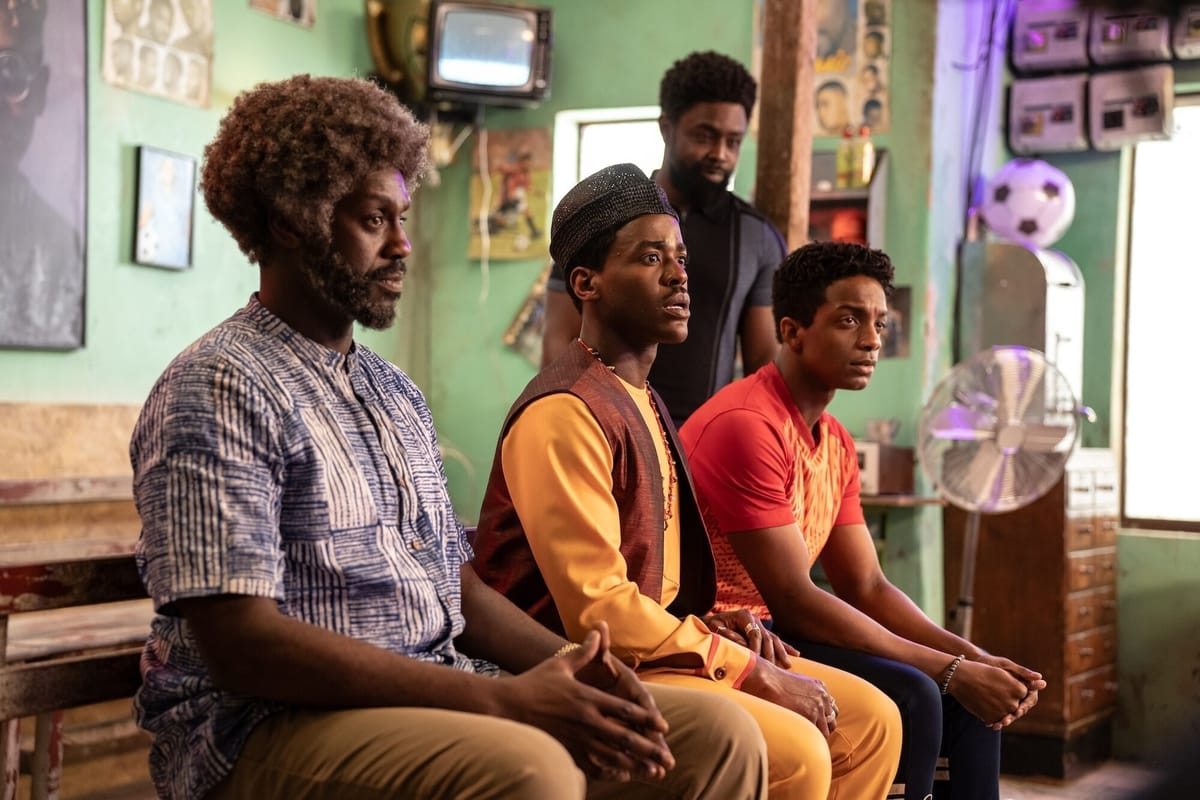
The closest the series has come is “Demons of the Punjab,” which takes a loving deep-dive into Yaz’s Pakistani family heritage. Yet even that episode is ultimately a story about violent religious divides and lingering colonial traumas. “The Story & the Engine,” however, is like nothing the show has ever done before. It’s an episode that realizes the Fifteenth Doctor’s Blackness can take the show to new locations it’s never been—in this case, a barbershop in Lagos, Nigeria in 2019. And it’s an episode that makes the Black and African experience central without using it as a source of trauma and conflict, but instead as a source of community, storytelling, and cultural traditions. It’s something that shouldn’t feel revelatory 15 seasons into NuWho’s run, and yet it absolutely does.
That doesn’t make “The Story & the Engine” a perfect episode. It’s corny at times and downright confusing at others. There’s probably about as much of it that doesn’t work as does. And yet it’s also distinctive and original in a way that’s thrilling to watch. When it comes to Doctor Who, I’ll take messy ambition over streamlined competence any day of the week. And “The Story & the Engine” is another example of the big, exciting swings the show is taking in this overall strong second season for Ncuti Gatwa.
In fact, a lot of things about “The Story & the Engine” made more sense once I learned that writer Inua Ellams—remarkably the first Black man to ever write for Doctor Who—is a poet. While Doctor Who has run the gamut from fairy tale fantasy to hard-ish sci-fi over the years, there’s a tone to “The Story & the Engine” that feels distinct from anything the show has really done before. It’s ambitious in scope and yet quite abstract at the same time. It tackles centuries of human history and a whole pantheon of storytelling gods and yet basically never leaves the barbershop. Like Tenet before it, I think it’s best if you try to feel this episode rather than understand it. But, of course, the latter is what we’re here to do in these reviews.
Plotwise, there are two big things that hold this episode back in the clarity department. One is how it introduces its story and the other is the way it uses its (gorgeous!) animated sequences. Traditionally, an episode of Doctor Who either has the Doctor stumble upon a new location and slowly discover something is wrong or get called in by an old friend to help with a problem. But this episode is a confusing mix of the two. Yearning for some comfort mid-Vindicator mission, the Doctor decides to visit his barber/friend Omo Eosa (Andor’s Sule Rimi), who has been providing him with an emotional safe space since he regenerated into the body of a Black Rwandan-Scottish man. But, coincidentally, Omo is also trapped in his barbershop and in desperate need of the Doctor’s help.
As far as I can tell, there’s no actual plot-link between those two things, which makes the Doctor’s later anger at Omo feel really unearned. It’s also hard to tell how “off” the trapped patrons are acting because there’s less exposition and character intro than there normally is in a Doctor Who episode. The Doctor’s comfort in this space actually undercuts some initial worldbuilding that I think would be helpful for understanding the episode’s more abstracted villains and how they’re operating within it. I still don’t know whether the barbershop kidnapping has been happening for days or weeks or years.
Speaking of which: Given the cool animated “window” device, I think this episode misses a trick not using animation to help explain the histories of The Barber (Ariyon Bakare), who turns out to be the embittered human ambassador for the Storytelling Gods, and Abena a.k.a. Abby (Michelle Asante), who turns out to be the daughter of the West African spider storytelling god Anansi. Maybe it’s fitting that an episode about oral storytelling really forces you to lock in and pay attention to what’s being said. But I think visually depicting the Doctor and Anansi betting over his daughter’s hand in marriage or The Barber’s fraught history with the gods would have been more impactful than, say, dramatizing the story of Yo-Yo Ma listening to a shaman in Botswana.
While I appreciate an episode that doesn’t do too much unnecessary handholding, there’s a risk of treating things too casually too. Even the idea that the barbershop simultaneously exists in both Lagos and outer space is a lot to wrap your head around (there’s a “time-space compressor” built into the doorway), and that’s before we get to the idea that The Barber created the Nexus/World Wide Web system and is now traveling it in a brain-heart Story Engine that’s powered by stories. It doesn’t help that this episode doles out information at an odd, uneven pace. The Doctor learns the barbershop is “traveling” at the 11-minute mark, but doesn’t check what’s outside the door until the 19-minute mark. (Turns out: a giant space spider, of course!)
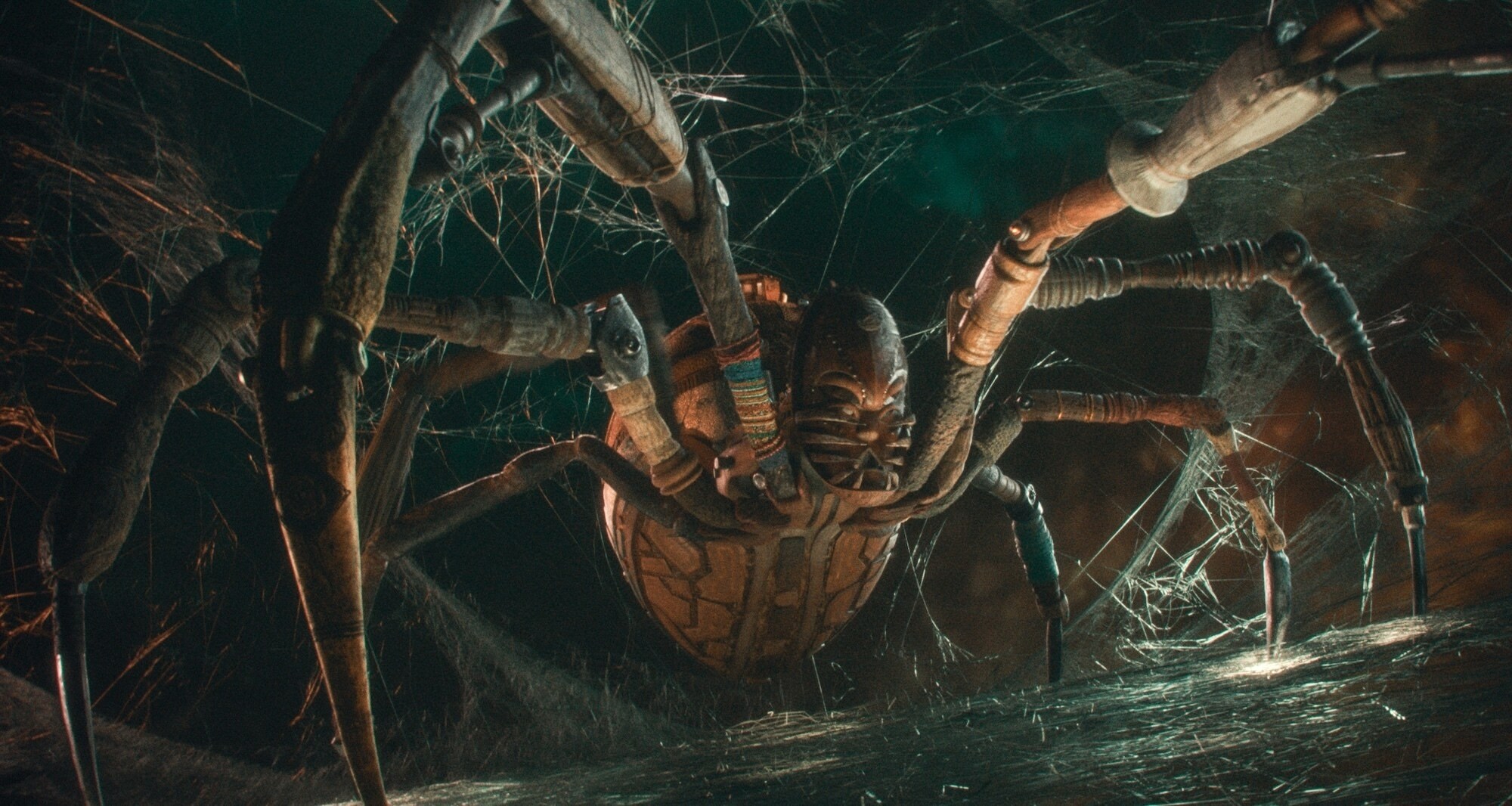
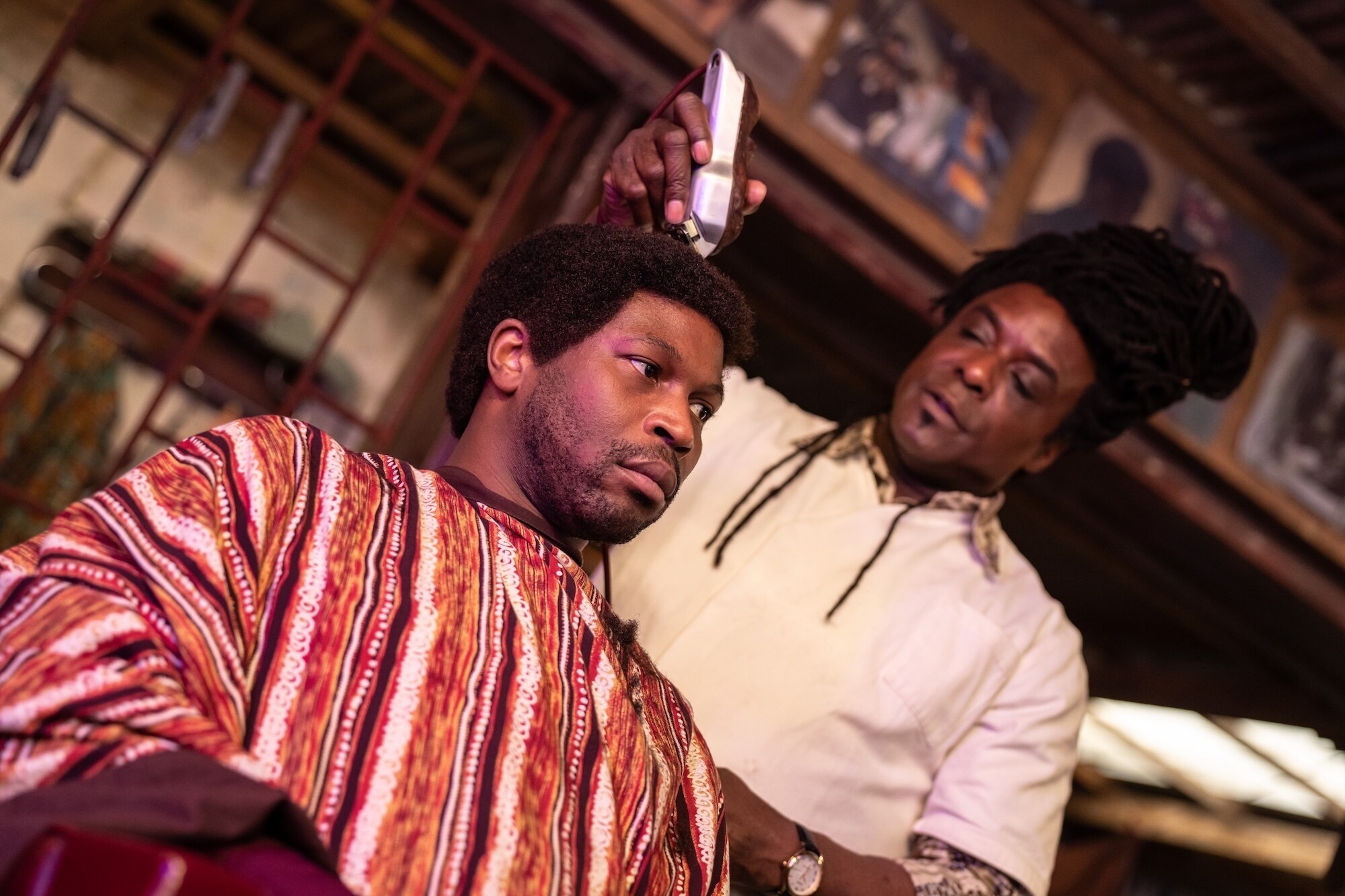
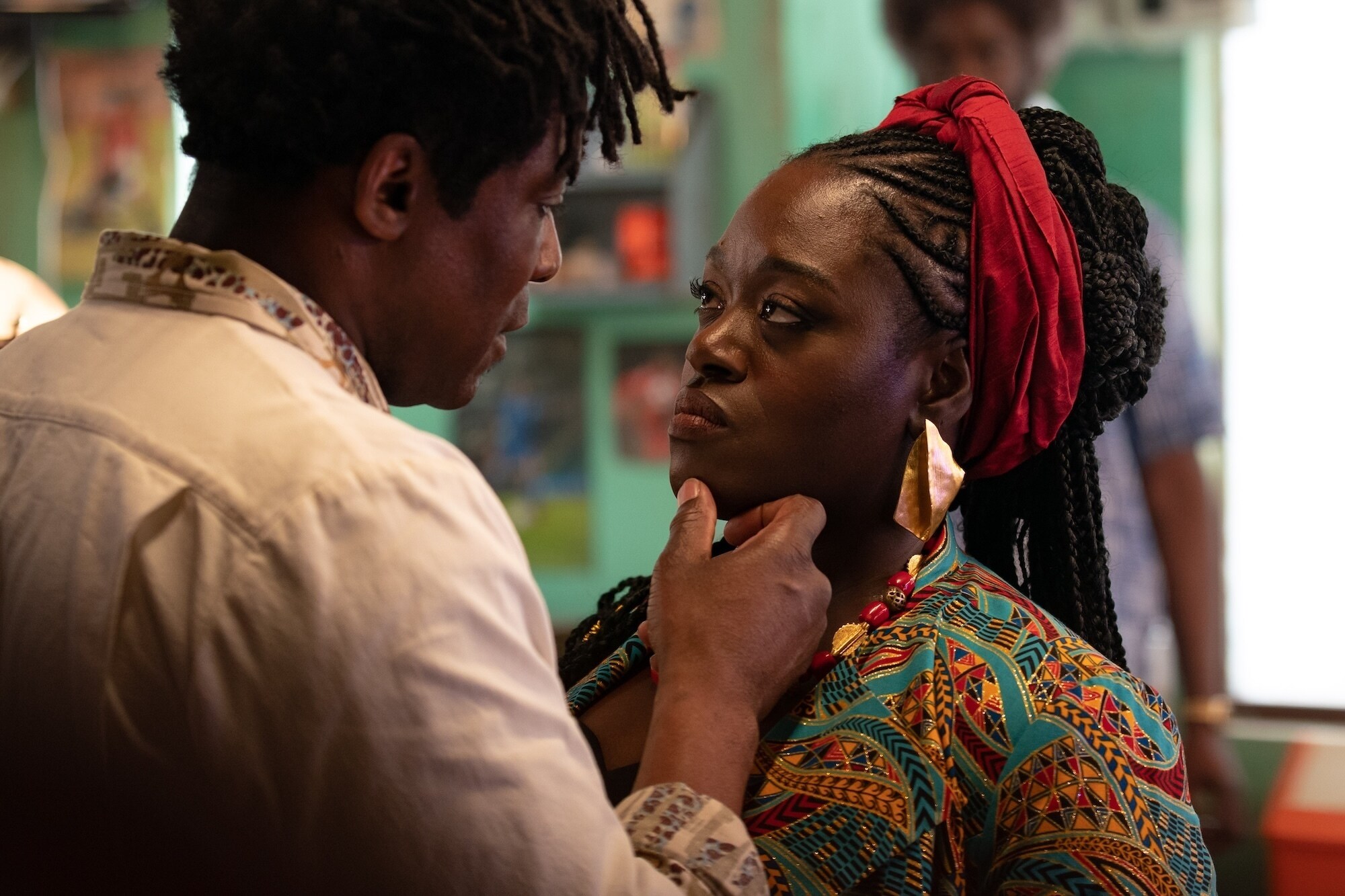
Still, under the “feel it, don’t understand it” principle, there’s a lot that works here too. As the playwright behind a project called Barber Shop Chronicles, Ellams clearly has a huge passion for the Black barbershop experience and the history and power of Black hair, which gives this episode a unique emotional resonance. (The map of braids is a nice touch.) And the idea of a bitter mortal trying to erase the Storytelling Gods is a cool basis for a contemporary folk tale. I even like that everyone gets a redemption arc here—with The Barber and Abena both breaking the “hurt people hurt people” cycle with a little push from the Doctor and Belinda.
True, where and how the story actually resolves does feel a little bit like sand slipping through your Nexus fingers. (The Doctor overloads the Story Engine with the power of his never-ending story, while The Barber opens the door to let everyone return to Lagos.) And the idea that the Doctor’s body is like a barbershop with all of his past regenerations as the bickering patrons inside is maybe a bit of a stretch. Still, I always love seeing the current Doctor folded into the long legacy of the character. And it’s especially nice to see Jodie Whittaker take her place among the lineup too, since I’m not sure the show has delivered one of those all-Doctor montages since she left.
In fact, for such a poetic fable, there are a surprising amount of nods towards the show’s broader history as well. We see a glimpse of the movie theater from “Lux” and the spaceship from “The Robot Revolution” as The Barber explains that he built the Nexus from “a strand of the gods’ blood and essence” in order to “cross-connect concepts, cultures, and ideas.” Most unexpectedly, we also get the first appearance of Jo Martin’s Fugitive Doctor since Chris Chibnall’s farewell in “The Power of the Doctor.” Her return here is another welcome example of Russell T. Davies trying to weave together all of NuWho history, rather than segment some of it out. Though I don’t know how the Doctor recognizes Abby if he met her in his lost years, it’s exciting to hear Martin’s Doctor tease that her story “might be finished one day.”
Indeed, Doctor Who has long been interested in the power of stories—from the Eleventh Doctor’s “we’re all stories in the end” speech to Clara’s leaf to the Doctor’s many literary heroes. “The Story & the Engine” continues that tradition while adding new thematic wrinkles about claiming credit for your work, rewriting your own narrative, and sharing stories communally. Perhaps most importantly, it also expands the lens on what a Doctor Who story can look like in the Fifteenth Doctor’s era.
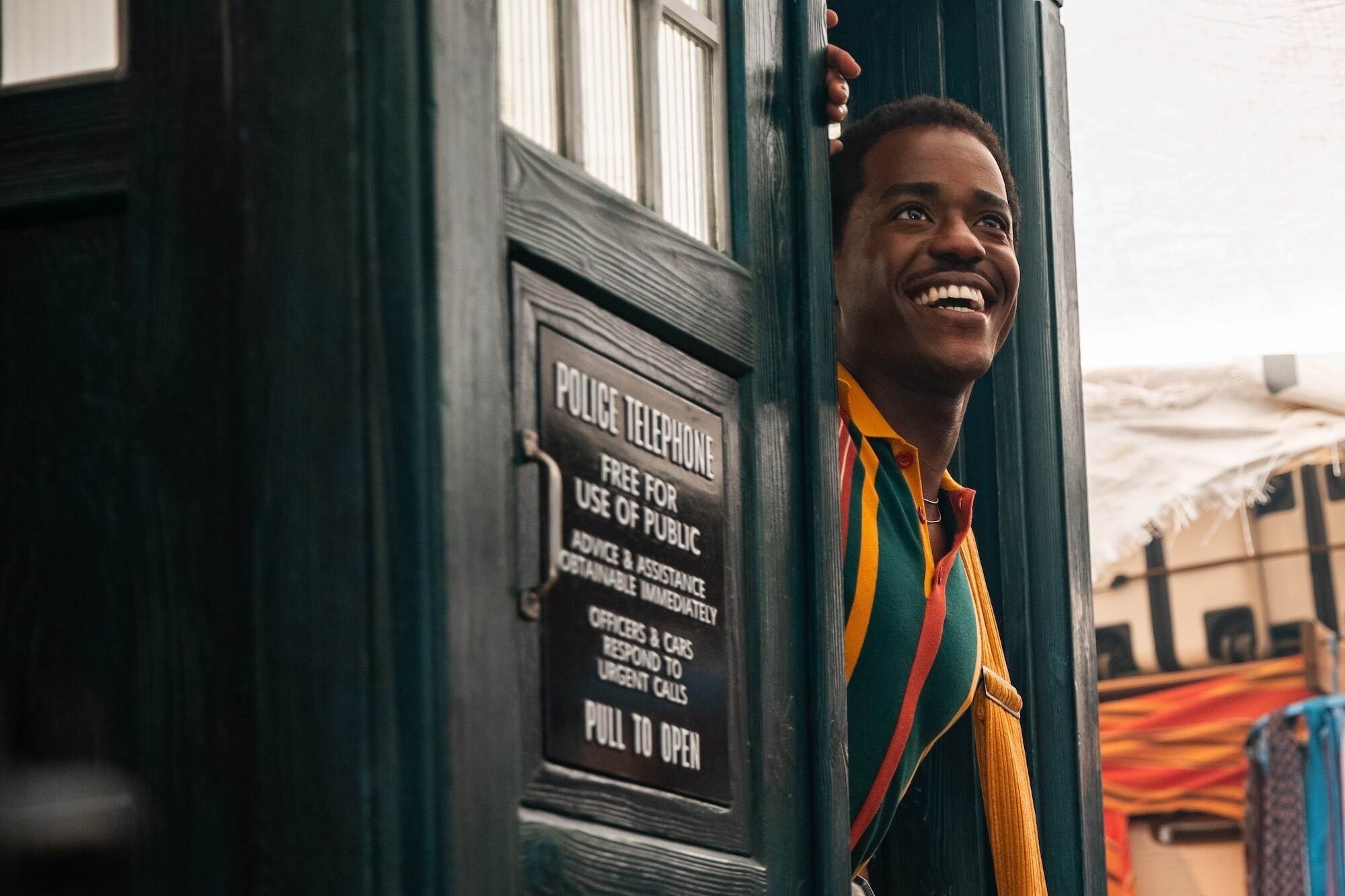
Where “Lux” explored the spaces that are off-limits to a Black Doctor, “The Story & the Engine” celebrates the new spaces that are now available to Gatwa’s Doctor as well. Instead of seeing race as some kind of storytelling hurdle, this episode sees it as an engine that can power bigger, more inventive stories the show could never have dreamed of before. That’s a worthwhile thesis, even if the episode occasionally stumbles a bit while making it.
Stray observations
- So is The Barber a Harbinger? I kept waiting for the show to make that connection official, but I don’t think it does.
- “The TARDIS does your hair” is one of my favorite lines in Doctor Who history. It’s so fun to go back and think about the TARDIS styling the Tenth Doctor’s 1950s hairdo in “The Idiot’s Lantern” or managing the Twelfth Doctor’s various levels of poof.
- I love the montage of the Doctor walking through the street market and greeting old friends, which feels so warm and lived-in. I also love that the episode lets Belinda be a little overwhelmed when she walks through it later, which emphasizes how a safe space for one person can be sensory overload for another.
- Gatwa has been throwing in a bunch of random American/English/African accents mid-sentence this season and it’s a very charming quirk of his Doctor!
- We get a lovely interlude showing the time Belinda saved a patient’s life by diagnosing a condition the hospital’s doctors missed. It’s a moving sequence that pays off the idea that the Doctor traveled up and down her timeline back in “The Robot Revolution.”
- The Doctor binged Marvel movies with the Norse goddess Saga, although she smartly ditched out after Endgame. (She also thinks Thor’s muscles aren’t big enough.)
- In addition to Ellams, Doctor Who has featured three Black women writers over the years. Malorie Blackman co-wrote “Rosa” with Chris Chibnall in season 11. Charlene James co-wrote “Can You Hear Me?” with Chibnall in season 12. And Sharma Angel Walfall co-wrote “The Well” with Russell T. Davies this season.
- Given Christopher Eccleston’s fairly, uh, tumultuous feelings toward the current Doctor Who showrunning team, I thought it was sweet they still gave him such a place of prominence in the Doctor montage.
- In addition to the “electric cinema” from “Lux” and the “space opera” from “The Robot Revolution,” The Barber mentions collecting stories in “a pub lit by candles, a Catholic church confession box, [and] a coal-powered theatre.” I’m not sure if there are one-to-one Doctor Who parallels for those locations as well.
- So what do we think is up with the little girl Belinda sees outside the barbershop? Now that the Fugitive Doctor is back, could she be tied to the Timeless Child storyline?
Comments ()